


























1 / 6
0
Views
0
Downloads

0.0
0
0 Likes
Understand the Ideal Gas Law
0 Views
0 Downloads
Paste this activity's link or code into your existing LMS (Google Classroom, Canvas, Teams, Schoology, Moodle, etc.).
Students can open and work on the activity right away, with no student login required.
You'll still be able to track student progress and results from your teacher account.
Information
Description
What It Is:
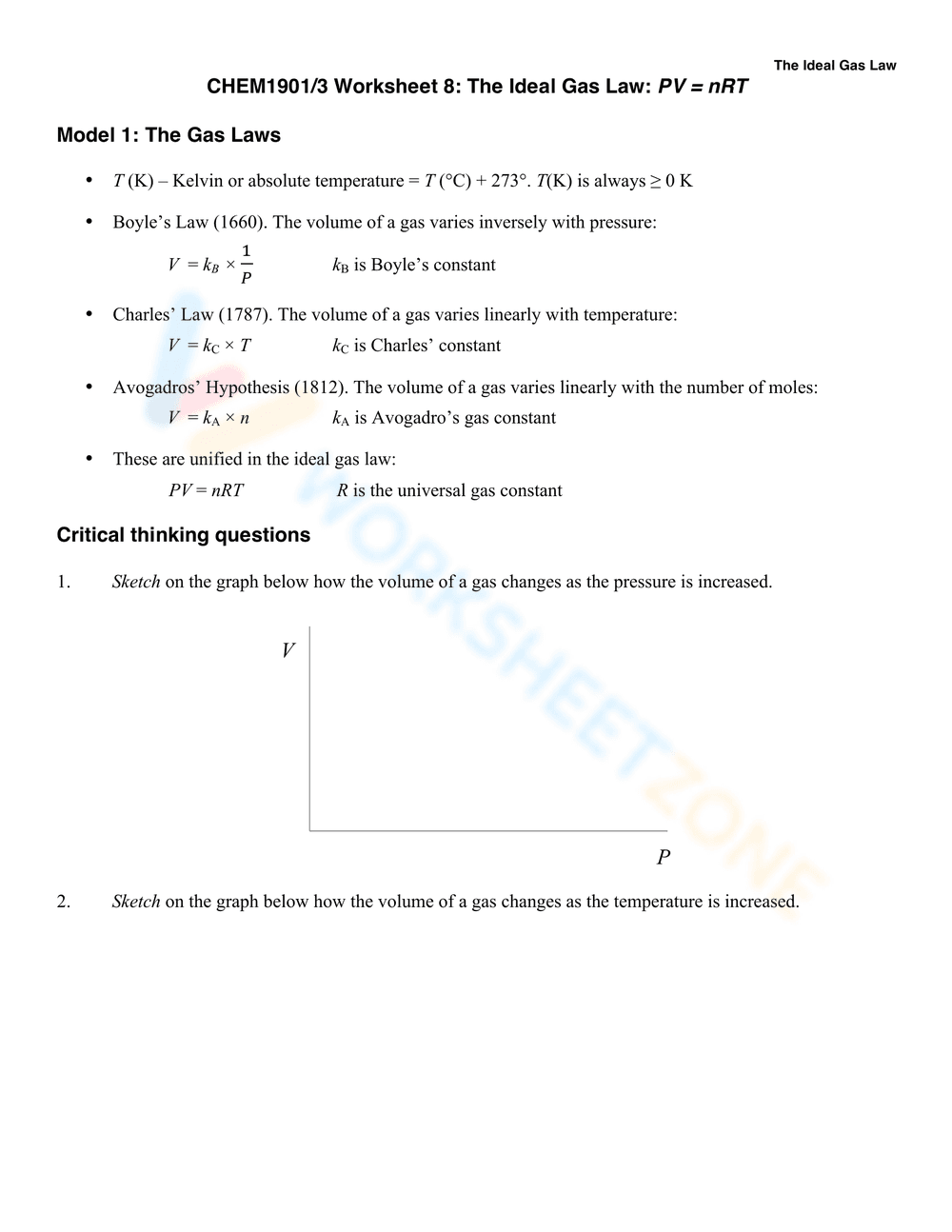
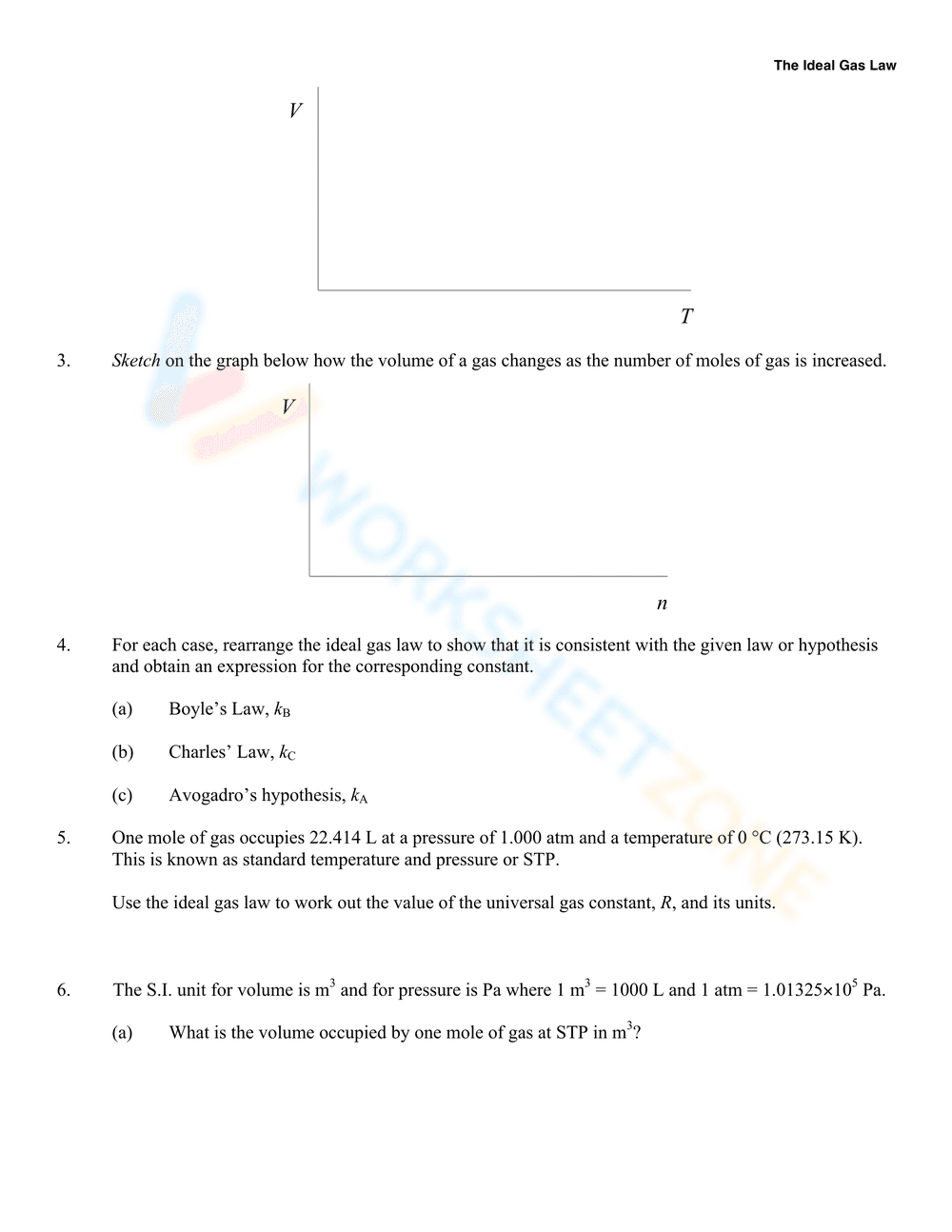
This is a chemistry worksheet focused on the Ideal Gas Law (PV=nRT). It presents Model 1: The Gas Laws, including definitions and formulas for Kelvin temperature conversion, Boyle's Law, Charles' Law, and Avogadro's Hypothesis. The worksheet includes critical thinking questions that require students to sketch graphs showing the relationship between volume and pressure, and volume and temperature.
Grade Level Suitability:
This worksheet is most suitable for high school students (Grades 11-12) or introductory college-level chemistry courses. It requires an understanding of basic algebra, graphing, and the fundamental principles of gas laws.
Why Use It:
This worksheet helps students understand and apply the Ideal Gas Law by reviewing the individual gas laws that contribute to it. It promotes critical thinking by requiring students to visualize and represent the relationships between gas properties graphically. It also reinforces the definitions of key concepts like Kelvin temperature and the universal gas constant.
How to Use It:
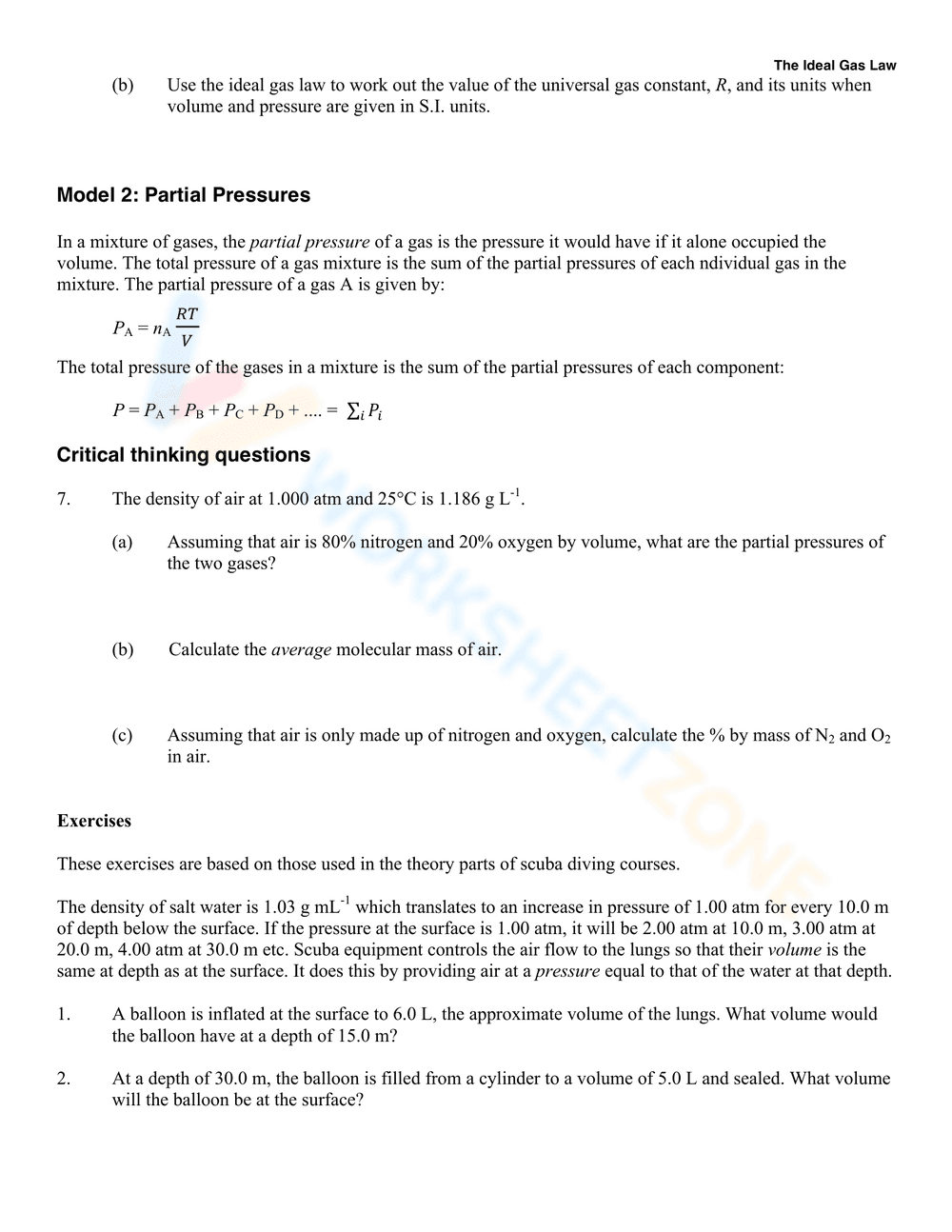
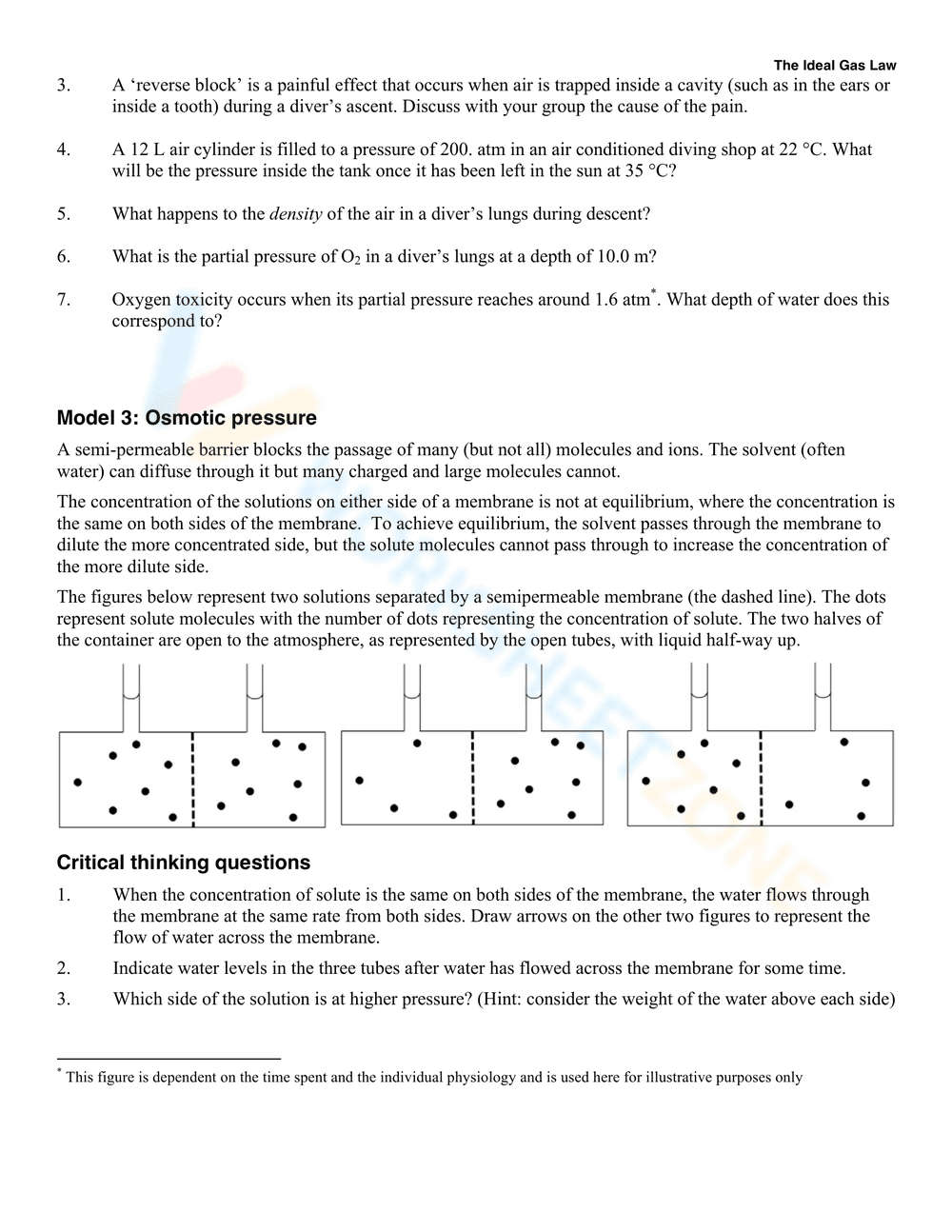
Students should first review the definitions and formulas presented for each gas law. Then, they should answer the critical thinking questions by sketching the appropriate curves on the provided graphs, demonstrating their understanding of how volume changes with pressure and temperature according to the gas laws.
Target Users:
The target users are high school or college students studying chemistry, particularly those learning about gas laws and the Ideal Gas Law. It is also useful for teachers as a supplemental exercise or assessment tool.
This is a chemistry worksheet focused on the Ideal Gas Law (PV=nRT). It presents Model 1: The Gas Laws, including definitions and formulas for Kelvin temperature conversion, Boyle's Law, Charles' Law, and Avogadro's Hypothesis. The worksheet includes critical thinking questions that require students to sketch graphs showing the relationship between volume and pressure, and volume and temperature.
Grade Level Suitability:
This worksheet is most suitable for high school students (Grades 11-12) or introductory college-level chemistry courses. It requires an understanding of basic algebra, graphing, and the fundamental principles of gas laws.
Why Use It:
This worksheet helps students understand and apply the Ideal Gas Law by reviewing the individual gas laws that contribute to it. It promotes critical thinking by requiring students to visualize and represent the relationships between gas properties graphically. It also reinforces the definitions of key concepts like Kelvin temperature and the universal gas constant.
How to Use It:
Students should first review the definitions and formulas presented for each gas law. Then, they should answer the critical thinking questions by sketching the appropriate curves on the provided graphs, demonstrating their understanding of how volume changes with pressure and temperature according to the gas laws.
Target Users:
The target users are high school or college students studying chemistry, particularly those learning about gas laws and the Ideal Gas Law. It is also useful for teachers as a supplemental exercise or assessment tool.


