


























1 / 5
0
Views
0
Downloads



0 Likes
Step-by-Step Instructions and Notes Worksheet
0 Views
0 Downloads
Paste this activity's link or code into your existing LMS (Google Classroom, Canvas, Teams, Schoology, Moodle, etc.).
Students can open and work on the activity right away, with no student login required.
You'll still be able to track student progress and results from your teacher account.
Information
Description
What It Is:
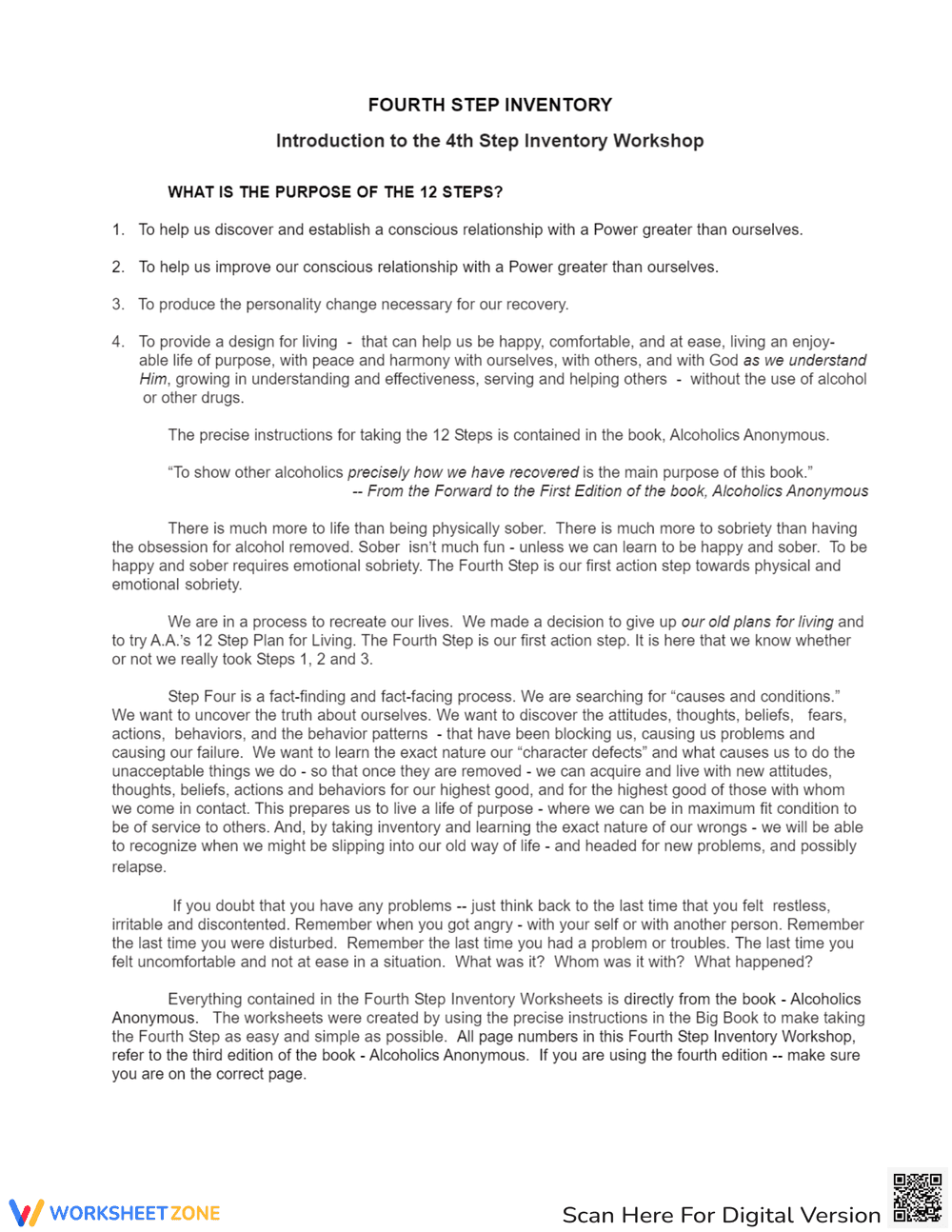
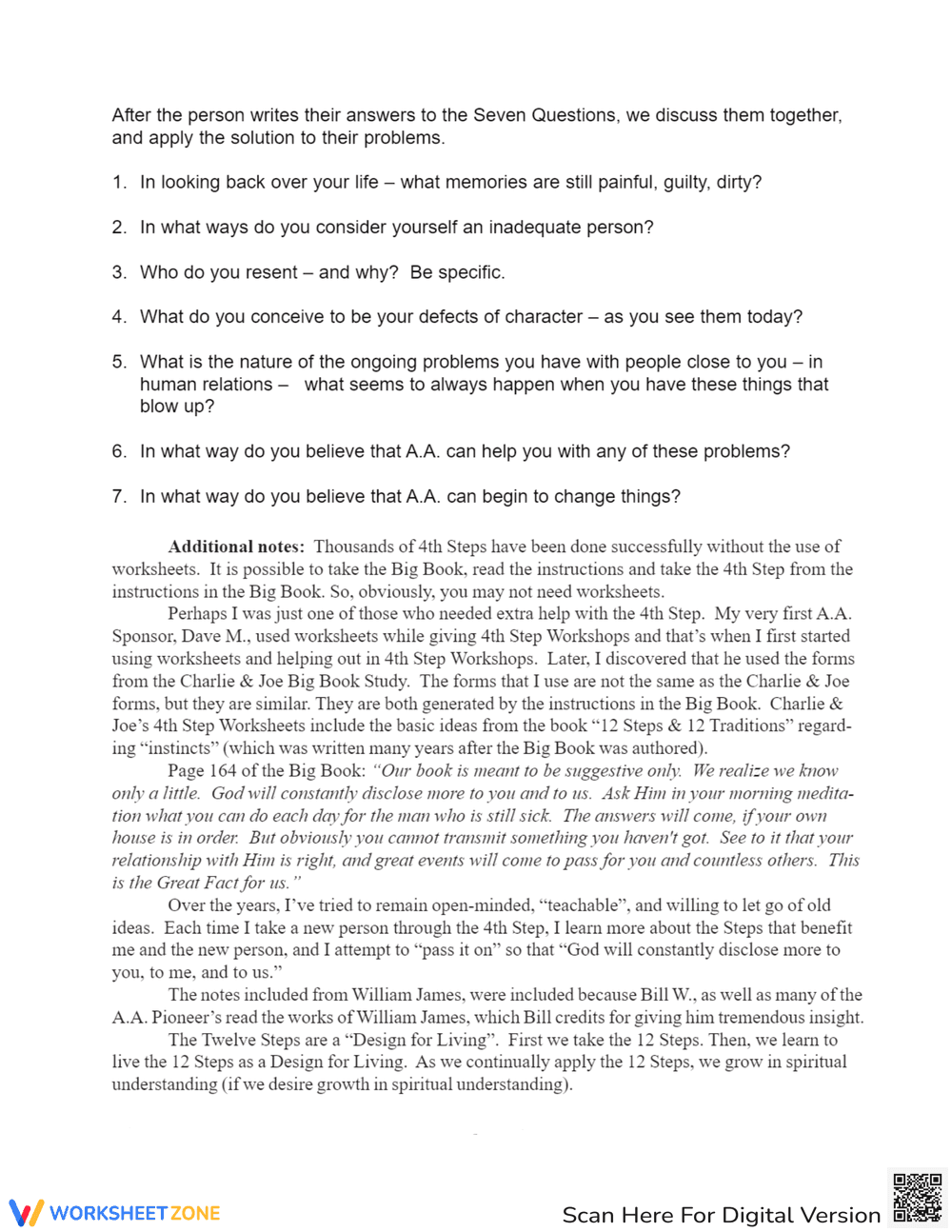
This is an introductory worksheet for the Fourth Step Inventory Workshop, based on the 12 Steps as outlined in Alcoholics Anonymous. It discusses the purpose of the 12 Steps, focusing on establishing a relationship with a higher power, improving consciousness, producing personality change, and providing a design for living. The text emphasizes self-discovery, uncovering attitudes, thoughts, beliefs, and behaviors, and preparing to live a life of purpose.
Grade Level Suitability:
This worksheet is not suitable for traditional grade levels. It is designed for adults participating in recovery programs, specifically those working through the Fourth Step Inventory in Alcoholics Anonymous or similar 12-step programs. The content requires a level of self-reflection and understanding of addiction and recovery concepts not typically found in younger students.
Why Use It:
This worksheet helps participants understand the goals and objectives of the 12 Steps. It provides a framework for self-examination and encourages individuals to identify patterns of behavior that may be hindering their recovery. It also offers guidance on how to approach the Fourth Step with honesty and self-awareness.
How to Use It:
The worksheet should be read carefully and thoughtfully. Participants should reflect on the questions and statements presented, considering how they apply to their own experiences. It serves as a starting point for deeper self-reflection and discussion with a sponsor or counselor. Users should consider the 'last time you felt restless, irritable and discontented' to help identify patterns.
Target Users:
The target users are adults in recovery programs, particularly those working through the Fourth Step in Alcoholics Anonymous or other 12-step programs. It is designed for individuals seeking to understand themselves better and to address underlying issues contributing to their addiction.
This is an introductory worksheet for the Fourth Step Inventory Workshop, based on the 12 Steps as outlined in Alcoholics Anonymous. It discusses the purpose of the 12 Steps, focusing on establishing a relationship with a higher power, improving consciousness, producing personality change, and providing a design for living. The text emphasizes self-discovery, uncovering attitudes, thoughts, beliefs, and behaviors, and preparing to live a life of purpose.
Grade Level Suitability:
This worksheet is not suitable for traditional grade levels. It is designed for adults participating in recovery programs, specifically those working through the Fourth Step Inventory in Alcoholics Anonymous or similar 12-step programs. The content requires a level of self-reflection and understanding of addiction and recovery concepts not typically found in younger students.
Why Use It:
This worksheet helps participants understand the goals and objectives of the 12 Steps. It provides a framework for self-examination and encourages individuals to identify patterns of behavior that may be hindering their recovery. It also offers guidance on how to approach the Fourth Step with honesty and self-awareness.
How to Use It:
The worksheet should be read carefully and thoughtfully. Participants should reflect on the questions and statements presented, considering how they apply to their own experiences. It serves as a starting point for deeper self-reflection and discussion with a sponsor or counselor. Users should consider the 'last time you felt restless, irritable and discontented' to help identify patterns.
Target Users:
The target users are adults in recovery programs, particularly those working through the Fourth Step in Alcoholics Anonymous or other 12-step programs. It is designed for individuals seeking to understand themselves better and to address underlying issues contributing to their addiction.


