


























0
Views
0
Downloads

0.0
0
0 Likes
Biotic and Abiotic Factors of Biomes Worksheet
0 Views
0 Downloads
Paste this activity's link or code into your existing LMS (Google Classroom, Canvas, Teams, Schoology, Moodle, etc.).
Students can open and work on the activity right away, with no student login required.
You'll still be able to track student progress and results from your teacher account.
Information
Description
What It Is:
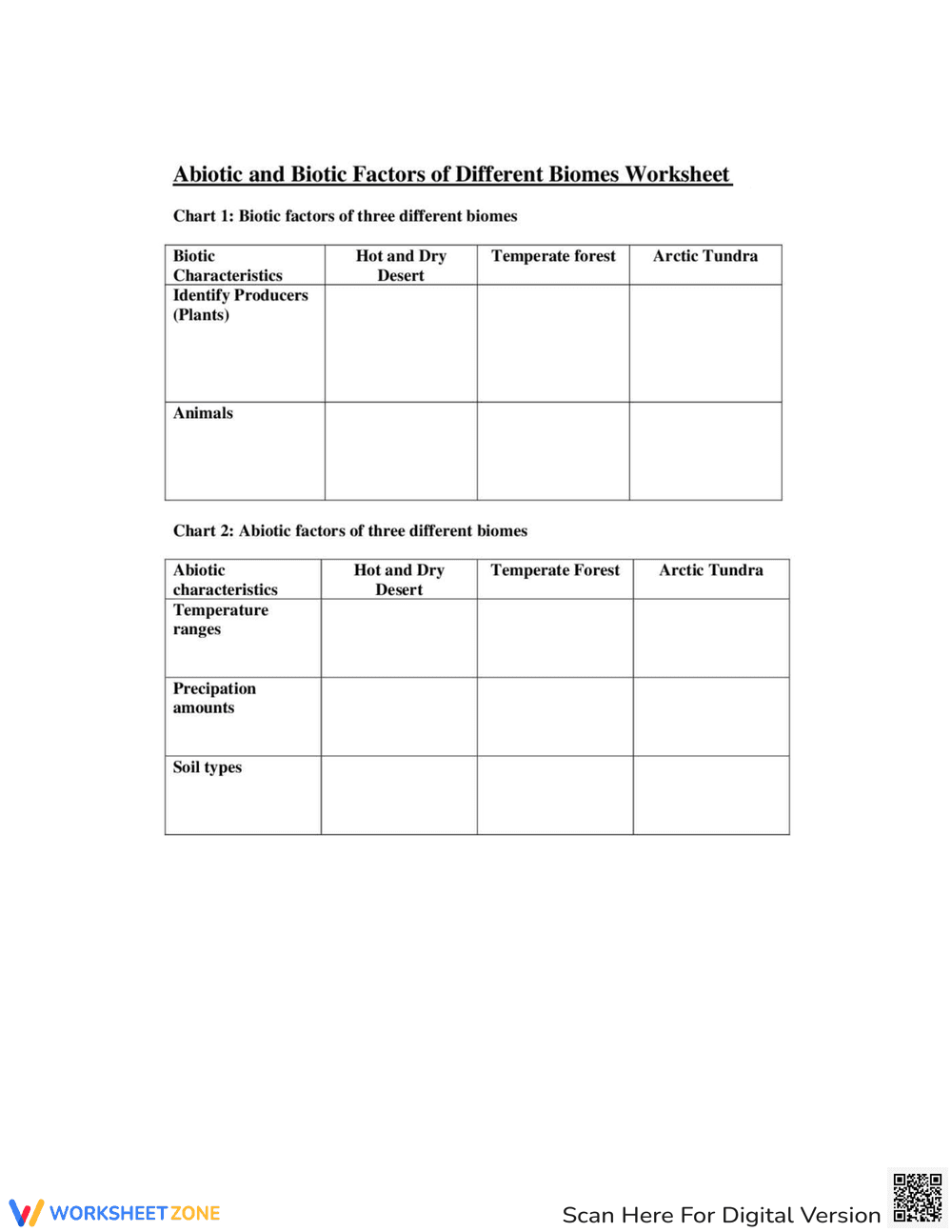
This is a worksheet titled 'Abiotic and Biotic Factors of Different Biomes.' It contains two charts. The first chart focuses on biotic factors, asking students to identify producers (plants) and animals in different biomes: Hot and Dry Desert, Temperate Forest, and Arctic Tundra. The second chart focuses on abiotic factors, asking students to describe temperature ranges, precipitation amounts, and soil types for the same three biomes.
Grade Level Suitability:
This worksheet is suitable for grades 6-9. It requires students to understand the concepts of biotic and abiotic factors, different biomes, and the characteristics of each biome. It involves research and critical thinking skills.
Why Use It:
This worksheet helps students learn about the relationship between living and non-living things in different environments. It encourages them to analyze and compare the biotic and abiotic characteristics of various biomes. It promotes understanding of ecological concepts and environmental science.
How to Use It:
Students should research or use prior knowledge to fill in the charts. For each biome (Hot and Dry Desert, Temperate Forest, Arctic Tundra), they should identify examples of plants and animals (biotic factors) and describe the temperature ranges, precipitation amounts, and soil types (abiotic factors). The worksheet can be used as a class activity, homework assignment, or assessment tool.
Target Users:
This worksheet is designed for middle school students studying ecology, environmental science, or biology. It is useful for teachers looking for a hands-on activity to reinforce learning about biomes and their characteristics.
This is a worksheet titled 'Abiotic and Biotic Factors of Different Biomes.' It contains two charts. The first chart focuses on biotic factors, asking students to identify producers (plants) and animals in different biomes: Hot and Dry Desert, Temperate Forest, and Arctic Tundra. The second chart focuses on abiotic factors, asking students to describe temperature ranges, precipitation amounts, and soil types for the same three biomes.
Grade Level Suitability:
This worksheet is suitable for grades 6-9. It requires students to understand the concepts of biotic and abiotic factors, different biomes, and the characteristics of each biome. It involves research and critical thinking skills.
Why Use It:
This worksheet helps students learn about the relationship between living and non-living things in different environments. It encourages them to analyze and compare the biotic and abiotic characteristics of various biomes. It promotes understanding of ecological concepts and environmental science.
How to Use It:
Students should research or use prior knowledge to fill in the charts. For each biome (Hot and Dry Desert, Temperate Forest, Arctic Tundra), they should identify examples of plants and animals (biotic factors) and describe the temperature ranges, precipitation amounts, and soil types (abiotic factors). The worksheet can be used as a class activity, homework assignment, or assessment tool.
Target Users:
This worksheet is designed for middle school students studying ecology, environmental science, or biology. It is useful for teachers looking for a hands-on activity to reinforce learning about biomes and their characteristics.


