


























1 / 2
0
Views
0
Downloads

0 Likes
Abiotic vs Biotic Worksheet with Definitions & Classification
0 Views
0 Downloads
Paste this activity's link or code into your existing LMS (Google Classroom, Canvas, Teams, Schoology, Moodle, etc.).
Students can open and work on the activity right away, with no student login required.
You'll still be able to track student progress and results from your teacher account.
Information
Description
What It Is:
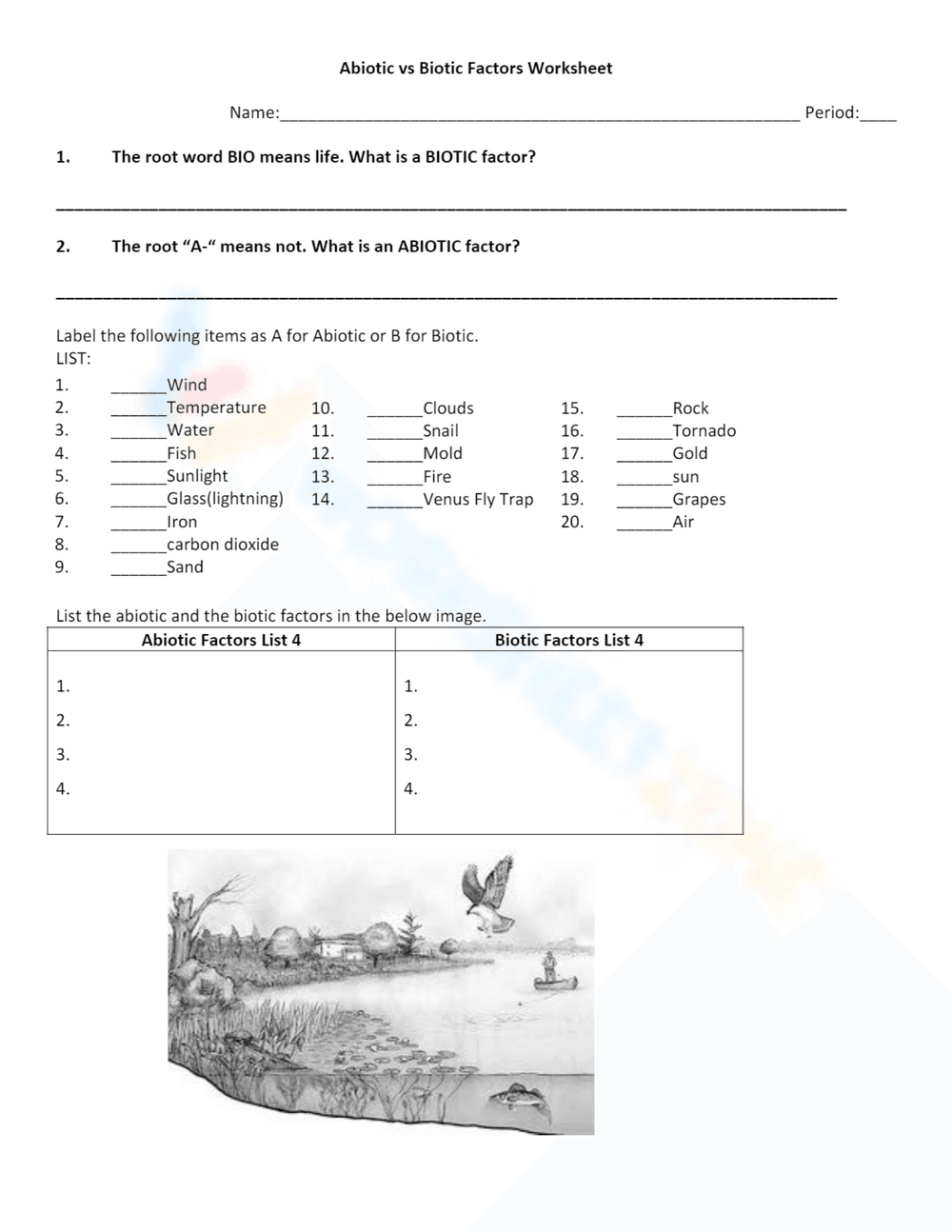
This is an educational worksheet focused on abiotic and biotic factors. It includes questions about the meaning of the root words 'bio' and 'a-', a labeling activity where students classify items like wind, temperature, water, fish, sunlight, glass (lightning), iron, carbon dioxide, sand, clouds, snail, mold, fire, Venus Fly Trap, rock, tornado, gold, sun, grapes, and air as either abiotic or biotic. Finally, it asks students to identify and list abiotic and biotic factors from an image of a natural environment.
Grade Level Suitability:
This worksheet is suitable for upper elementary and middle school students, specifically grades 4-7. The content requires an understanding of basic biological concepts and the ability to categorize elements of an ecosystem.
Why Use It:
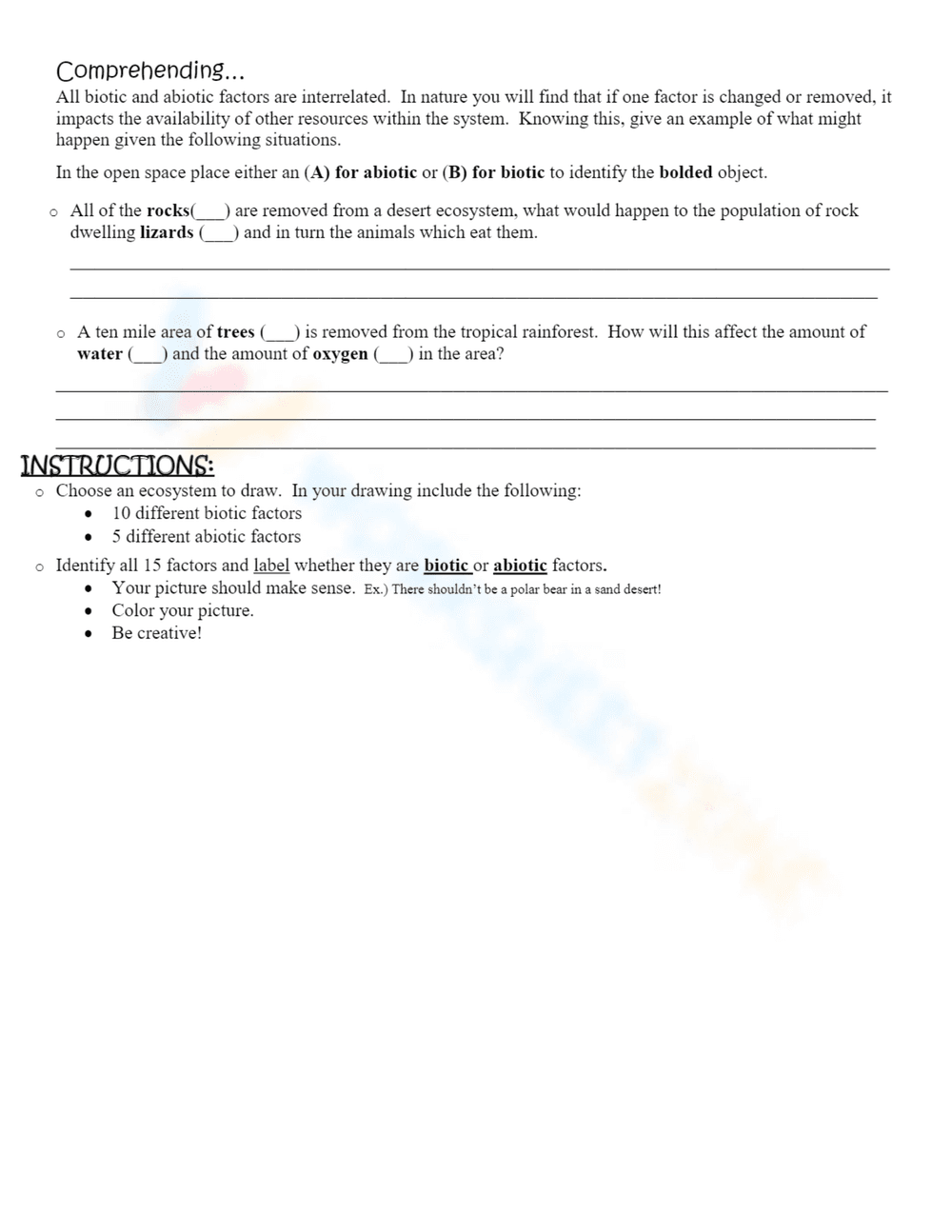
This worksheet reinforces the understanding of biotic and abiotic factors within an ecosystem. It helps students develop critical thinking skills by applying definitions to specific examples and analyzing a visual representation of an environment. It clarifies the difference between living and non-living components of an environment.
How to Use It:
Students should first define biotic and abiotic factors using the root word clues. Then, they should label each item in the list as either 'A' for abiotic or 'B' for biotic. Finally, they should analyze the provided image and list the abiotic and biotic factors they can identify within it in the provided tables.
Target Users:
This worksheet is ideal for science teachers teaching ecology, biology, or environmental science. It is also beneficial for students learning about ecosystems and the interdependence of living and non-living things. Homeschooling parents could also use this worksheet as part of a science curriculum.
This is an educational worksheet focused on abiotic and biotic factors. It includes questions about the meaning of the root words 'bio' and 'a-', a labeling activity where students classify items like wind, temperature, water, fish, sunlight, glass (lightning), iron, carbon dioxide, sand, clouds, snail, mold, fire, Venus Fly Trap, rock, tornado, gold, sun, grapes, and air as either abiotic or biotic. Finally, it asks students to identify and list abiotic and biotic factors from an image of a natural environment.
Grade Level Suitability:
This worksheet is suitable for upper elementary and middle school students, specifically grades 4-7. The content requires an understanding of basic biological concepts and the ability to categorize elements of an ecosystem.
Why Use It:
This worksheet reinforces the understanding of biotic and abiotic factors within an ecosystem. It helps students develop critical thinking skills by applying definitions to specific examples and analyzing a visual representation of an environment. It clarifies the difference between living and non-living components of an environment.
How to Use It:
Students should first define biotic and abiotic factors using the root word clues. Then, they should label each item in the list as either 'A' for abiotic or 'B' for biotic. Finally, they should analyze the provided image and list the abiotic and biotic factors they can identify within it in the provided tables.
Target Users:
This worksheet is ideal for science teachers teaching ecology, biology, or environmental science. It is also beneficial for students learning about ecosystems and the interdependence of living and non-living things. Homeschooling parents could also use this worksheet as part of a science curriculum.


