


























1 / 2
0
Views
0
Downloads

0.0
0
0 Likes
Explore Abiotic vs Biotic Factors
0 Views
0 Downloads
Paste this activity's link or code into your existing LMS (Google Classroom, Canvas, Teams, Schoology, Moodle, etc.).
Students can open and work on the activity right away, with no student login required.
You'll still be able to track student progress and results from your teacher account.
Information
Description
What It Is:
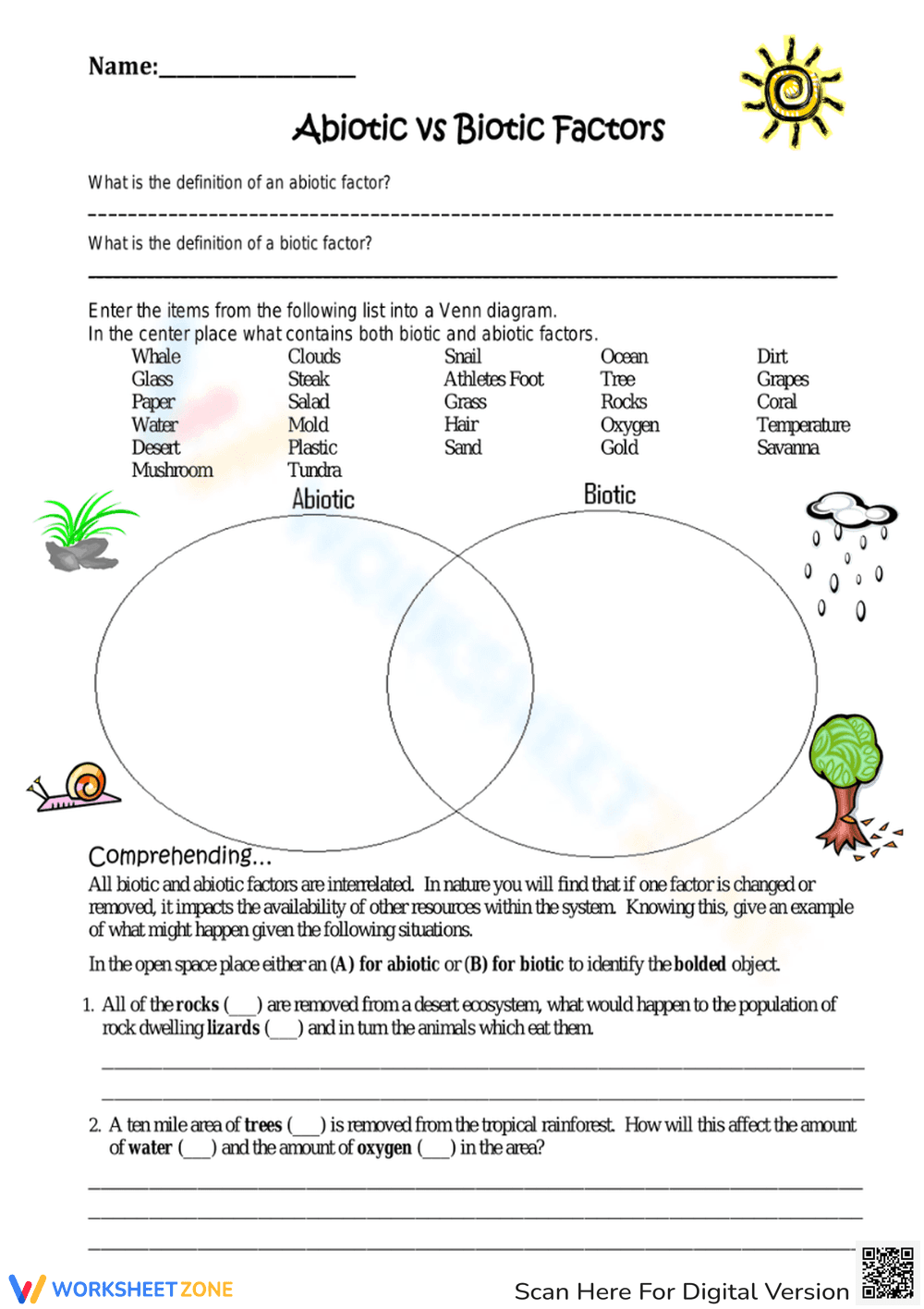
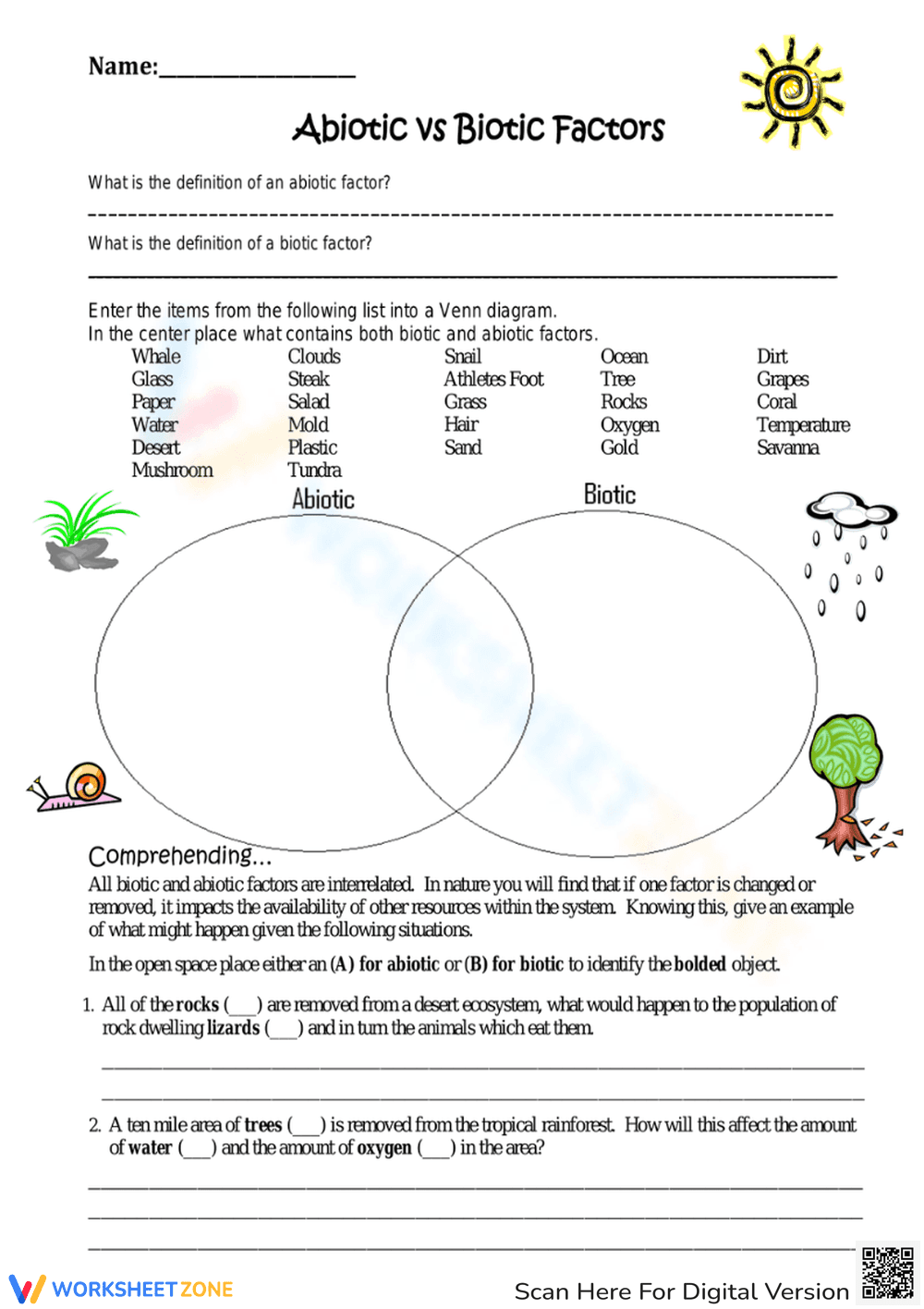
This is an educational worksheet focusing on the distinction between abiotic and biotic factors. It includes definition questions, a Venn diagram activity where students categorize items (like 'whale,' 'clouds,' 'rocks,' 'sand') as abiotic, biotic, or both, and comprehension questions about the impact of removing biotic or abiotic elements from an ecosystem.
Grade Level Suitability:
This worksheet is suitable for grades 5-7. The concepts of abiotic and biotic factors are typically introduced in upper elementary and middle school science. The Venn diagram and comprehension questions require analytical skills appropriate for these grade levels.
Why Use It:
This worksheet reinforces understanding of abiotic and biotic factors in an ecosystem. It encourages critical thinking by requiring students to analyze the relationships between these factors and predict the consequences of environmental changes. It also helps develop vocabulary related to ecology.
How to Use It:
Begin by having students define abiotic and biotic factors. Then, guide them in completing the Venn diagram by categorizing the provided list of items. Finally, students should answer the comprehension questions, placing 'A' or 'B' to identify the bolded objects, and explaining the ecological consequences described in each scenario.
Target Users:
This worksheet is designed for science teachers teaching ecology and ecosystems. It's also beneficial for students in grades 5-7 learning about the interaction between living and non-living elements in the environment. Homeschooling parents can also use this as a supplementary material.
This is an educational worksheet focusing on the distinction between abiotic and biotic factors. It includes definition questions, a Venn diagram activity where students categorize items (like 'whale,' 'clouds,' 'rocks,' 'sand') as abiotic, biotic, or both, and comprehension questions about the impact of removing biotic or abiotic elements from an ecosystem.
Grade Level Suitability:
This worksheet is suitable for grades 5-7. The concepts of abiotic and biotic factors are typically introduced in upper elementary and middle school science. The Venn diagram and comprehension questions require analytical skills appropriate for these grade levels.
Why Use It:
This worksheet reinforces understanding of abiotic and biotic factors in an ecosystem. It encourages critical thinking by requiring students to analyze the relationships between these factors and predict the consequences of environmental changes. It also helps develop vocabulary related to ecology.
How to Use It:
Begin by having students define abiotic and biotic factors. Then, guide them in completing the Venn diagram by categorizing the provided list of items. Finally, students should answer the comprehension questions, placing 'A' or 'B' to identify the bolded objects, and explaining the ecological consequences described in each scenario.
Target Users:
This worksheet is designed for science teachers teaching ecology and ecosystems. It's also beneficial for students in grades 5-7 learning about the interaction between living and non-living elements in the environment. Homeschooling parents can also use this as a supplementary material.


