


























0
Views
0
Downloads

0 Likes
Abiotic vs Biotic: Understanding Ecosystem Components
0 Views
0 Downloads
Paste this activity's link or code into your existing LMS (Google Classroom, Canvas, Teams, Schoology, Moodle, etc.).
Students can open and work on the activity right away, with no student login required.
You'll still be able to track student progress and results from your teacher account.
Information
Description
What It Is:
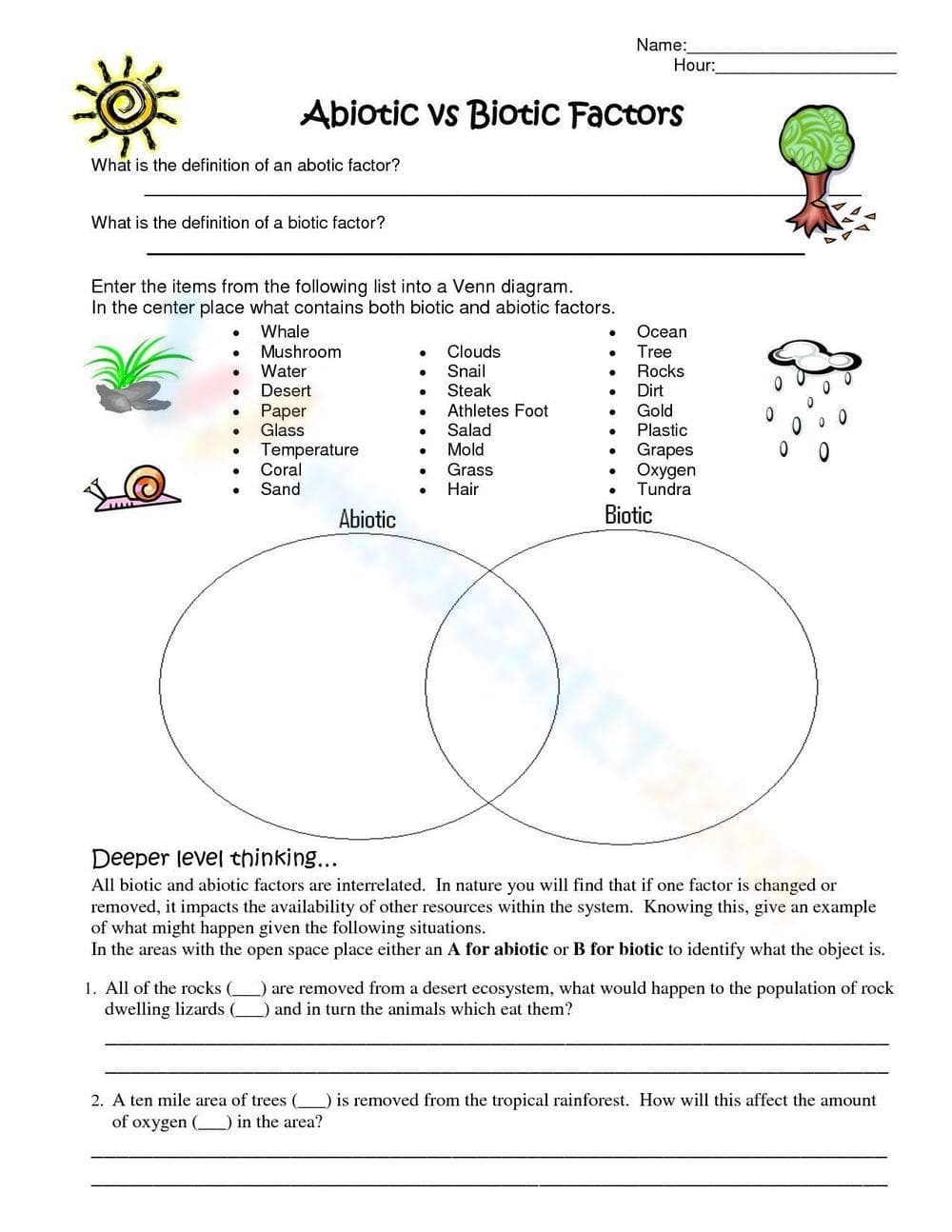
This is a science worksheet focusing on abiotic and biotic factors. It begins with defining abiotic and biotic factors, followed by a Venn diagram activity where students categorize a list of items (whale, mushroom, water, desert, paper, glass, temperature, coral, sand, clouds, snail, steak, athlete's foot, salad, mold, grass, hair, ocean, tree, rocks, dirt, gold, plastic, grapes, oxygen, tundra) into abiotic, biotic, or both. It ends with deeper level thinking questions about how removing abiotic or biotic factors affects an ecosystem.
Grade Level Suitability:
This worksheet is suitable for grades 5-7. It introduces the concepts of abiotic and biotic factors and requires students to classify items based on their understanding. The 'deeper level thinking' questions require some understanding of ecosystems and food chains, making it appropriate for middle school.
Why Use It:
This worksheet helps students learn and differentiate between abiotic and biotic factors in an ecosystem. The Venn diagram provides a visual way to organize and understand these concepts. The deeper level thinking questions encourage critical thinking about the interconnectedness of ecosystems.
How to Use It:
First, students should define abiotic and biotic factors in the spaces provided. Next, they should carefully consider each item in the list and write it in the appropriate section of the Venn diagram: abiotic, biotic, or in the center where the circles overlap if it's both. Finally, they should answer the deeper level thinking questions using their knowledge of ecosystems.
Target Users:
This worksheet is designed for science students in upper elementary or middle school who are learning about ecosystems and the environment. It is also suitable for homeschooling environments covering life science topics.
This is a science worksheet focusing on abiotic and biotic factors. It begins with defining abiotic and biotic factors, followed by a Venn diagram activity where students categorize a list of items (whale, mushroom, water, desert, paper, glass, temperature, coral, sand, clouds, snail, steak, athlete's foot, salad, mold, grass, hair, ocean, tree, rocks, dirt, gold, plastic, grapes, oxygen, tundra) into abiotic, biotic, or both. It ends with deeper level thinking questions about how removing abiotic or biotic factors affects an ecosystem.
Grade Level Suitability:
This worksheet is suitable for grades 5-7. It introduces the concepts of abiotic and biotic factors and requires students to classify items based on their understanding. The 'deeper level thinking' questions require some understanding of ecosystems and food chains, making it appropriate for middle school.
Why Use It:
This worksheet helps students learn and differentiate between abiotic and biotic factors in an ecosystem. The Venn diagram provides a visual way to organize and understand these concepts. The deeper level thinking questions encourage critical thinking about the interconnectedness of ecosystems.
How to Use It:
First, students should define abiotic and biotic factors in the spaces provided. Next, they should carefully consider each item in the list and write it in the appropriate section of the Venn diagram: abiotic, biotic, or in the center where the circles overlap if it's both. Finally, they should answer the deeper level thinking questions using their knowledge of ecosystems.
Target Users:
This worksheet is designed for science students in upper elementary or middle school who are learning about ecosystems and the environment. It is also suitable for homeschooling environments covering life science topics.


