


























1 / 5
0
Views
0
Downloads

0.0
0
0 Likes
Activity on Evidence of Evolution
0 Views
0 Downloads
Paste this activity's link or code into your existing LMS (Google Classroom, Canvas, Teams, Schoology, Moodle, etc.).
Students can open and work on the activity right away, with no student login required.
You'll still be able to track student progress and results from your teacher account.
Information
Description
What It Is:
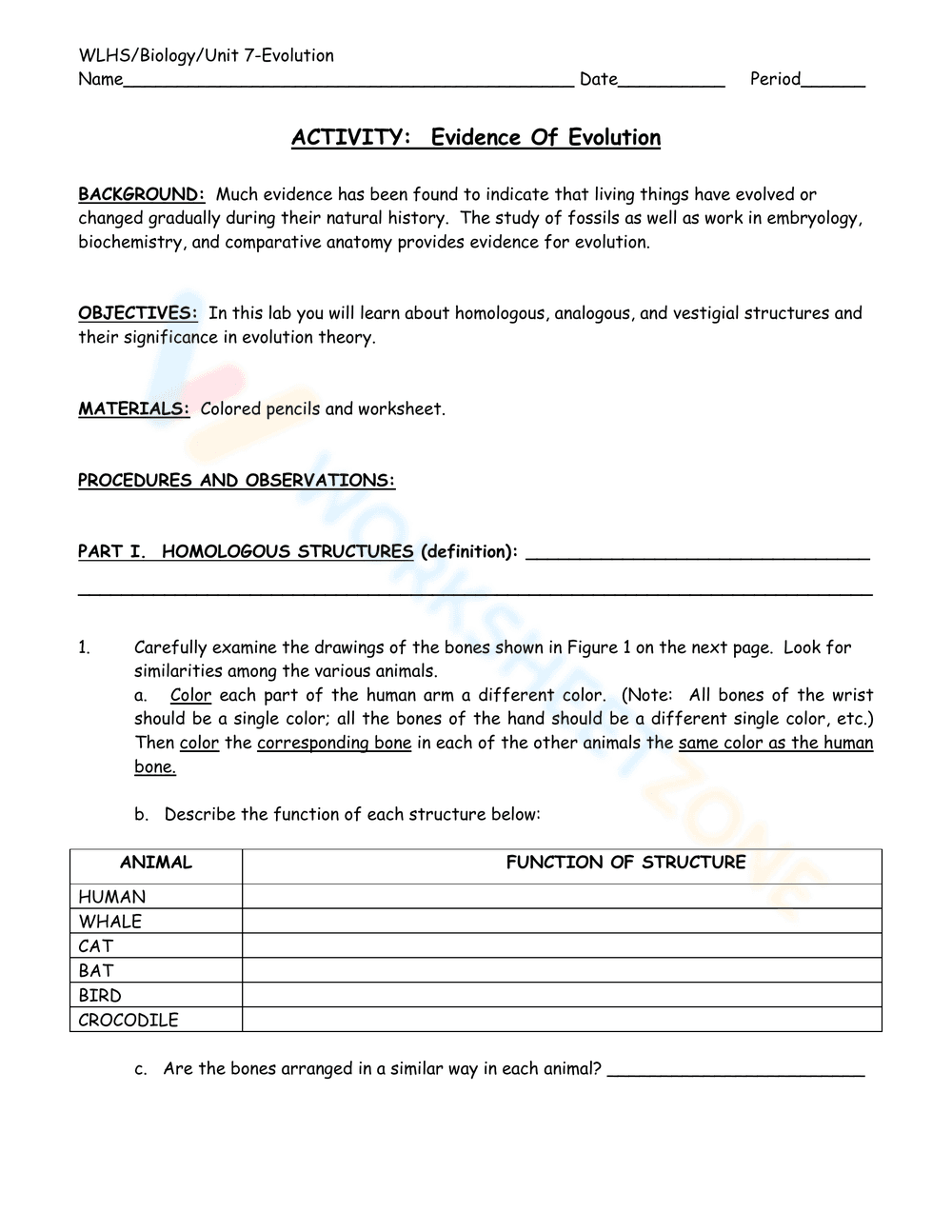
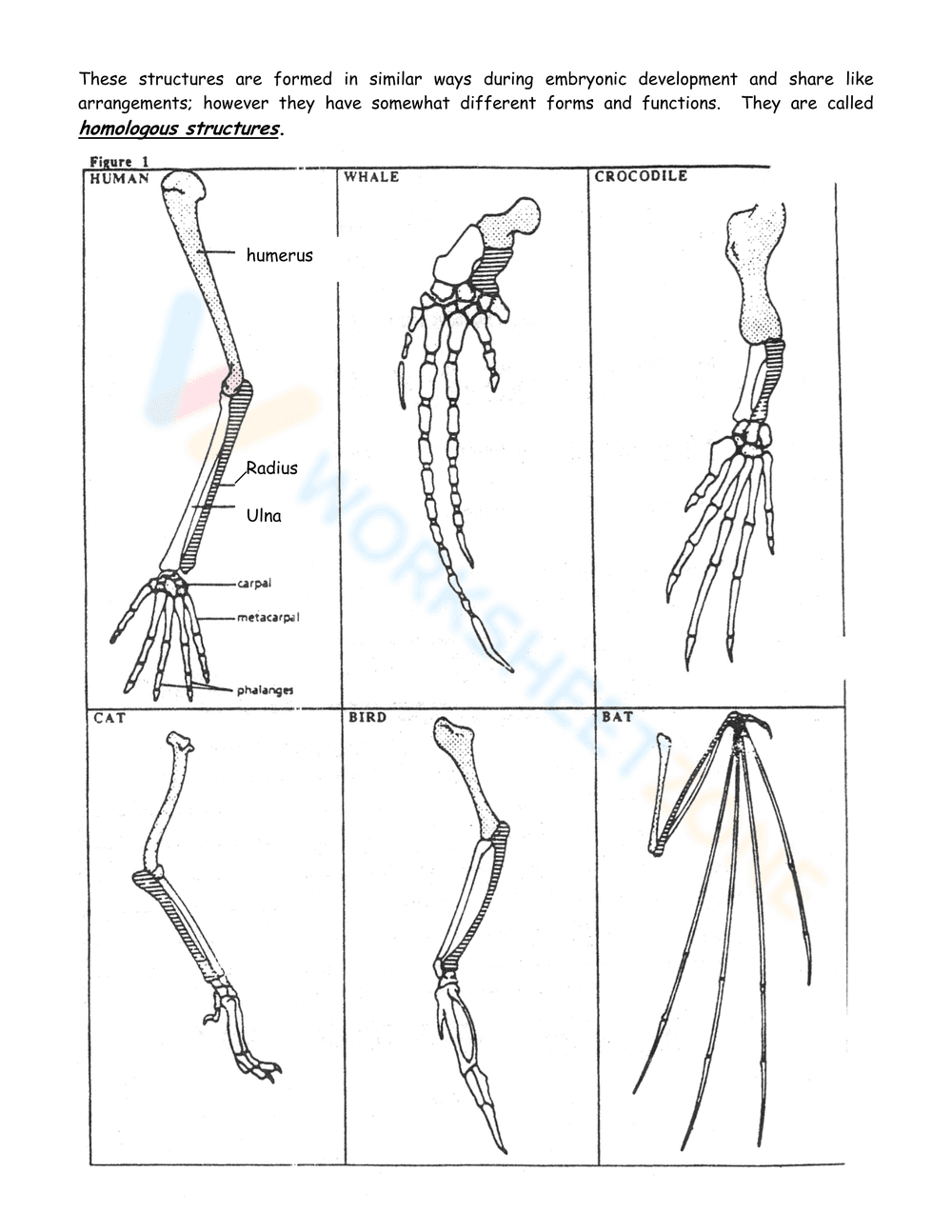
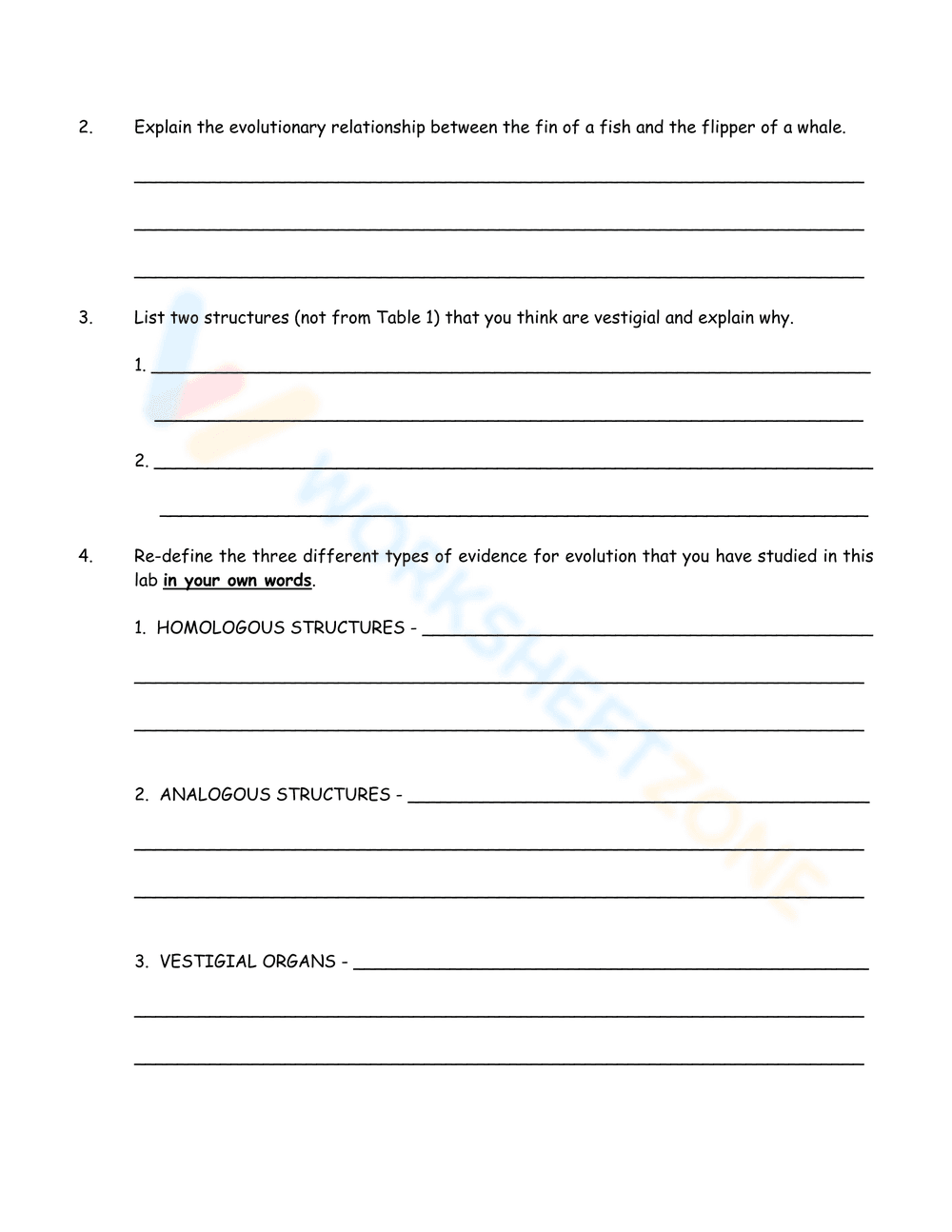
This is a biology worksheet titled 'Evidence of Evolution.' It includes background information on how living things have evolved, mentioning fossils, embryology, biochemistry, and comparative anatomy. The objectives state students will learn about homologous, analogous, and vestigial structures. The activity focuses on homologous structures, requiring students to color different parts of the human arm and corresponding bones in other animals (whale, cat, bat, bird, crocodile) with matching colors. Students then describe the function of each structure in each animal and answer whether the bones are arranged in a similar way.
Grade Level Suitability:
This worksheet is suitable for high school biology (Grades 9-12). The concepts of evolution, homologous structures, and comparative anatomy are typically covered at this level. The activity requires critical thinking and analysis of anatomical structures, which is appropriate for high school students.
Why Use It:
This worksheet helps students understand the concept of homologous structures as evidence of evolution. It allows them to visually compare bone structures across different species and understand how these structures have evolved to serve different functions. It reinforces the understanding of evolutionary relationships between organisms.
How to Use It:
Students should first read the background information and objectives. Then, they need to find 'Figure 1' (mentioned in the worksheet, but not included in this image) which likely contains diagrams of the bones of the listed animals. Using colored pencils, they should color each part of the human arm a different color and then color the corresponding bones in the other animals the same color as the human arm. Next, they should describe the function of each structure in the provided table. Finally, they should answer the question about the arrangement of bones.
Target Users:
The target users are high school biology students and teachers. It is also beneficial for anyone studying evolutionary biology or comparative anatomy.
This is a biology worksheet titled 'Evidence of Evolution.' It includes background information on how living things have evolved, mentioning fossils, embryology, biochemistry, and comparative anatomy. The objectives state students will learn about homologous, analogous, and vestigial structures. The activity focuses on homologous structures, requiring students to color different parts of the human arm and corresponding bones in other animals (whale, cat, bat, bird, crocodile) with matching colors. Students then describe the function of each structure in each animal and answer whether the bones are arranged in a similar way.
Grade Level Suitability:
This worksheet is suitable for high school biology (Grades 9-12). The concepts of evolution, homologous structures, and comparative anatomy are typically covered at this level. The activity requires critical thinking and analysis of anatomical structures, which is appropriate for high school students.
Why Use It:
This worksheet helps students understand the concept of homologous structures as evidence of evolution. It allows them to visually compare bone structures across different species and understand how these structures have evolved to serve different functions. It reinforces the understanding of evolutionary relationships between organisms.
How to Use It:
Students should first read the background information and objectives. Then, they need to find 'Figure 1' (mentioned in the worksheet, but not included in this image) which likely contains diagrams of the bones of the listed animals. Using colored pencils, they should color each part of the human arm a different color and then color the corresponding bones in the other animals the same color as the human arm. Next, they should describe the function of each structure in the provided table. Finally, they should answer the question about the arrangement of bones.
Target Users:
The target users are high school biology students and teachers. It is also beneficial for anyone studying evolutionary biology or comparative anatomy.


