


























1 / 2
0
Views
0
Downloads

0.0
0
0 Likes
Understanding Assertive Communication Skills
0 Views
0 Downloads
Paste this activity's link or code into your existing LMS (Google Classroom, Canvas, Teams, Schoology, Moodle, etc.).
Students can open and work on the activity right away, with no student login required.
You'll still be able to track student progress and results from your teacher account.
Information
Description
What It Is:
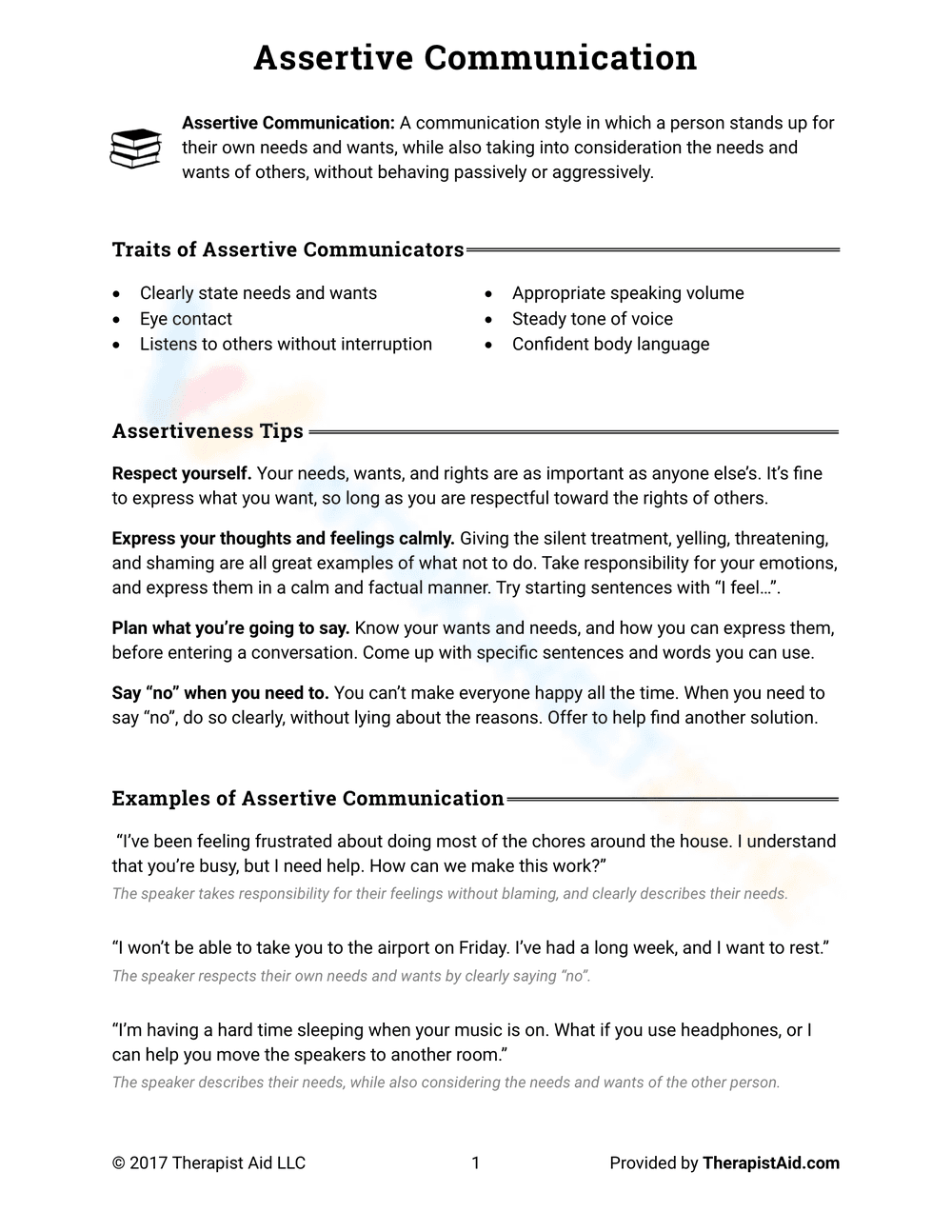
This is an educational worksheet about assertive communication. It includes a definition of assertive communication, a list of traits of assertive communicators (e.g., clearly stating needs, eye contact, appropriate speaking volume), and assertiveness tips (e.g., respect yourself, express thoughts calmly, plan what you're going to say, say 'no'). The worksheet also provides examples of assertive communication phrases.
Grade Level Suitability:
This worksheet is suitable for late middle school (grades 7-8) through high school (grades 9-12) and even adults. The concepts are relatively complex and require a certain level of social and emotional maturity to understand and apply.
Why Use It:
This worksheet helps individuals learn about assertive communication, understand its benefits, and develop the skills to communicate assertively. It promotes self-respect, clear communication, and healthy boundaries. It provides practical tips and examples that can be used in real-life situations.
How to Use It:
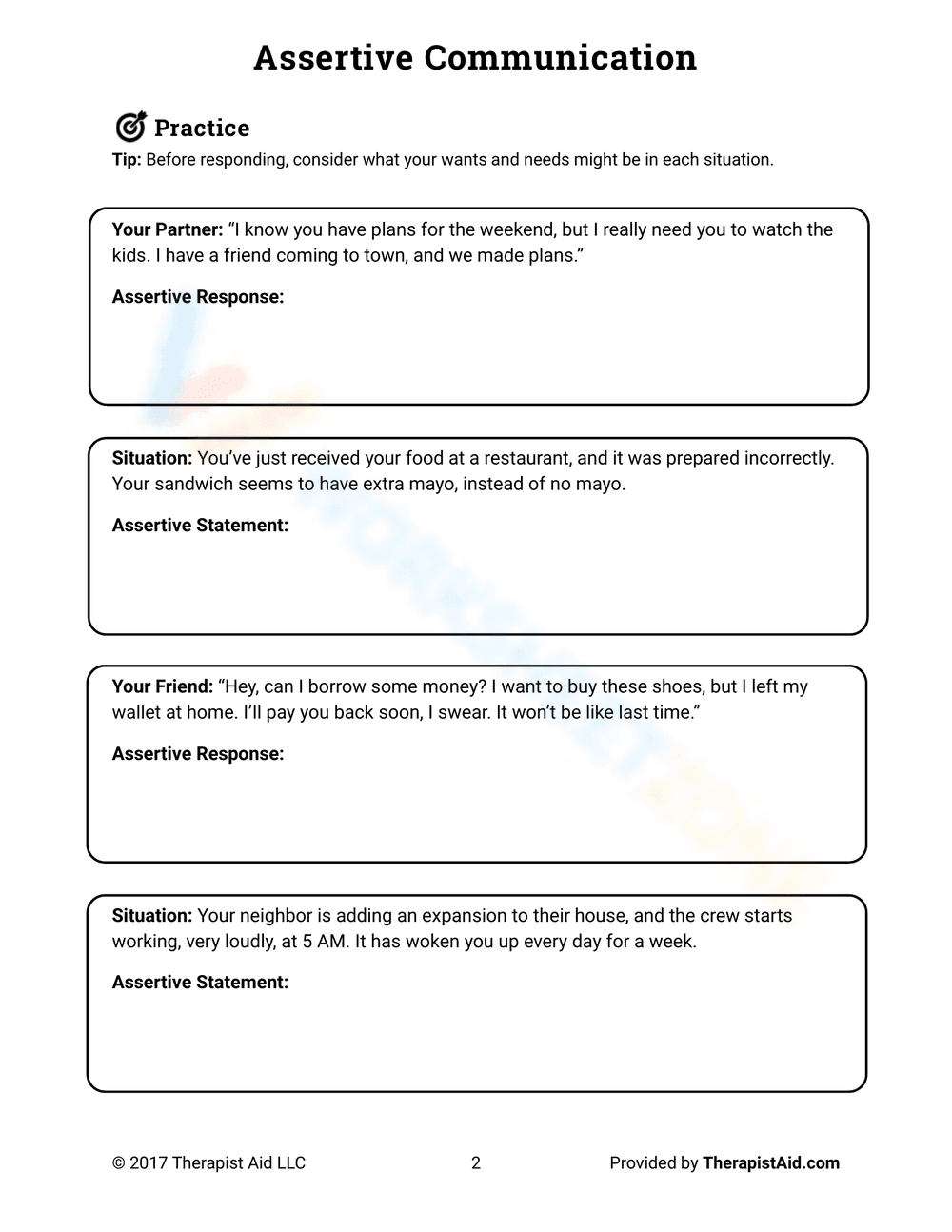
Read through the definition and traits of assertive communicators. Study the assertiveness tips and consider how they can be applied in different situations. Analyze the examples of assertive communication and practice using similar phrases. Discuss the concepts and examples with others to deepen understanding.
Target Users:
This worksheet is beneficial for students, teenagers, young adults, and adults who want to improve their communication skills, build confidence, and establish healthy relationships. It's also helpful for individuals struggling with passive or aggressive communication styles.
This is an educational worksheet about assertive communication. It includes a definition of assertive communication, a list of traits of assertive communicators (e.g., clearly stating needs, eye contact, appropriate speaking volume), and assertiveness tips (e.g., respect yourself, express thoughts calmly, plan what you're going to say, say 'no'). The worksheet also provides examples of assertive communication phrases.
Grade Level Suitability:
This worksheet is suitable for late middle school (grades 7-8) through high school (grades 9-12) and even adults. The concepts are relatively complex and require a certain level of social and emotional maturity to understand and apply.
Why Use It:
This worksheet helps individuals learn about assertive communication, understand its benefits, and develop the skills to communicate assertively. It promotes self-respect, clear communication, and healthy boundaries. It provides practical tips and examples that can be used in real-life situations.
How to Use It:
Read through the definition and traits of assertive communicators. Study the assertiveness tips and consider how they can be applied in different situations. Analyze the examples of assertive communication and practice using similar phrases. Discuss the concepts and examples with others to deepen understanding.
Target Users:
This worksheet is beneficial for students, teenagers, young adults, and adults who want to improve their communication skills, build confidence, and establish healthy relationships. It's also helpful for individuals struggling with passive or aggressive communication styles.


