


























0
Views
0
Downloads

0.0
0
0 Likes
Behavior Contract Worksheet
0 Views
0 Downloads
Paste this activity's link or code into your existing LMS (Google Classroom, Canvas, Teams, Schoology, Moodle, etc.).
Students can open and work on the activity right away, with no student login required.
You'll still be able to track student progress and results from your teacher account.
Information
Description
What It Is:
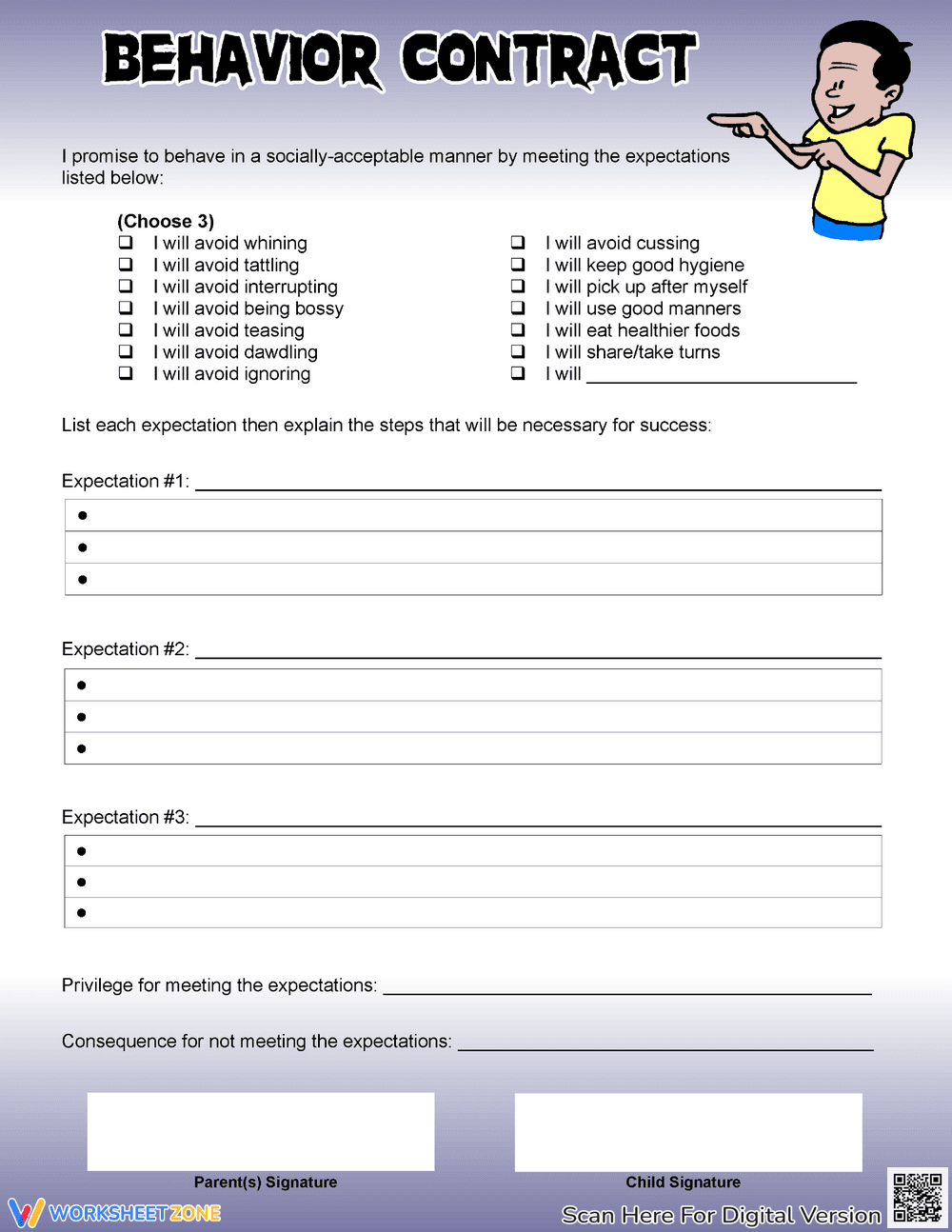
This is a behavior contract worksheet. It starts with a promise to behave in a socially acceptable manner. It has a checklist of behaviors like 'I will avoid whining,' 'I will avoid tattling,' 'I will avoid cussing,' 'I will keep good hygiene' where the child chooses three. It then has space to list three expectations and explain the steps for success. It includes space to write a privilege for meeting expectations and a consequence for not meeting expectations, followed by spaces for parent and child signatures.
Grade Level Suitability:
This worksheet is suitable for grades 1-5. The language is simple and the concepts are easily understandable for elementary-aged children. The need to choose only three behaviors makes it manageable for younger students, while the expectation-setting section allows for more complex thought for older elementary students.
Why Use It:
This worksheet helps children take ownership of their behavior by actively participating in setting expectations and consequences. It promotes self-regulation, social skills, and responsibility. It also facilitates communication between children and their parents or teachers regarding behavioral goals.
How to Use It:
First, have the child choose three behaviors from the checklist that they want to improve. Next, work together to define three specific expectations and the steps needed to meet them. Then, collaboratively decide on a privilege for meeting the expectations and a consequence for not meeting them. Finally, both the parent/teacher and the child should sign the contract. Review the contract regularly and adjust as needed.
Target Users:
This worksheet is beneficial for parents, teachers, counselors, or therapists working with children who need support in improving their behavior. It's also helpful for children who are ready to take responsibility for their actions and work towards specific behavioral goals.
This is a behavior contract worksheet. It starts with a promise to behave in a socially acceptable manner. It has a checklist of behaviors like 'I will avoid whining,' 'I will avoid tattling,' 'I will avoid cussing,' 'I will keep good hygiene' where the child chooses three. It then has space to list three expectations and explain the steps for success. It includes space to write a privilege for meeting expectations and a consequence for not meeting expectations, followed by spaces for parent and child signatures.
Grade Level Suitability:
This worksheet is suitable for grades 1-5. The language is simple and the concepts are easily understandable for elementary-aged children. The need to choose only three behaviors makes it manageable for younger students, while the expectation-setting section allows for more complex thought for older elementary students.
Why Use It:
This worksheet helps children take ownership of their behavior by actively participating in setting expectations and consequences. It promotes self-regulation, social skills, and responsibility. It also facilitates communication between children and their parents or teachers regarding behavioral goals.
How to Use It:
First, have the child choose three behaviors from the checklist that they want to improve. Next, work together to define three specific expectations and the steps needed to meet them. Then, collaboratively decide on a privilege for meeting the expectations and a consequence for not meeting them. Finally, both the parent/teacher and the child should sign the contract. Review the contract regularly and adjust as needed.
Target Users:
This worksheet is beneficial for parents, teachers, counselors, or therapists working with children who need support in improving their behavior. It's also helpful for children who are ready to take responsibility for their actions and work towards specific behavioral goals.


