


























0
Views
0
Downloads

0.0
0
0 Likes
Benefits of Terracing Worksheet
0 Views
0 Downloads
Paste this activity's link or code into your existing LMS (Google Classroom, Canvas, Teams, Schoology, Moodle, etc.).
Students can open and work on the activity right away, with no student login required.
You'll still be able to track student progress and results from your teacher account.
Information
Description
What It Is:
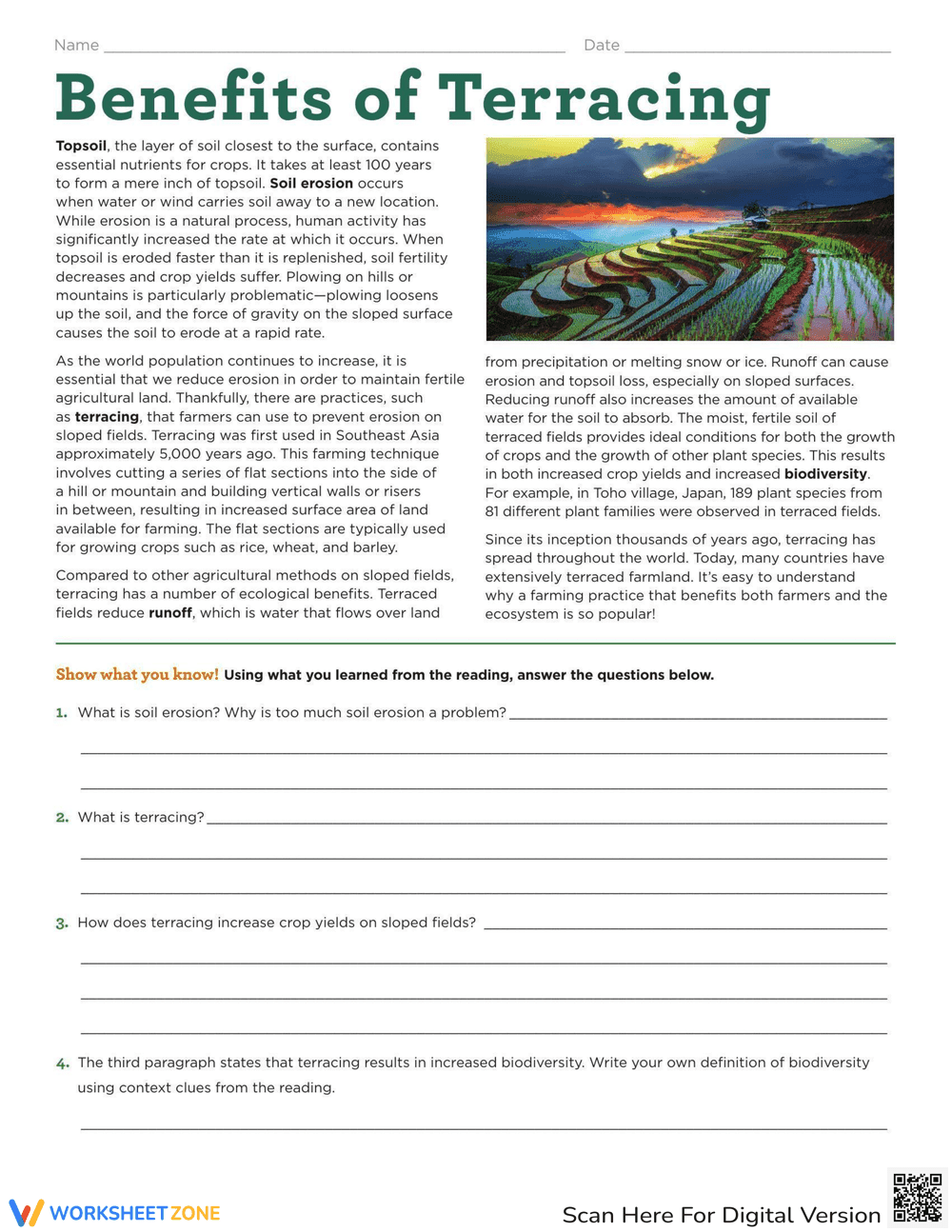
This is an educational worksheet titled 'Benefits of Terracing.' It includes an informational text explaining terracing, its history, how it works, and its benefits, accompanied by a color photograph of terraced fields. The worksheet also includes four comprehension questions designed to assess the student's understanding of the reading material, asking about soil erosion, the definition of terracing, how terracing increases crop yields, and how it increases biodiversity.
Grade Level Suitability:
This worksheet appears suitable for grades 5-7. The reading complexity and the comprehension questions require a basic understanding of environmental science concepts and the ability to extract information from a text. The questions also require students to formulate their own definitions based on context clues, which is a higher-level thinking skill.
Why Use It:
This worksheet helps students learn about terracing as a sustainable agricultural practice. It promotes reading comprehension skills, critical thinking, and vocabulary development. It also teaches about environmental conservation, soil erosion prevention, and the importance of biodiversity in agriculture.
How to Use It:
First, have students read the informational text about terracing carefully. Then, instruct them to answer the comprehension questions based on what they learned from the reading. Encourage them to use context clues from the text to define biodiversity. The worksheet can be used for individual work, group discussions, or as a homework assignment.
Target Users:
This worksheet is ideal for elementary and middle school students studying environmental science, agriculture, geography, or reading comprehension. It's also suitable for teachers looking for engaging and informative resources to supplement their lessons on sustainable farming practices.
This is an educational worksheet titled 'Benefits of Terracing.' It includes an informational text explaining terracing, its history, how it works, and its benefits, accompanied by a color photograph of terraced fields. The worksheet also includes four comprehension questions designed to assess the student's understanding of the reading material, asking about soil erosion, the definition of terracing, how terracing increases crop yields, and how it increases biodiversity.
Grade Level Suitability:
This worksheet appears suitable for grades 5-7. The reading complexity and the comprehension questions require a basic understanding of environmental science concepts and the ability to extract information from a text. The questions also require students to formulate their own definitions based on context clues, which is a higher-level thinking skill.
Why Use It:
This worksheet helps students learn about terracing as a sustainable agricultural practice. It promotes reading comprehension skills, critical thinking, and vocabulary development. It also teaches about environmental conservation, soil erosion prevention, and the importance of biodiversity in agriculture.
How to Use It:
First, have students read the informational text about terracing carefully. Then, instruct them to answer the comprehension questions based on what they learned from the reading. Encourage them to use context clues from the text to define biodiversity. The worksheet can be used for individual work, group discussions, or as a homework assignment.
Target Users:
This worksheet is ideal for elementary and middle school students studying environmental science, agriculture, geography, or reading comprehension. It's also suitable for teachers looking for engaging and informative resources to supplement their lessons on sustainable farming practices.


