


























0
Views
0
Downloads

0 Likes
Biome Table: Abiotic and Biotic Factors
0 Views
0 Downloads
Paste this activity's link or code into your existing LMS (Google Classroom, Canvas, Teams, Schoology, Moodle, etc.).
Students can open and work on the activity right away, with no student login required.
You'll still be able to track student progress and results from your teacher account.
Information
Description
What It Is:
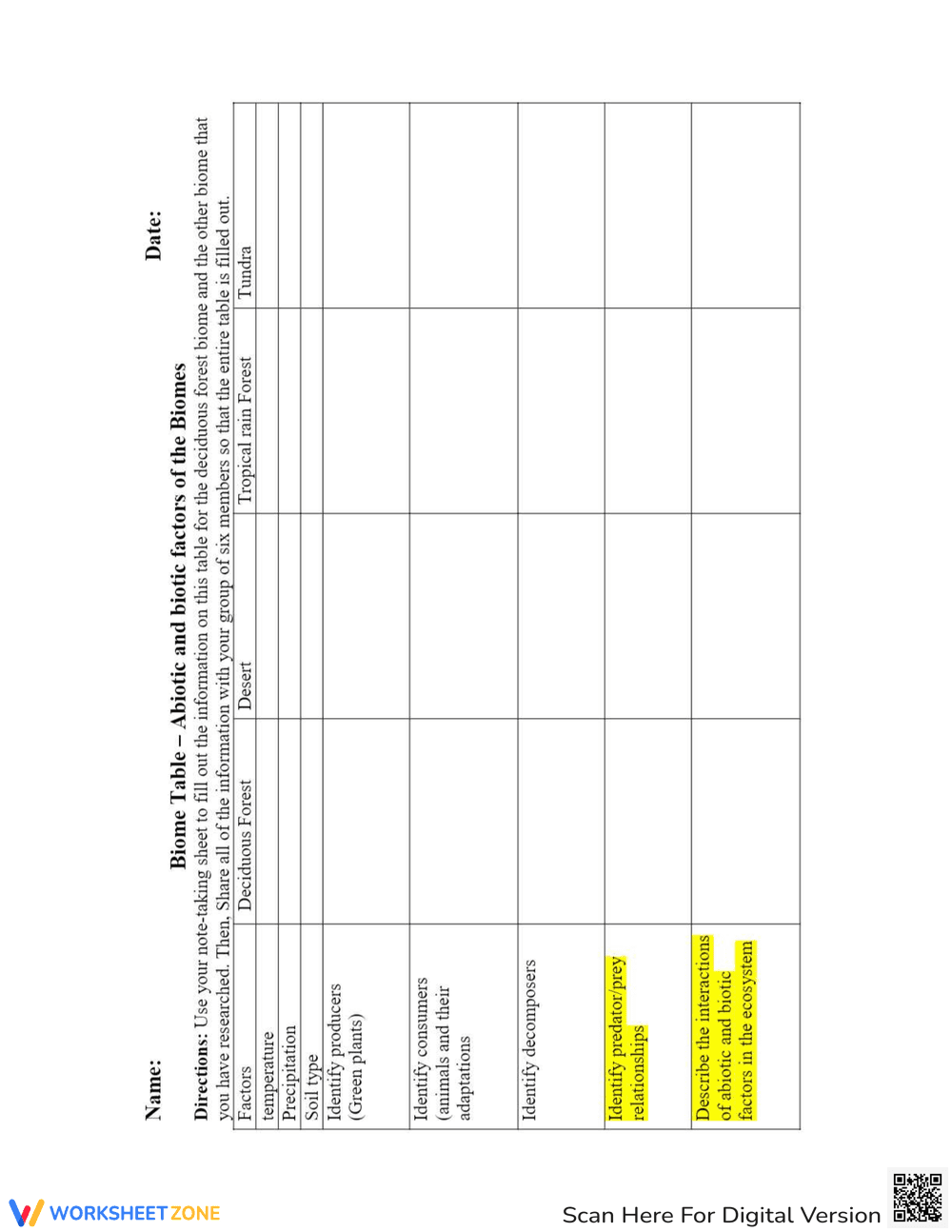
This is a science worksheet designed to help students explore abiotic and biotic factors within different biomes. It features a table where students can record information about temperature, precipitation, soil type, producers, consumers, decomposers, predator-prey relationships, and interactions of abiotic and biotic factors for the Deciduous Forest, Desert, Tropical Rain Forest, and Tundra biomes.
Grade Level Suitability:
This worksheet is suitable for grades 6-9. The content requires understanding of ecological concepts such as biomes, food webs, and the roles of different organisms within an ecosystem, which are typically introduced in middle school science curricula.
Why Use It:
This worksheet helps students organize information about different biomes and understand the relationship between abiotic and biotic factors. It promotes research skills, critical thinking, and collaborative learning as students share information with their group. It also allows them to compare and contrast different biomes.
How to Use It:
Students should use their notes and research to fill in the table for each biome. They should identify specific examples for each factor, such as typical temperature ranges, average precipitation, common soil types, examples of producers, consumers, and decomposers, and describe predator-prey relationships. After completing their individual tables, they should share their findings with their group to fill in any missing information.
Target Users:
This worksheet is designed for middle school science students studying ecology and biomes. It is also useful for teachers who want to provide a structured activity for students to research and compare different ecosystems.
This is a science worksheet designed to help students explore abiotic and biotic factors within different biomes. It features a table where students can record information about temperature, precipitation, soil type, producers, consumers, decomposers, predator-prey relationships, and interactions of abiotic and biotic factors for the Deciduous Forest, Desert, Tropical Rain Forest, and Tundra biomes.
Grade Level Suitability:
This worksheet is suitable for grades 6-9. The content requires understanding of ecological concepts such as biomes, food webs, and the roles of different organisms within an ecosystem, which are typically introduced in middle school science curricula.
Why Use It:
This worksheet helps students organize information about different biomes and understand the relationship between abiotic and biotic factors. It promotes research skills, critical thinking, and collaborative learning as students share information with their group. It also allows them to compare and contrast different biomes.
How to Use It:
Students should use their notes and research to fill in the table for each biome. They should identify specific examples for each factor, such as typical temperature ranges, average precipitation, common soil types, examples of producers, consumers, and decomposers, and describe predator-prey relationships. After completing their individual tables, they should share their findings with their group to fill in any missing information.
Target Users:
This worksheet is designed for middle school science students studying ecology and biomes. It is also useful for teachers who want to provide a structured activity for students to research and compare different ecosystems.


