


























0
Views
0
Downloads

0.0
0
0 Likes
Biotic and Abiotic Factors: Biodiversity Worksheet
0 Views
0 Downloads
Paste this activity's link or code into your existing LMS (Google Classroom, Canvas, Teams, Schoology, Moodle, etc.).
Students can open and work on the activity right away, with no student login required.
You'll still be able to track student progress and results from your teacher account.
Information
Description
What It Is:
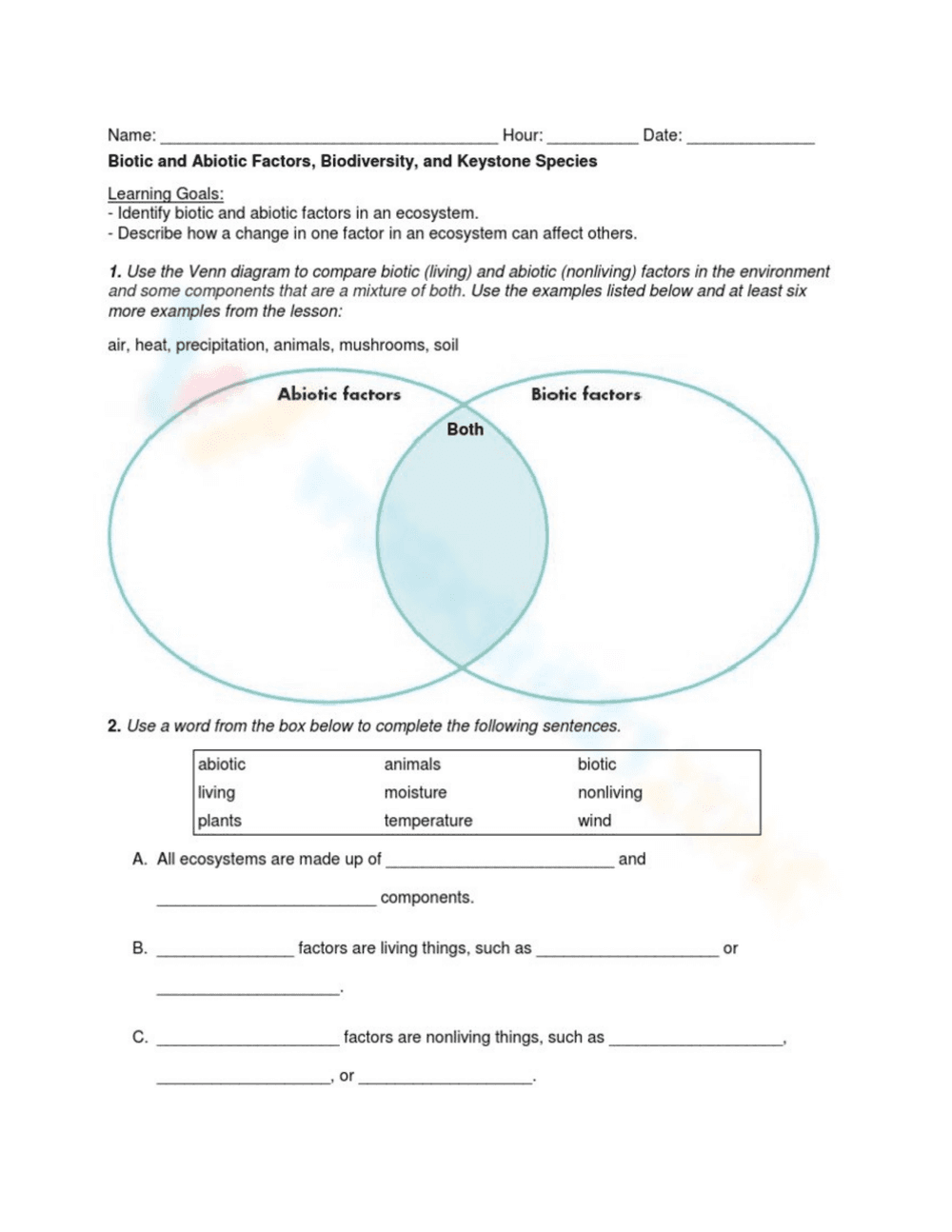
This is an educational worksheet focusing on biotic and abiotic factors, biodiversity, and keystone species. It includes a Venn diagram activity where students compare biotic and abiotic factors using provided examples like air, heat, precipitation, animals, mushrooms, and soil, and adding their own. The worksheet also contains fill-in-the-blank sentences using a word bank of terms such as abiotic, animals, biotic, living, moisture, nonliving, plants, temperature, and wind to reinforce understanding of ecosystem components.
Grade Level Suitability:
This worksheet is suitable for grades 6-8, potentially adaptable for high school review. The concepts of biotic and abiotic factors are foundational in middle school science, and the Venn diagram and fill-in-the-blank activities help solidify understanding at this level.
Why Use It:
This worksheet helps students identify and differentiate between biotic and abiotic factors in an ecosystem. It promotes critical thinking through the Venn diagram activity and reinforces vocabulary related to ecosystem components. The worksheet also introduces the concepts of biodiversity and keystone species.
How to Use It:
First, students should complete the Venn diagram by categorizing the provided examples and adding their own. Then, they should use the word bank to fill in the blanks in the sentences, demonstrating their understanding of the relationship between ecosystem components and biotic/abiotic factors.
Target Users:
This worksheet is designed for middle school science students learning about ecosystems and the factors that influence them. It can also be used as a review tool for high school students.
This is an educational worksheet focusing on biotic and abiotic factors, biodiversity, and keystone species. It includes a Venn diagram activity where students compare biotic and abiotic factors using provided examples like air, heat, precipitation, animals, mushrooms, and soil, and adding their own. The worksheet also contains fill-in-the-blank sentences using a word bank of terms such as abiotic, animals, biotic, living, moisture, nonliving, plants, temperature, and wind to reinforce understanding of ecosystem components.
Grade Level Suitability:
This worksheet is suitable for grades 6-8, potentially adaptable for high school review. The concepts of biotic and abiotic factors are foundational in middle school science, and the Venn diagram and fill-in-the-blank activities help solidify understanding at this level.
Why Use It:
This worksheet helps students identify and differentiate between biotic and abiotic factors in an ecosystem. It promotes critical thinking through the Venn diagram activity and reinforces vocabulary related to ecosystem components. The worksheet also introduces the concepts of biodiversity and keystone species.
How to Use It:
First, students should complete the Venn diagram by categorizing the provided examples and adding their own. Then, they should use the word bank to fill in the blanks in the sentences, demonstrating their understanding of the relationship between ecosystem components and biotic/abiotic factors.
Target Users:
This worksheet is designed for middle school science students learning about ecosystems and the factors that influence them. It can also be used as a review tool for high school students.


