


























0
Views
0
Downloads

0.0
0
0 Likes
Biotic and Abiotic Factors Poster Worksheet
0 Views
0 Downloads
Paste this activity's link or code into your existing LMS (Google Classroom, Canvas, Teams, Schoology, Moodle, etc.).
Students can open and work on the activity right away, with no student login required.
You'll still be able to track student progress and results from your teacher account.
Information
Description
What It Is:
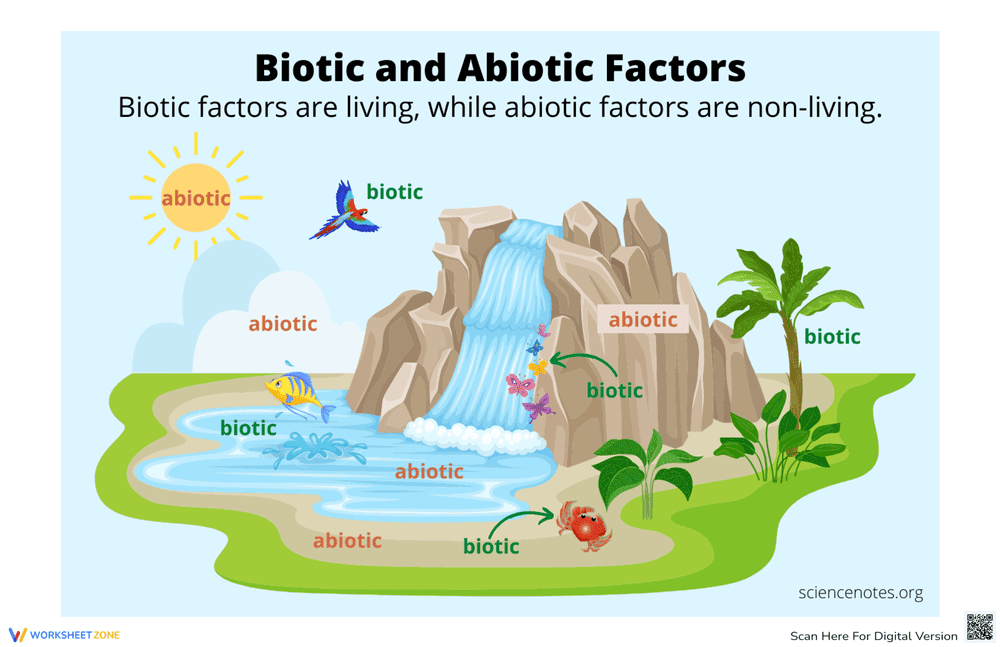
This is an educational worksheet illustrating biotic and abiotic factors in an ecosystem. It defines biotic factors as living and abiotic factors as non-living. The worksheet features a colorful illustration of a natural environment including a waterfall, plants, animals (like a bird, fish, and crab), the sun, and water. Each element in the picture is labeled as either 'biotic' or 'abiotic'.
Grade Level Suitability:
This worksheet is suitable for grades 2-5. The concepts are introduced in a simple, visually engaging manner. The vocabulary is straightforward, making it accessible to younger learners while still providing a foundational understanding for older elementary students.
Why Use It:
This worksheet helps students understand the difference between living (biotic) and non-living (abiotic) components of an ecosystem. It promotes visual learning and reinforces the concept through labeling and association with familiar elements of nature. It encourages observation and critical thinking about the environment.
How to Use It:
Use the worksheet as an introduction to the concepts of biotic and abiotic factors. Students can review the definitions at the top and then identify the labeled elements in the illustration. The worksheet can be used for discussion, independent practice, or as a visual aid during a lesson on ecosystems. Students could also be asked to provide additional examples of biotic and abiotic factors not shown in the image.
Target Users:
This worksheet is targeted towards elementary school students learning about ecosystems, life science, and the environment. It's also useful for teachers looking for visual aids to explain the difference between biotic and abiotic factors. Homeschooling parents can use it as part of their science curriculum.
This is an educational worksheet illustrating biotic and abiotic factors in an ecosystem. It defines biotic factors as living and abiotic factors as non-living. The worksheet features a colorful illustration of a natural environment including a waterfall, plants, animals (like a bird, fish, and crab), the sun, and water. Each element in the picture is labeled as either 'biotic' or 'abiotic'.
Grade Level Suitability:
This worksheet is suitable for grades 2-5. The concepts are introduced in a simple, visually engaging manner. The vocabulary is straightforward, making it accessible to younger learners while still providing a foundational understanding for older elementary students.
Why Use It:
This worksheet helps students understand the difference between living (biotic) and non-living (abiotic) components of an ecosystem. It promotes visual learning and reinforces the concept through labeling and association with familiar elements of nature. It encourages observation and critical thinking about the environment.
How to Use It:
Use the worksheet as an introduction to the concepts of biotic and abiotic factors. Students can review the definitions at the top and then identify the labeled elements in the illustration. The worksheet can be used for discussion, independent practice, or as a visual aid during a lesson on ecosystems. Students could also be asked to provide additional examples of biotic and abiotic factors not shown in the image.
Target Users:
This worksheet is targeted towards elementary school students learning about ecosystems, life science, and the environment. It's also useful for teachers looking for visual aids to explain the difference between biotic and abiotic factors. Homeschooling parents can use it as part of their science curriculum.


