


























1 / 2
0
Views
0
Downloads


0.0
0
0 Likes
Calculating Mealtime Insulin
0 Views
0 Downloads
Paste this activity's link or code into your existing LMS (Google Classroom, Canvas, Teams, Schoology, Moodle, etc.).
Students can open and work on the activity right away, with no student login required.
You'll still be able to track student progress and results from your teacher account.
Information
Description
What It Is:
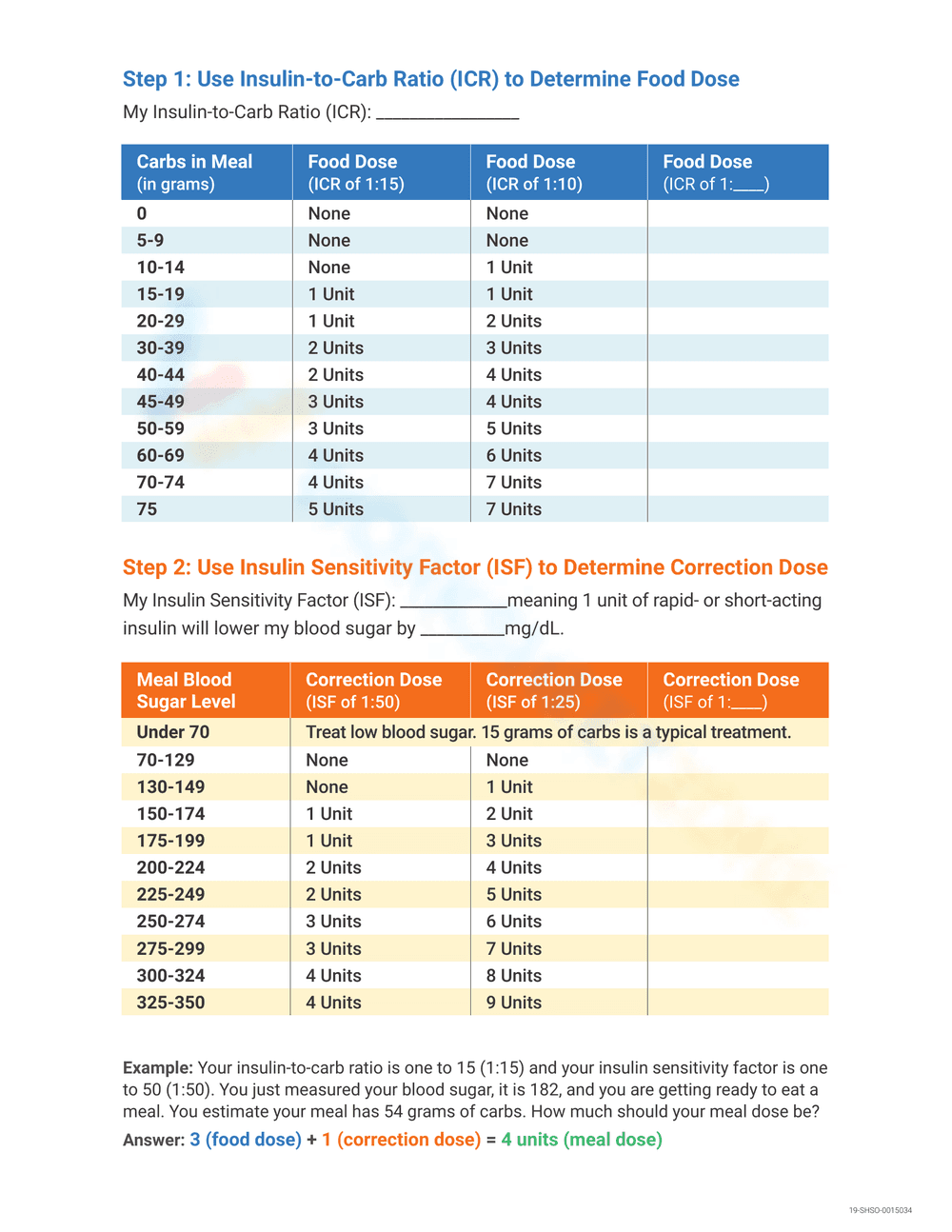
This is an educational worksheet titled 'Calculating My Mealtime Insulin' focused on flexible intensive insulin dosing. It outlines a three-step process: calculating the Food Dose (insulin based on carbs), the Correction Dose (insulin to add to food dose), and the Meal Dose (insulin to take before a meal). Each step includes specific instructions, such as estimating carbs, using insulin-to-carb ratio, testing blood sugar, and adding food and correction doses.
Grade Level Suitability:
This worksheet is not grade-level specific in the traditional sense. It is designed for adults or older teenagers (high school level) who are managing their diabetes and using insulin. The content requires understanding of basic math, carbohydrate counting, and insulin dosing principles.
Why Use It:
This worksheet aims to educate individuals on how to calculate their mealtime insulin doses based on carbohydrate intake and blood sugar levels. It promotes better understanding of flexible insulin dosing, which can lead to improved blood sugar control and overall diabetes management. It provides a structured approach to calculating insulin needs.
How to Use It:
Start by estimating the amount of carbs in your meal. Then, use your insulin-to-carb ratio to calculate the Food Dose. Separately, test your blood sugar and use your insulin sensitivity factor to calculate the Correction Dose. Finally, add the Food Dose and Correction Dose together to determine the total Meal Dose. Inject this amount 15-30 minutes before eating.
Target Users:
This worksheet is intended for individuals with diabetes (Type 1 or Type 2) who are using flexible intensive insulin therapy. It is also suitable for diabetes educators and healthcare professionals to use as a teaching tool for their patients.
This is an educational worksheet titled 'Calculating My Mealtime Insulin' focused on flexible intensive insulin dosing. It outlines a three-step process: calculating the Food Dose (insulin based on carbs), the Correction Dose (insulin to add to food dose), and the Meal Dose (insulin to take before a meal). Each step includes specific instructions, such as estimating carbs, using insulin-to-carb ratio, testing blood sugar, and adding food and correction doses.
Grade Level Suitability:
This worksheet is not grade-level specific in the traditional sense. It is designed for adults or older teenagers (high school level) who are managing their diabetes and using insulin. The content requires understanding of basic math, carbohydrate counting, and insulin dosing principles.
Why Use It:
This worksheet aims to educate individuals on how to calculate their mealtime insulin doses based on carbohydrate intake and blood sugar levels. It promotes better understanding of flexible insulin dosing, which can lead to improved blood sugar control and overall diabetes management. It provides a structured approach to calculating insulin needs.
How to Use It:
Start by estimating the amount of carbs in your meal. Then, use your insulin-to-carb ratio to calculate the Food Dose. Separately, test your blood sugar and use your insulin sensitivity factor to calculate the Correction Dose. Finally, add the Food Dose and Correction Dose together to determine the total Meal Dose. Inject this amount 15-30 minutes before eating.
Target Users:
This worksheet is intended for individuals with diabetes (Type 1 or Type 2) who are using flexible intensive insulin therapy. It is also suitable for diabetes educators and healthcare professionals to use as a teaching tool for their patients.


