


























1 / 2
0
Views
0
Downloads


0 Likes
Causes and Effects of Natural Disasters
0 Views
0 Downloads
Paste this activity's link or code into your existing LMS (Google Classroom, Canvas, Teams, Schoology, Moodle, etc.).
Students can open and work on the activity right away, with no student login required.
You'll still be able to track student progress and results from your teacher account.
Information
Description
What It Is:
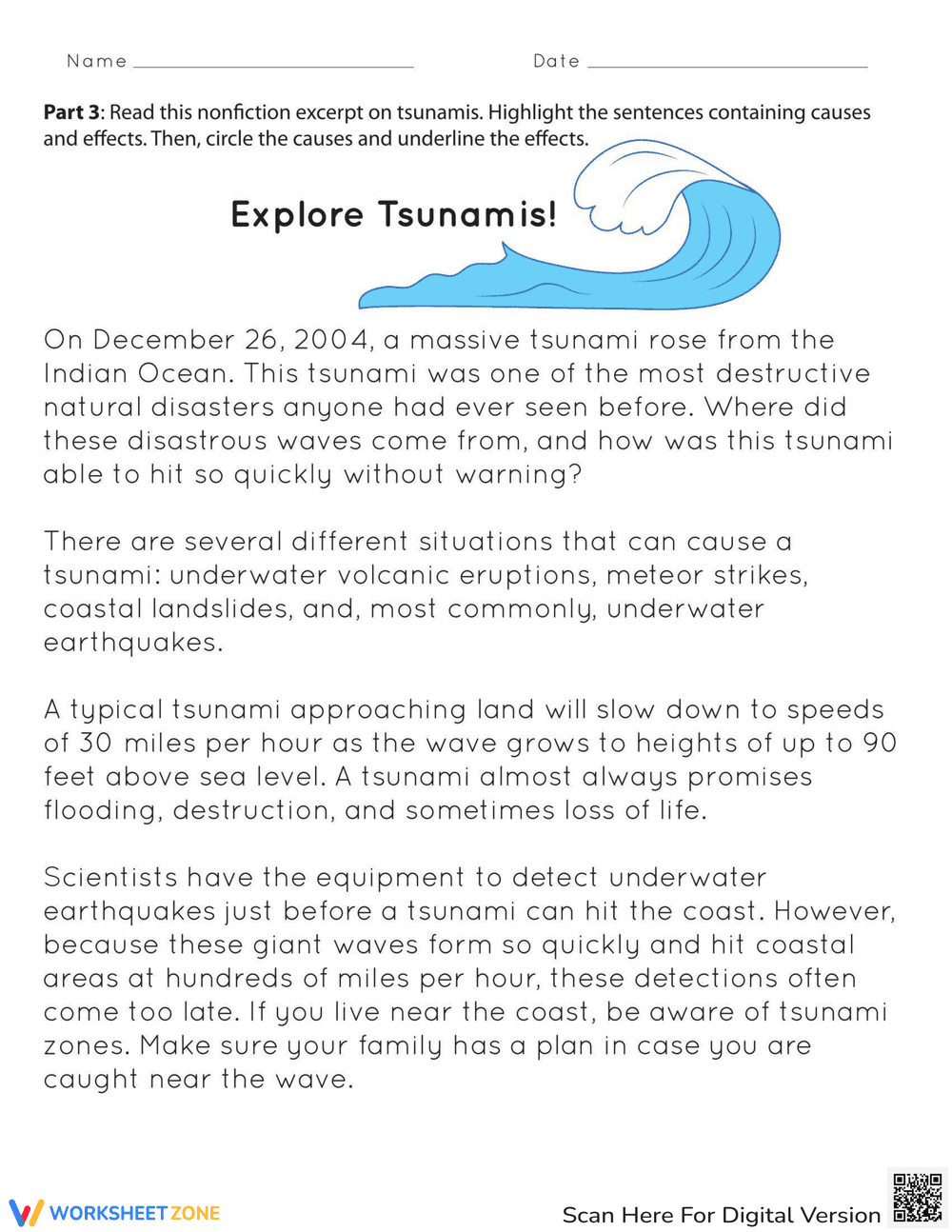
This is an educational worksheet focusing on cause and effect relationships, specifically related to natural disasters. Part 1 presents sentences where students must identify and circle the cause and underline the effect. Part 2 provides sentence frames and a word bank of natural disasters (hurricane, lightning, earthquake, blizzard, avalanche, fire, tsunami, flood) for students to complete the sentences, then circle the cause and underline the effect.
Grade Level Suitability:
This worksheet is suitable for grades 4-6. The vocabulary and sentence structure are appropriate for this age range. The concept of cause and effect is a key skill taught in these grades, and the topic of natural disasters is engaging and relevant.
Why Use It:
This worksheet helps students develop critical thinking skills by identifying cause and effect relationships. It reinforces vocabulary related to natural disasters and improves reading comprehension. It also encourages students to apply their knowledge of natural disasters to complete sentences and understand their consequences.
How to Use It:
For Part 1, instruct students to read each sentence carefully and identify the cause and effect. They should circle the cause and underline the effect. For Part 2, students should use the word bank to fill in the blanks in the sentence frames, ensuring the sentence makes logical sense. After completing the sentence, they should circle the cause and underline the effect.
Target Users:
This worksheet is ideal for elementary and middle school students learning about cause and effect relationships and natural disasters. It can be used in a classroom setting, as homework, or as a supplemental learning activity for students who need extra practice with these concepts.
This is an educational worksheet focusing on cause and effect relationships, specifically related to natural disasters. Part 1 presents sentences where students must identify and circle the cause and underline the effect. Part 2 provides sentence frames and a word bank of natural disasters (hurricane, lightning, earthquake, blizzard, avalanche, fire, tsunami, flood) for students to complete the sentences, then circle the cause and underline the effect.
Grade Level Suitability:
This worksheet is suitable for grades 4-6. The vocabulary and sentence structure are appropriate for this age range. The concept of cause and effect is a key skill taught in these grades, and the topic of natural disasters is engaging and relevant.
Why Use It:
This worksheet helps students develop critical thinking skills by identifying cause and effect relationships. It reinforces vocabulary related to natural disasters and improves reading comprehension. It also encourages students to apply their knowledge of natural disasters to complete sentences and understand their consequences.
How to Use It:
For Part 1, instruct students to read each sentence carefully and identify the cause and effect. They should circle the cause and underline the effect. For Part 2, students should use the word bank to fill in the blanks in the sentence frames, ensuring the sentence makes logical sense. After completing the sentence, they should circle the cause and underline the effect.
Target Users:
This worksheet is ideal for elementary and middle school students learning about cause and effect relationships and natural disasters. It can be used in a classroom setting, as homework, or as a supplemental learning activity for students who need extra practice with these concepts.


