


























1 / 8
0
Views
0
Downloads




0.0
0
0 Likes
Detailed Chain Analysis
0 Views
0 Downloads
Paste this activity's link or code into your existing LMS (Google Classroom, Canvas, Teams, Schoology, Moodle, etc.).
Students can open and work on the activity right away, with no student login required.
You'll still be able to track student progress and results from your teacher account.
Information
Description
What It Is:
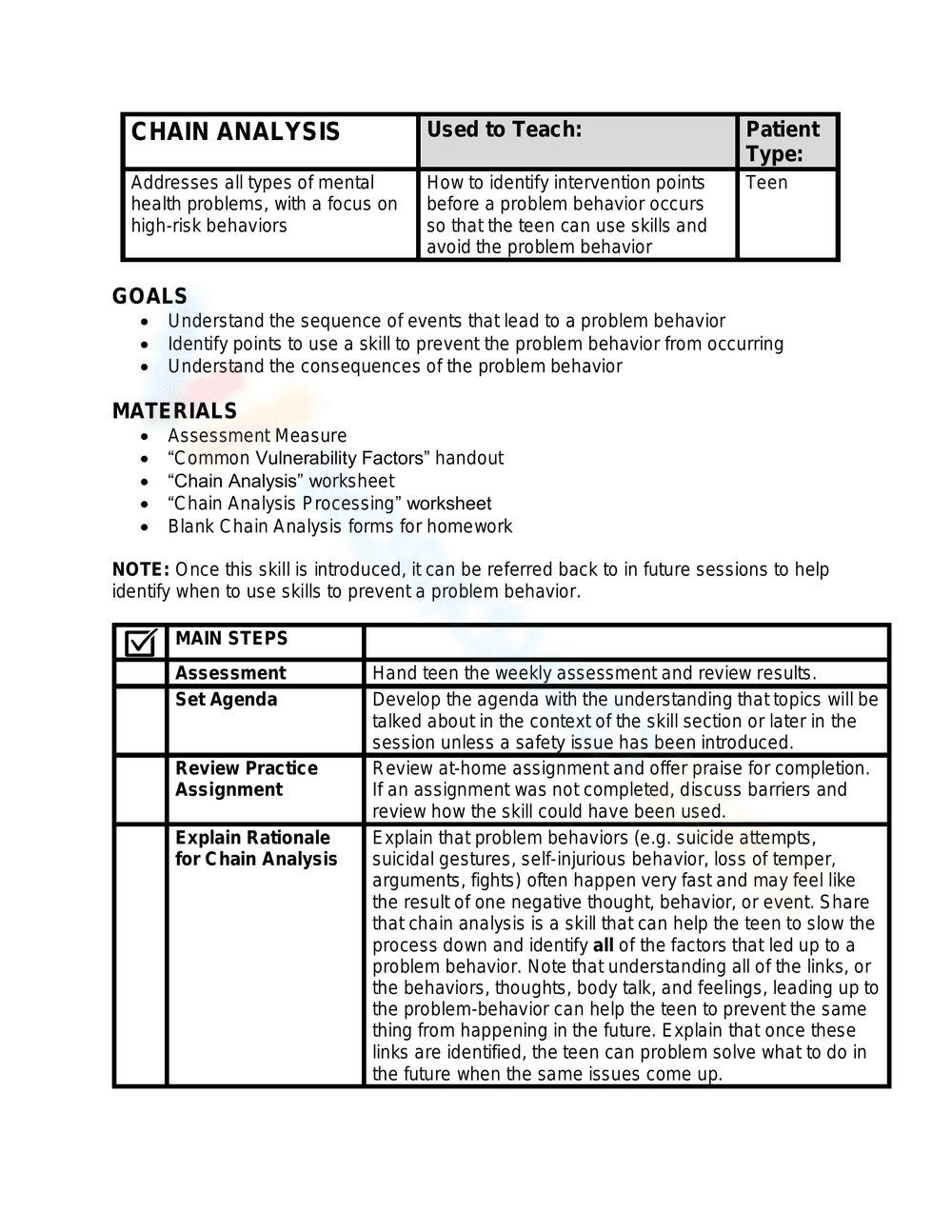
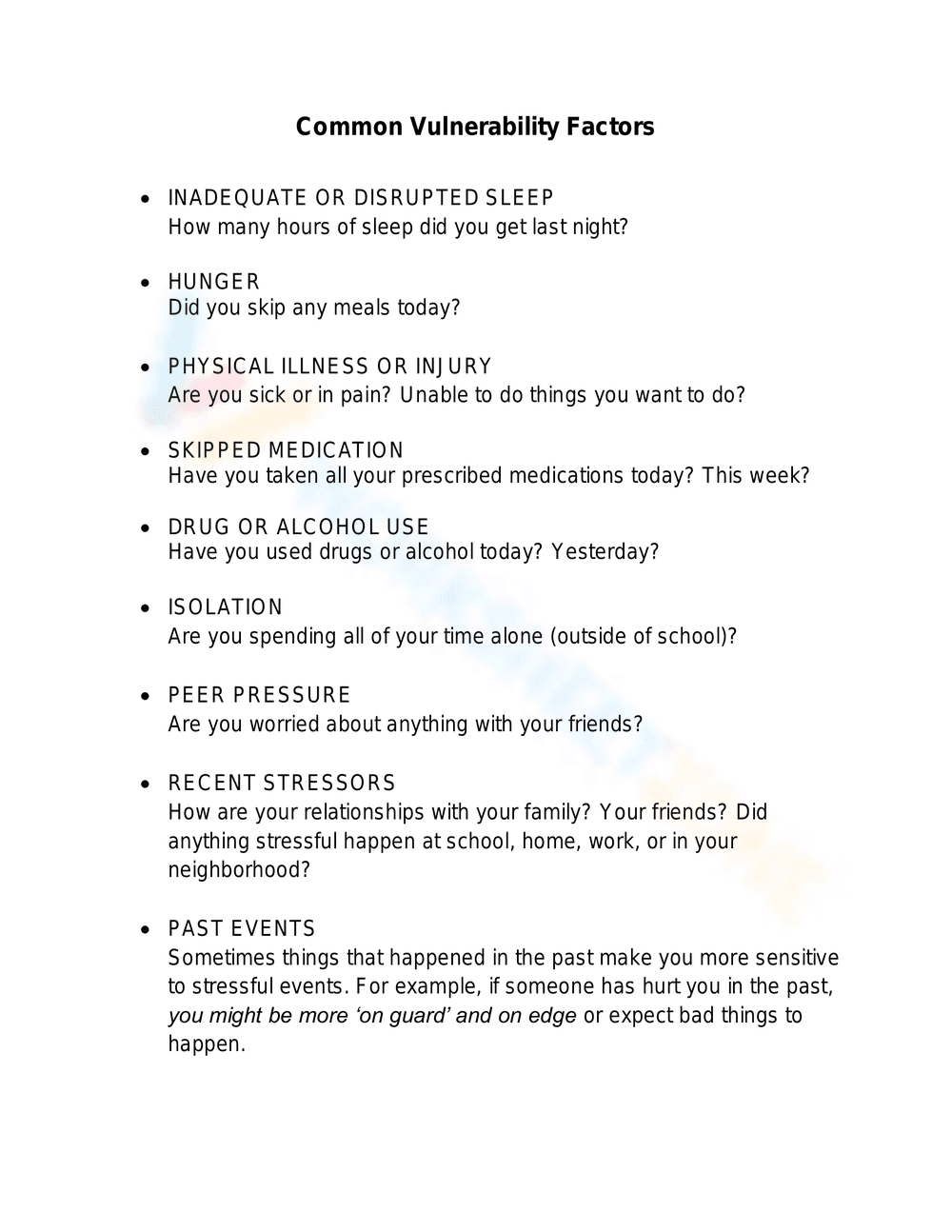
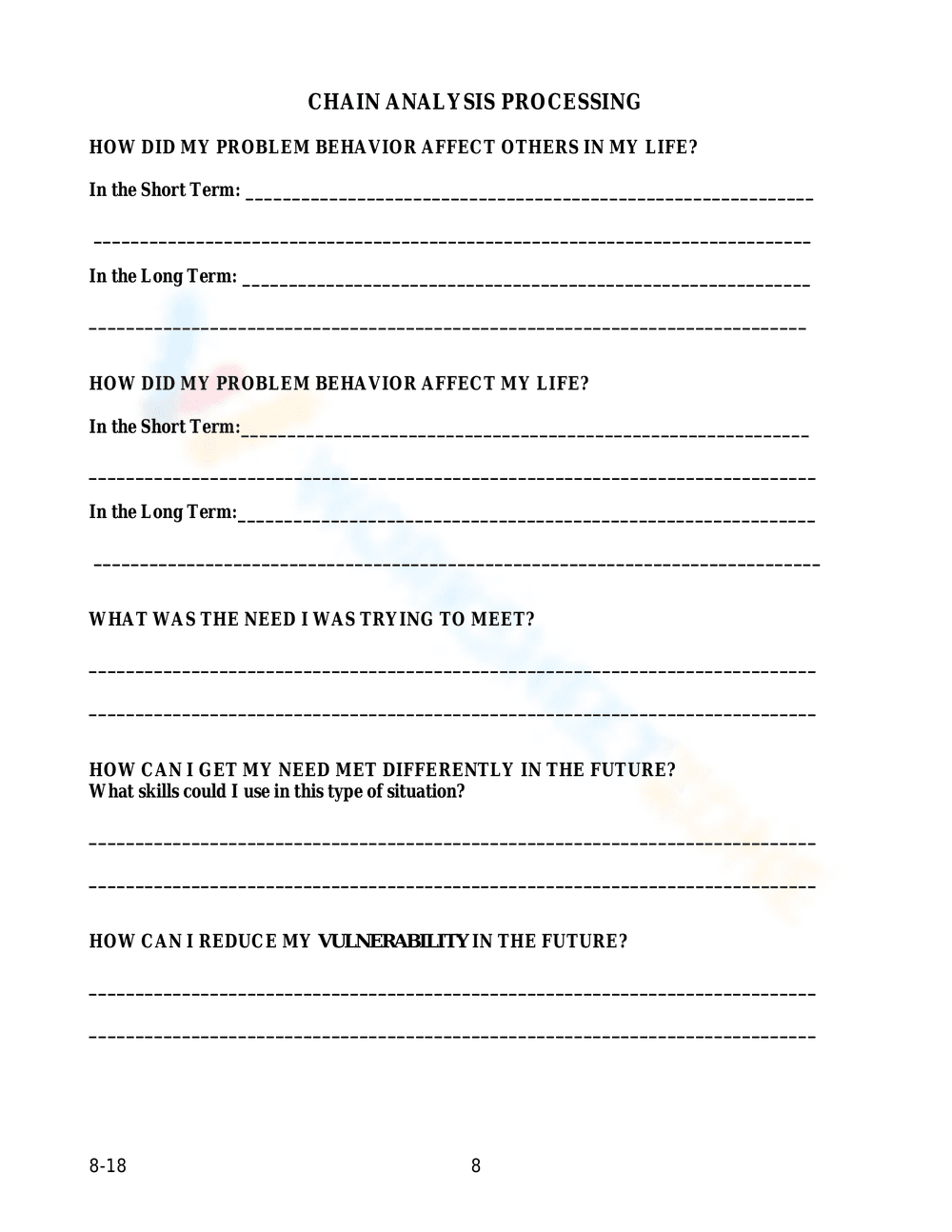
This is a worksheet focused on 'Chain Analysis,' a therapeutic technique for addressing mental health problems, particularly high-risk behaviors in teens. It outlines goals such as understanding the sequence of events leading to problem behaviors, identifying intervention points, and understanding the consequences. It lists materials needed like assessment measures, handouts, and chain analysis worksheets. The worksheet details main steps including assessment, setting the agenda, reviewing practice assignments, and explaining the rationale for chain analysis, including examples of problem behaviors like suicide attempts and self-injurious behavior.
Grade Level Suitability:
This worksheet is suitable for high school students (grades 9-12) and potentially late middle school (grades 7-8) depending on their maturity and the context of the mental health curriculum. The content deals with complex emotional and behavioral concepts, requiring a level of abstract thinking and self-reflection typically developed in older adolescents.
Why Use It:
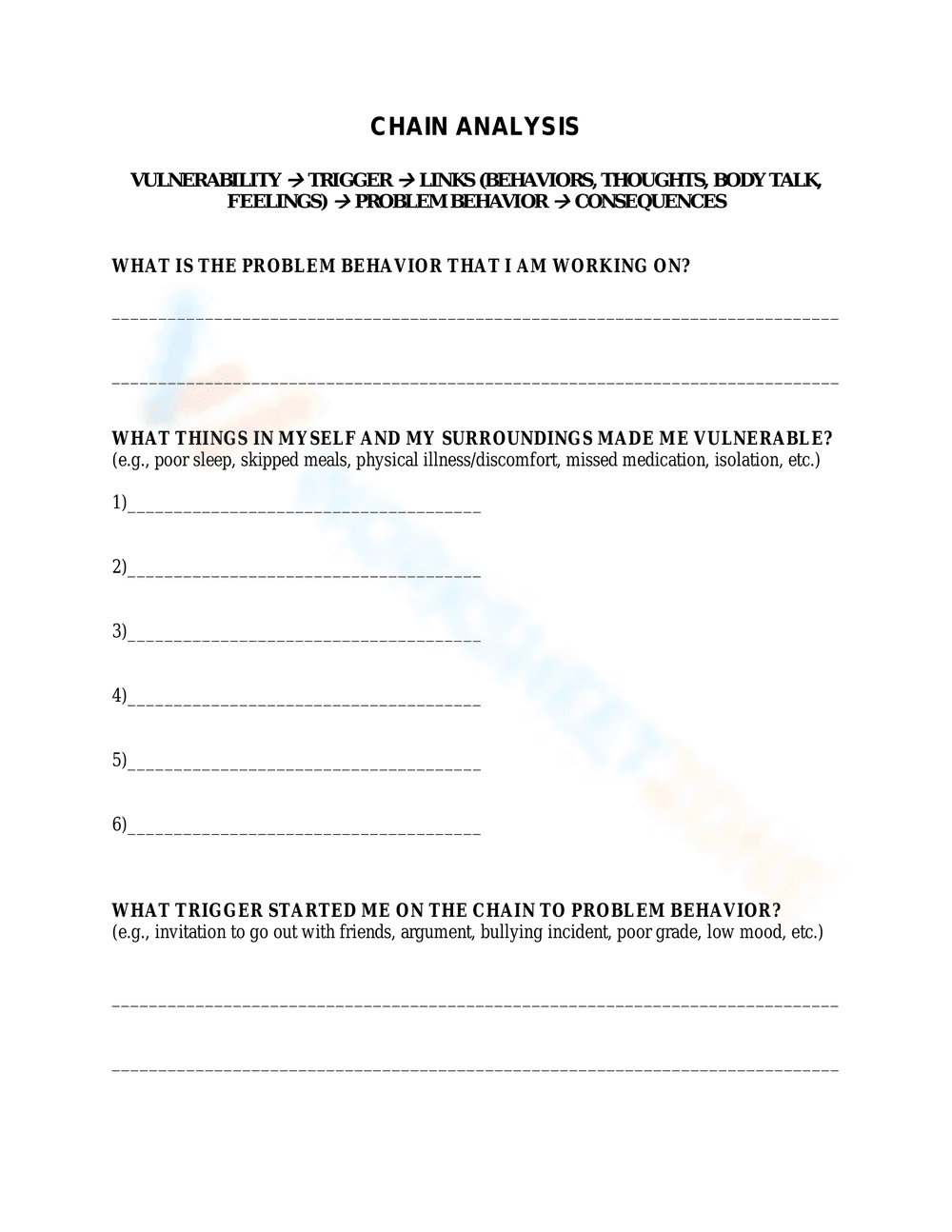
This worksheet helps teens understand the root causes and triggers of their problem behaviors by breaking them down into a sequence of events. It encourages self-awareness, problem-solving skills, and the ability to identify intervention points to prevent future occurrences. It promotes emotional regulation and provides a framework for addressing mental health challenges.
How to Use It:
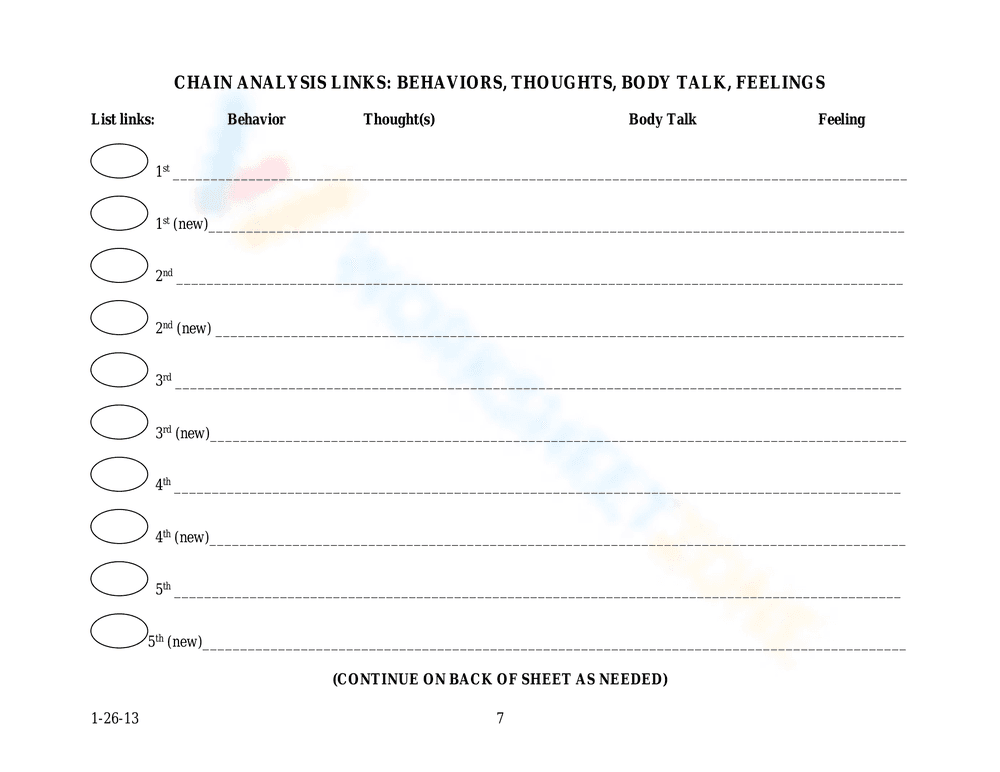
The worksheet can be used as a guide during therapy sessions or as homework to reinforce learned skills. Start by assessing the teen's current state and setting an agenda for the session. Review any previous practice assignments, discussing barriers and skill usage. Explain the rationale behind chain analysis, providing examples of problem behaviors and emphasizing the importance of identifying links between thoughts, feelings, and actions.
Target Users:
This worksheet is designed for therapists, counselors, and educators working with teenagers who are struggling with mental health issues, high-risk behaviors, or emotional regulation. It's also beneficial for teens themselves who are actively participating in therapy and seeking to understand and manage their behaviors.
This is a worksheet focused on 'Chain Analysis,' a therapeutic technique for addressing mental health problems, particularly high-risk behaviors in teens. It outlines goals such as understanding the sequence of events leading to problem behaviors, identifying intervention points, and understanding the consequences. It lists materials needed like assessment measures, handouts, and chain analysis worksheets. The worksheet details main steps including assessment, setting the agenda, reviewing practice assignments, and explaining the rationale for chain analysis, including examples of problem behaviors like suicide attempts and self-injurious behavior.
Grade Level Suitability:
This worksheet is suitable for high school students (grades 9-12) and potentially late middle school (grades 7-8) depending on their maturity and the context of the mental health curriculum. The content deals with complex emotional and behavioral concepts, requiring a level of abstract thinking and self-reflection typically developed in older adolescents.
Why Use It:
This worksheet helps teens understand the root causes and triggers of their problem behaviors by breaking them down into a sequence of events. It encourages self-awareness, problem-solving skills, and the ability to identify intervention points to prevent future occurrences. It promotes emotional regulation and provides a framework for addressing mental health challenges.
How to Use It:
The worksheet can be used as a guide during therapy sessions or as homework to reinforce learned skills. Start by assessing the teen's current state and setting an agenda for the session. Review any previous practice assignments, discussing barriers and skill usage. Explain the rationale behind chain analysis, providing examples of problem behaviors and emphasizing the importance of identifying links between thoughts, feelings, and actions.
Target Users:
This worksheet is designed for therapists, counselors, and educators working with teenagers who are struggling with mental health issues, high-risk behaviors, or emotional regulation. It's also beneficial for teens themselves who are actively participating in therapy and seeking to understand and manage their behaviors.


