


























1 / 2
0
Views
0
Downloads


0.0
0
0 Likes
Characterization Worksheet for Literary Analysis
0 Views
0 Downloads
Paste this activity's link or code into your existing LMS (Google Classroom, Canvas, Teams, Schoology, Moodle, etc.).
Students can open and work on the activity right away, with no student login required.
You'll still be able to track student progress and results from your teacher account.
Information
Description
What It Is:
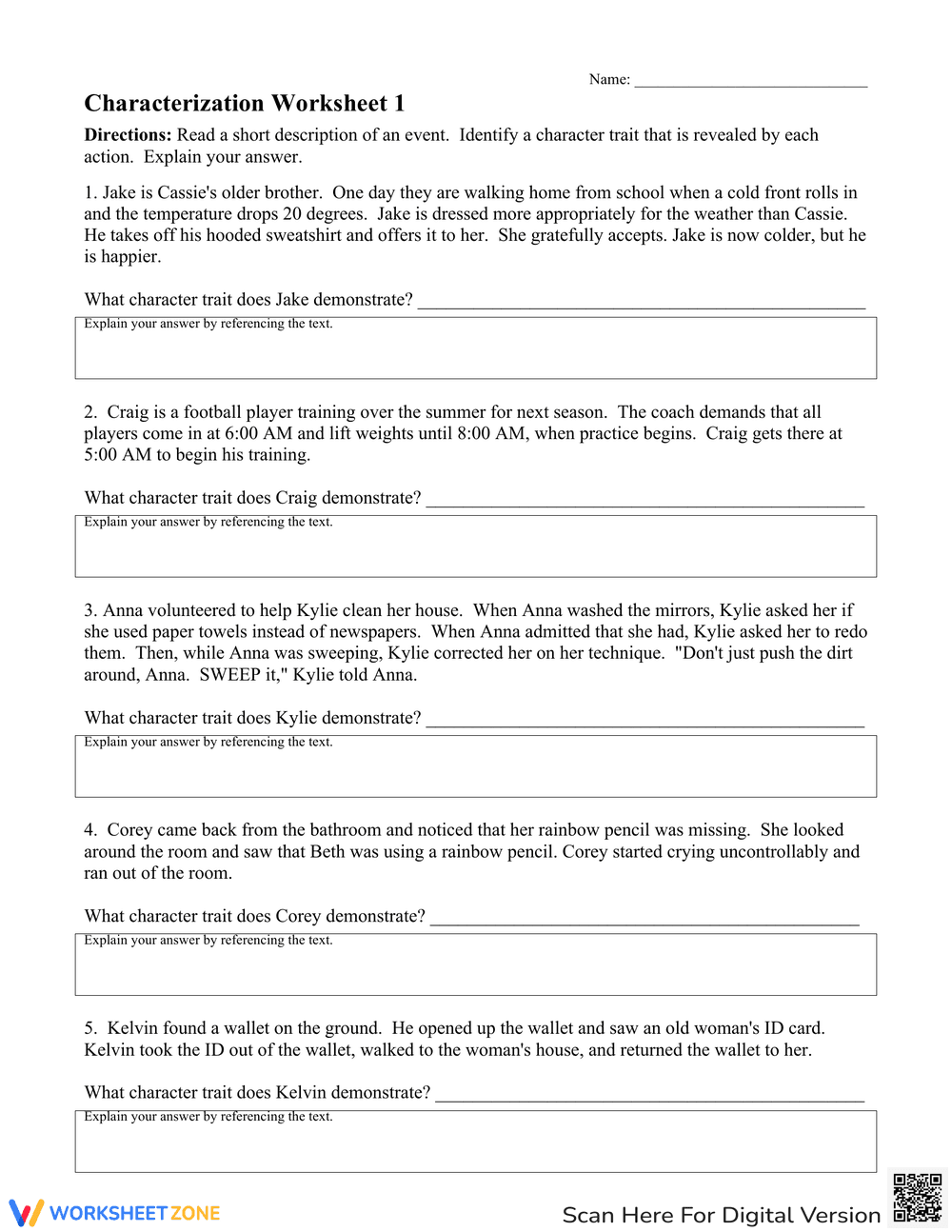
This is a characterization worksheet with five short scenarios. Students read each scenario and identify a character trait demonstrated by a character's actions within the story. There are spaces provided for students to write the character trait and explain their answer by referencing the text.
Grade Level Suitability:
This worksheet is suitable for grades 6-8. The scenarios are short and relatively simple, requiring students to infer character traits from actions and dialogue. The level of reading comprehension and analytical skills required makes it appropriate for middle school students.
Why Use It:
This worksheet helps students develop their reading comprehension and character analysis skills. It encourages them to think critically about how characters' actions reveal their personality traits. It also promotes close reading and the ability to support their interpretations with textual evidence.
How to Use It:
Students should read each scenario carefully. Then, they should identify the character trait that is most clearly demonstrated by the character's actions in that scenario. Finally, they should write down the character trait and explain how they arrived at that conclusion by referencing specific details from the text.
Target Users:
This worksheet is beneficial for middle school students learning about characterization in literature. It's also useful for students who need practice with reading comprehension, inferencing, and textual analysis. Teachers can use it as an in-class activity, homework assignment, or assessment tool.
This is a characterization worksheet with five short scenarios. Students read each scenario and identify a character trait demonstrated by a character's actions within the story. There are spaces provided for students to write the character trait and explain their answer by referencing the text.
Grade Level Suitability:
This worksheet is suitable for grades 6-8. The scenarios are short and relatively simple, requiring students to infer character traits from actions and dialogue. The level of reading comprehension and analytical skills required makes it appropriate for middle school students.
Why Use It:
This worksheet helps students develop their reading comprehension and character analysis skills. It encourages them to think critically about how characters' actions reveal their personality traits. It also promotes close reading and the ability to support their interpretations with textual evidence.
How to Use It:
Students should read each scenario carefully. Then, they should identify the character trait that is most clearly demonstrated by the character's actions in that scenario. Finally, they should write down the character trait and explain how they arrived at that conclusion by referencing specific details from the text.
Target Users:
This worksheet is beneficial for middle school students learning about characterization in literature. It's also useful for students who need practice with reading comprehension, inferencing, and textual analysis. Teachers can use it as an in-class activity, homework assignment, or assessment tool.


