


























1 / 5
0
Views
0
Downloads

0.0
0
0 Likes
Charles' Law Practice Problems
0 Views
0 Downloads
Paste this activity's link or code into your existing LMS (Google Classroom, Canvas, Teams, Schoology, Moodle, etc.).
Students can open and work on the activity right away, with no student login required.
You'll still be able to track student progress and results from your teacher account.
Information
Description
What It Is:
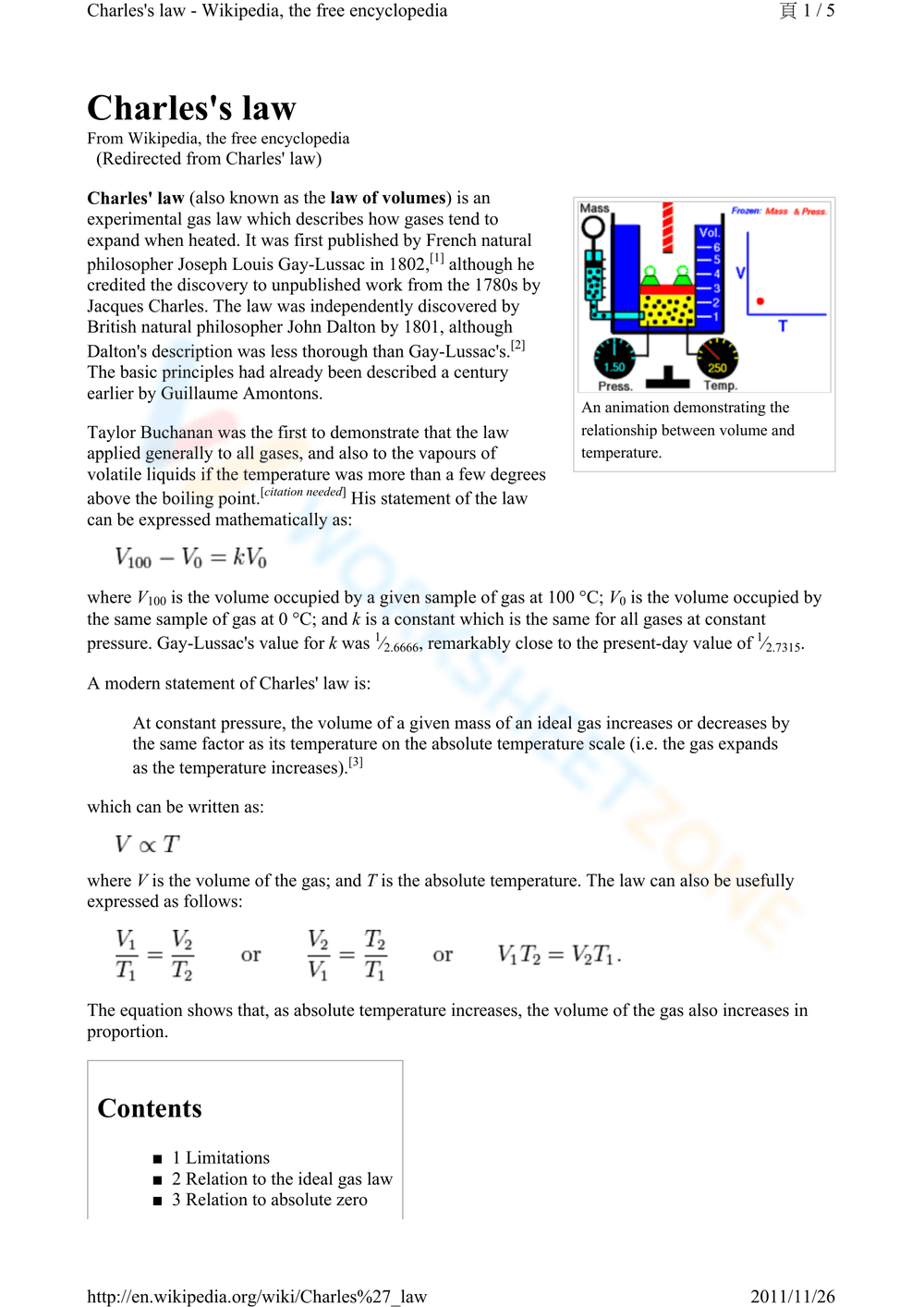
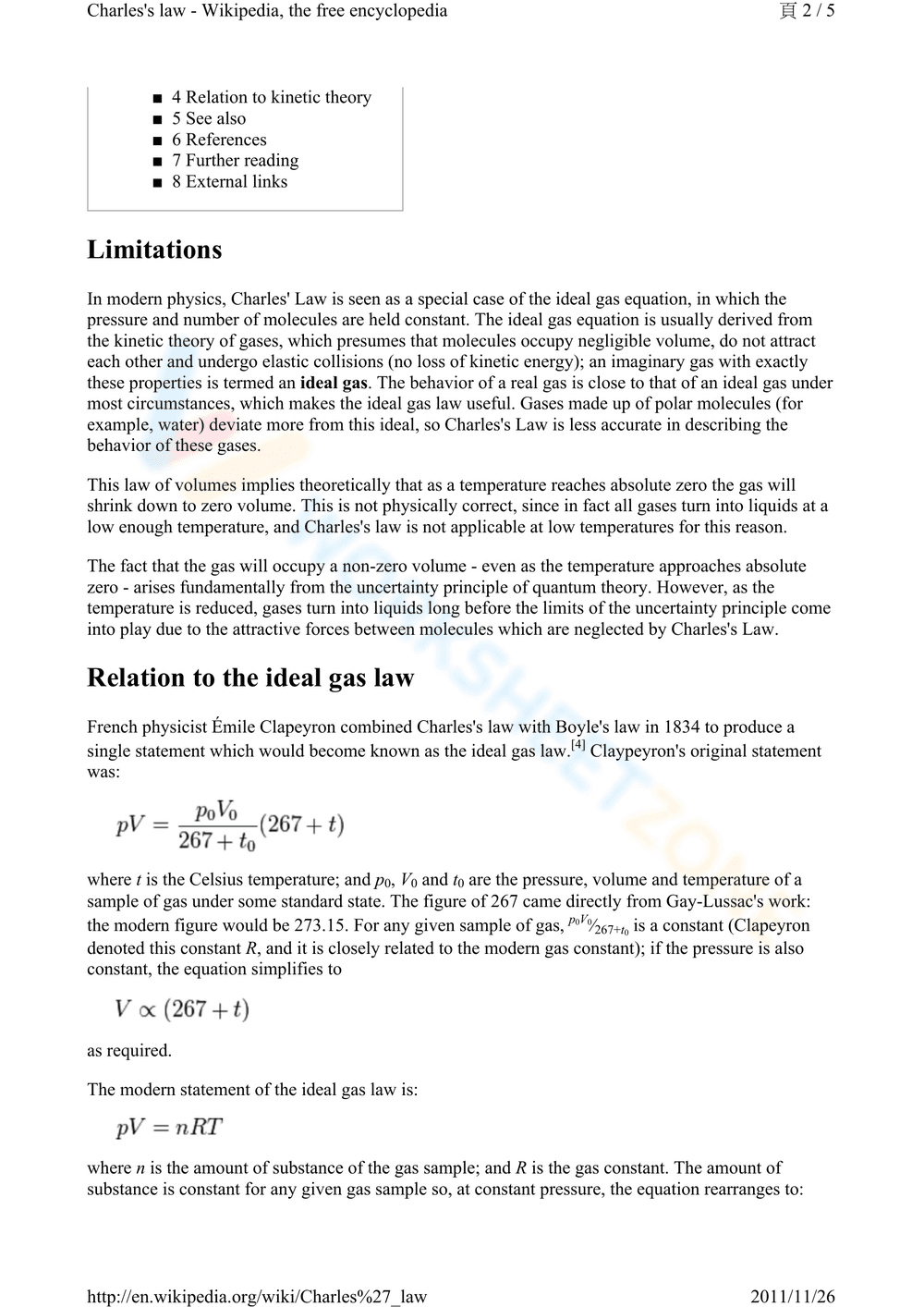
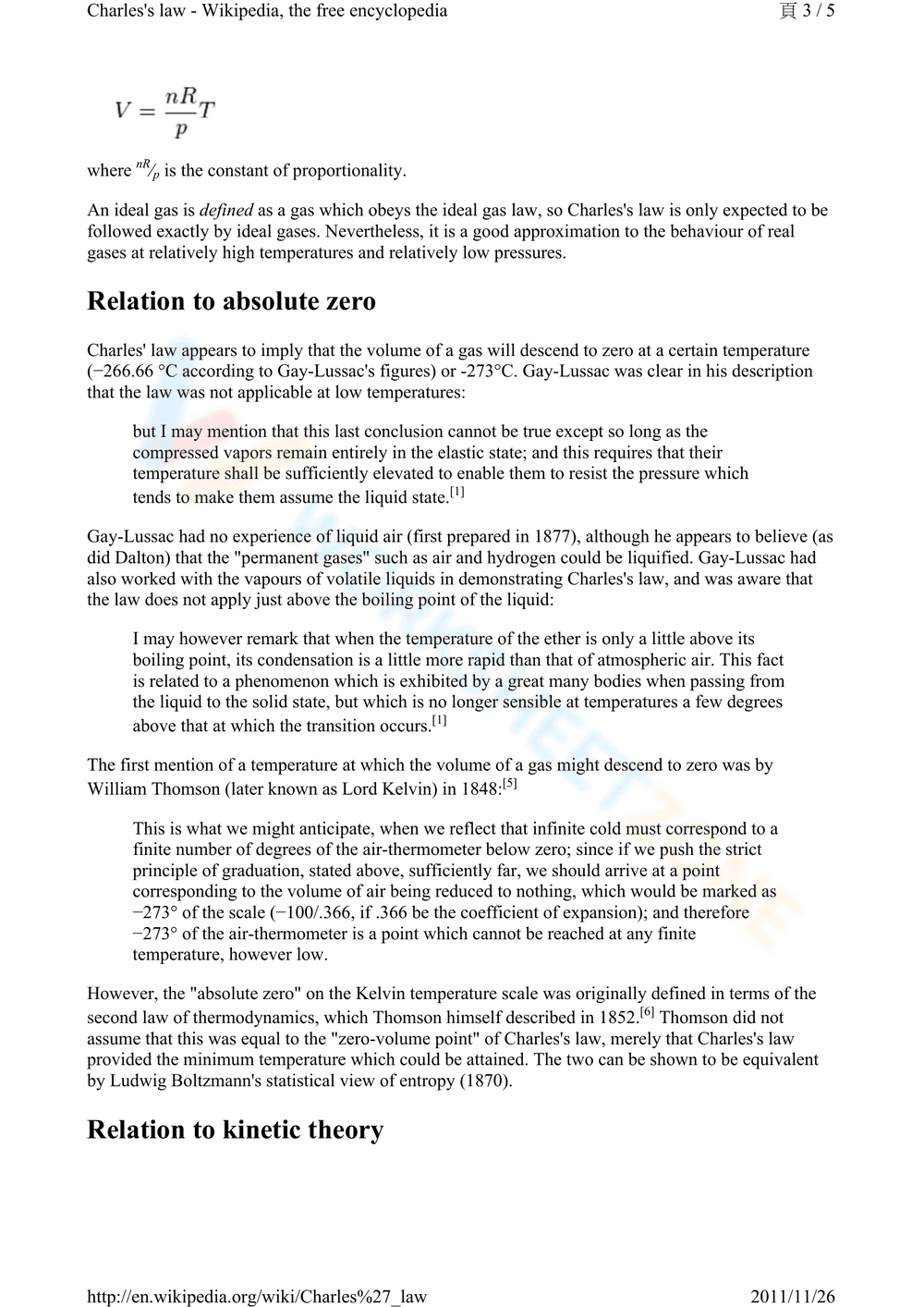
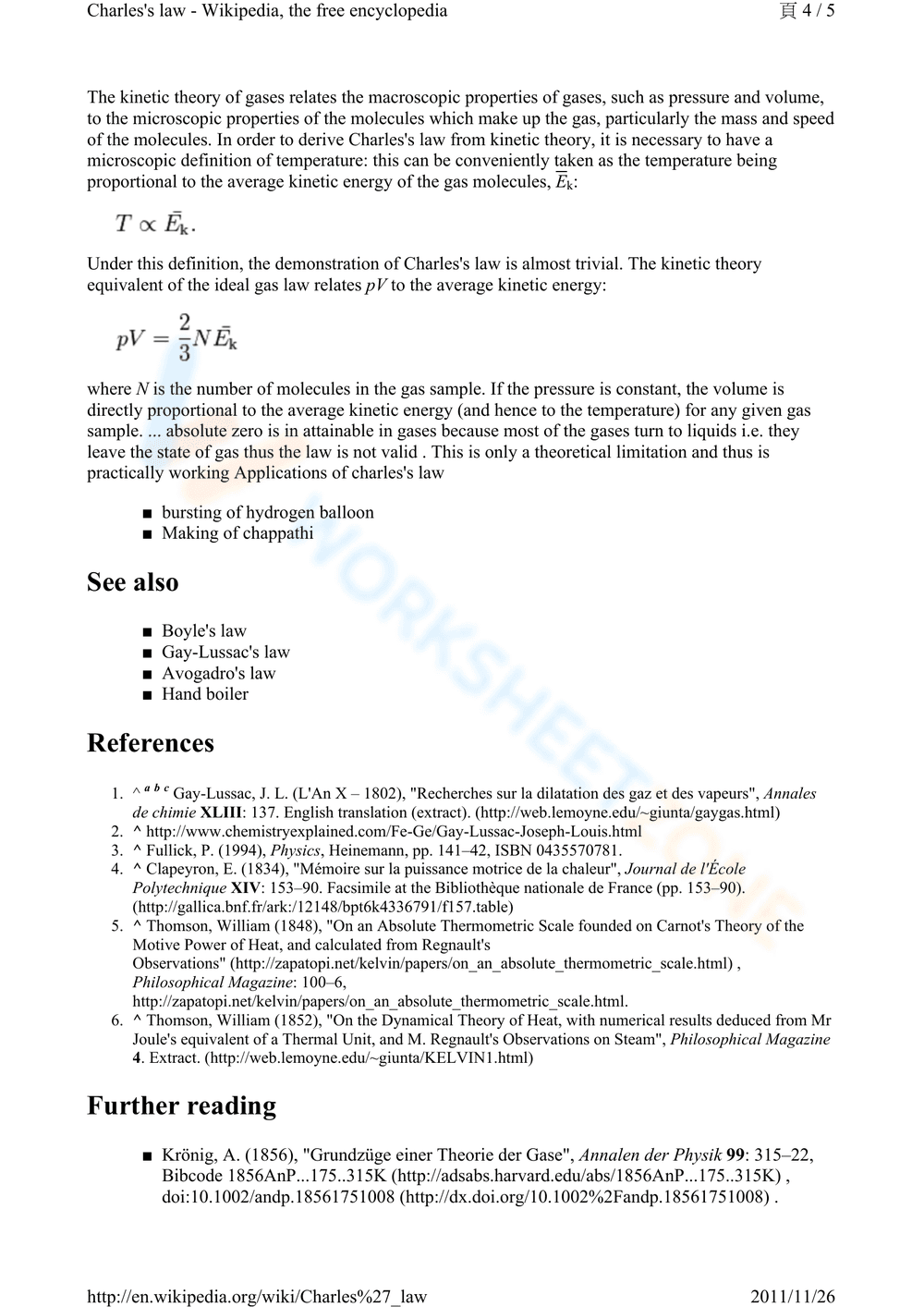
This is an educational worksheet page explaining Charles's Law, also known as the law of volumes. It includes a written explanation of the law, its history, and mathematical representations using formulas like V100 - V0 = kV0 and V ∝ T. There's also an animation demonstrating the relationship between volume and temperature. A table of contents lists 'Limitations,' 'Relation to the ideal gas law,' and 'Relation to absolute zero.'
Grade Level Suitability:
This worksheet is suitable for high school students, specifically grades 11-12, studying physics or chemistry. The content involves understanding scientific laws, mathematical formulas, and gas behavior, which are typically covered in these grades.
Why Use It:
This worksheet helps students understand Charles's Law by providing a historical context, mathematical representation, and visual animation. It promotes a deeper understanding of the relationship between volume and temperature in gases and helps students connect the law to other related concepts like the ideal gas law and absolute zero.
How to Use It:
Students can read the text to understand the definition and history of Charles's Law. They can study the formulas and examples to learn how to apply the law mathematically. The animation can be used to visualize the relationship between volume and temperature. The table of contents can guide further research on related topics.
Target Users:
The target users are high school students learning about gas laws in physics or chemistry, as well as teachers who need resources to explain Charles's Law. Anyone interested in the history and scientific principles behind gas behavior could also find this useful.
This is an educational worksheet page explaining Charles's Law, also known as the law of volumes. It includes a written explanation of the law, its history, and mathematical representations using formulas like V100 - V0 = kV0 and V ∝ T. There's also an animation demonstrating the relationship between volume and temperature. A table of contents lists 'Limitations,' 'Relation to the ideal gas law,' and 'Relation to absolute zero.'
Grade Level Suitability:
This worksheet is suitable for high school students, specifically grades 11-12, studying physics or chemistry. The content involves understanding scientific laws, mathematical formulas, and gas behavior, which are typically covered in these grades.
Why Use It:
This worksheet helps students understand Charles's Law by providing a historical context, mathematical representation, and visual animation. It promotes a deeper understanding of the relationship between volume and temperature in gases and helps students connect the law to other related concepts like the ideal gas law and absolute zero.
How to Use It:
Students can read the text to understand the definition and history of Charles's Law. They can study the formulas and examples to learn how to apply the law mathematically. The animation can be used to visualize the relationship between volume and temperature. The table of contents can guide further research on related topics.
Target Users:
The target users are high school students learning about gas laws in physics or chemistry, as well as teachers who need resources to explain Charles's Law. Anyone interested in the history and scientific principles behind gas behavior could also find this useful.


