


























1 / 4
0
Views
0
Downloads

0.0
0
0 Likes
Updated: Counting Rhythms with Notes
0 Views
0 Downloads
Paste this activity's link or code into your existing LMS (Google Classroom, Canvas, Teams, Schoology, Moodle, etc.).
Students can open and work on the activity right away, with no student login required.
You'll still be able to track student progress and results from your teacher account.
Information
Description
What It Is:
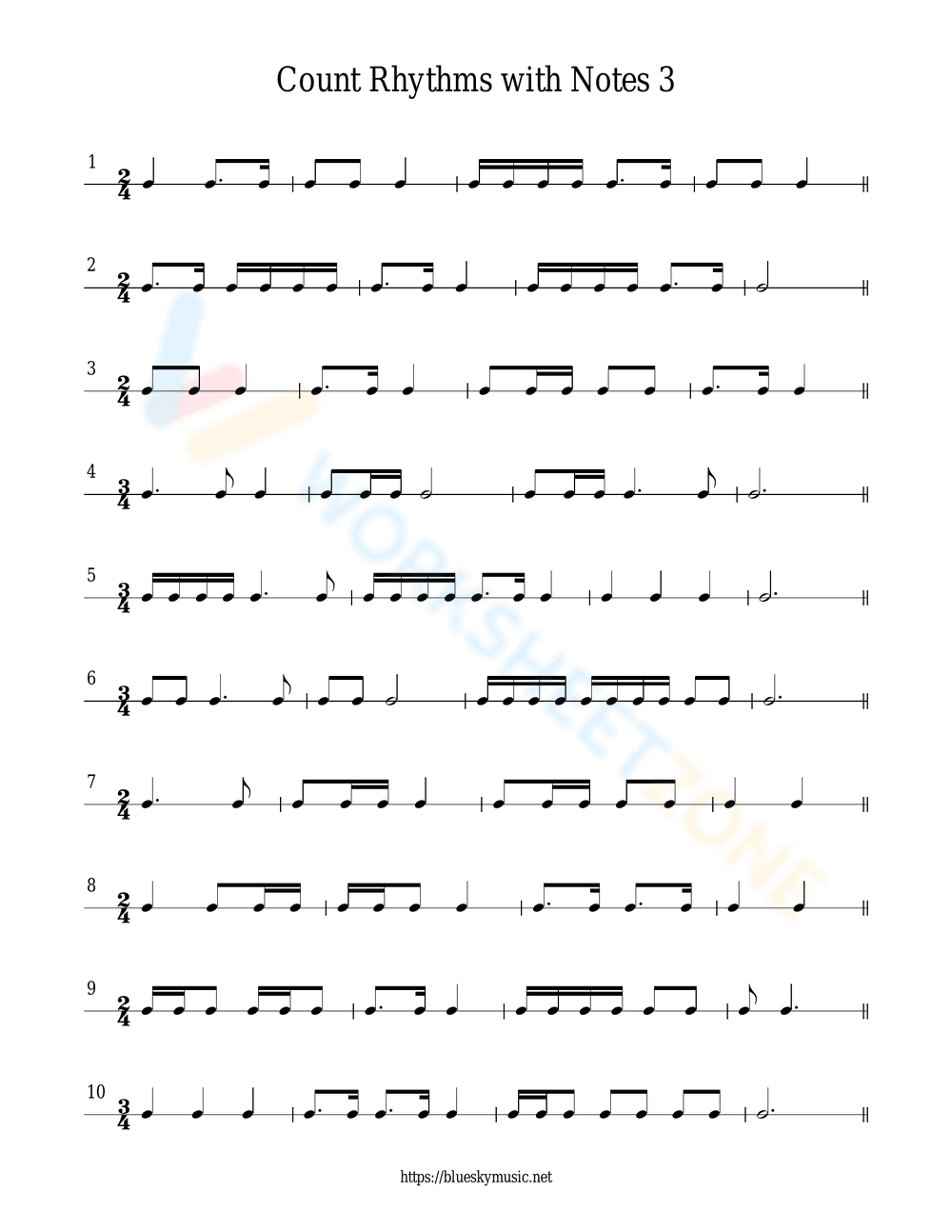
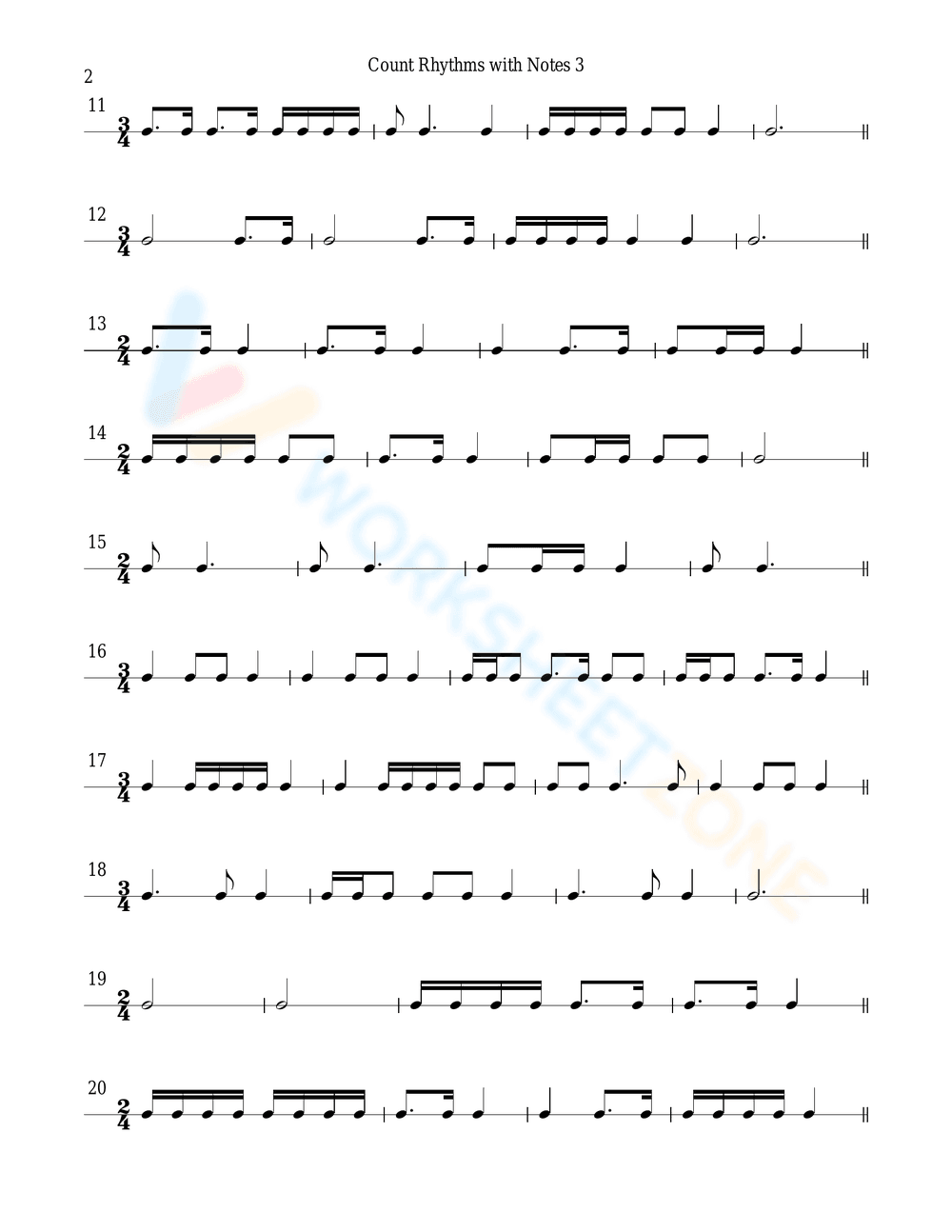
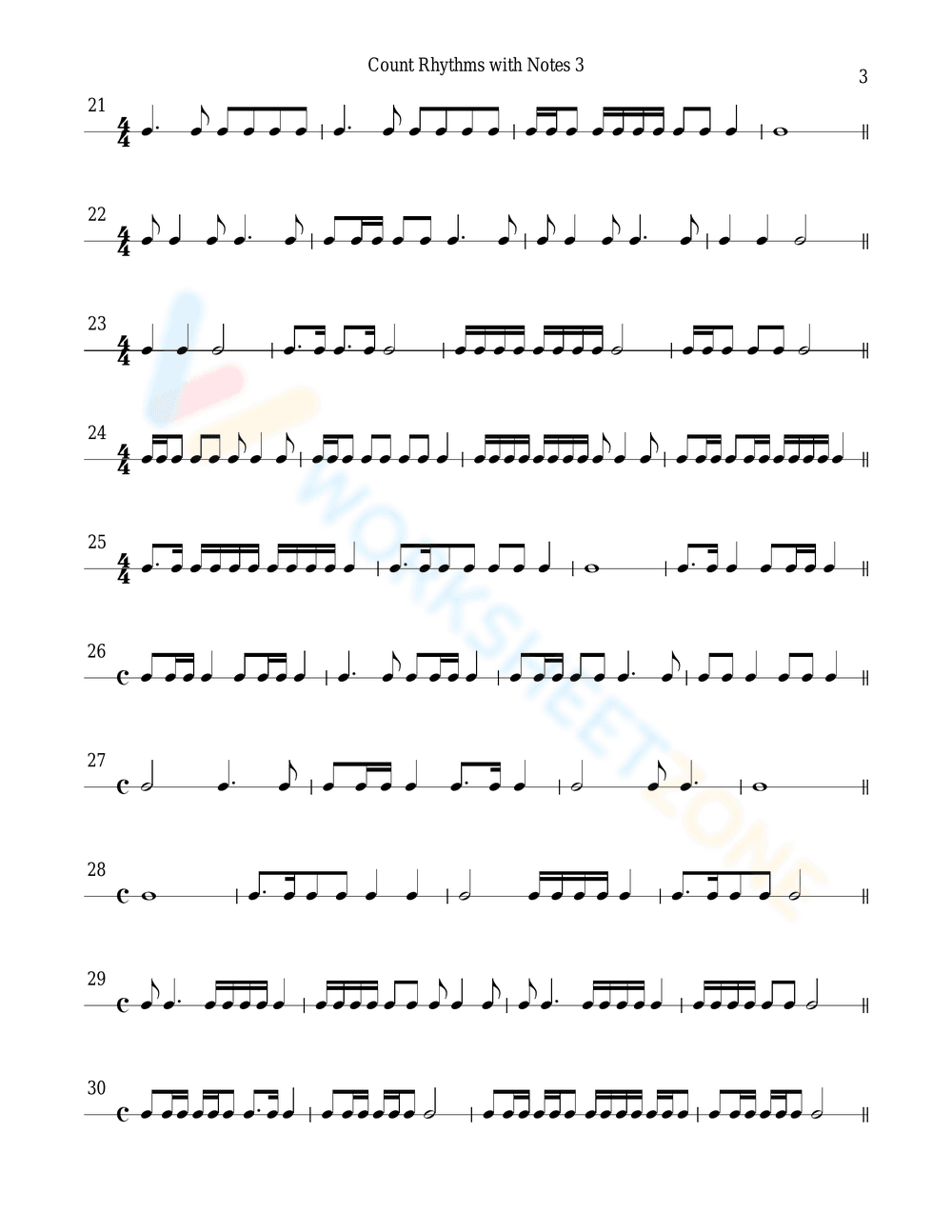
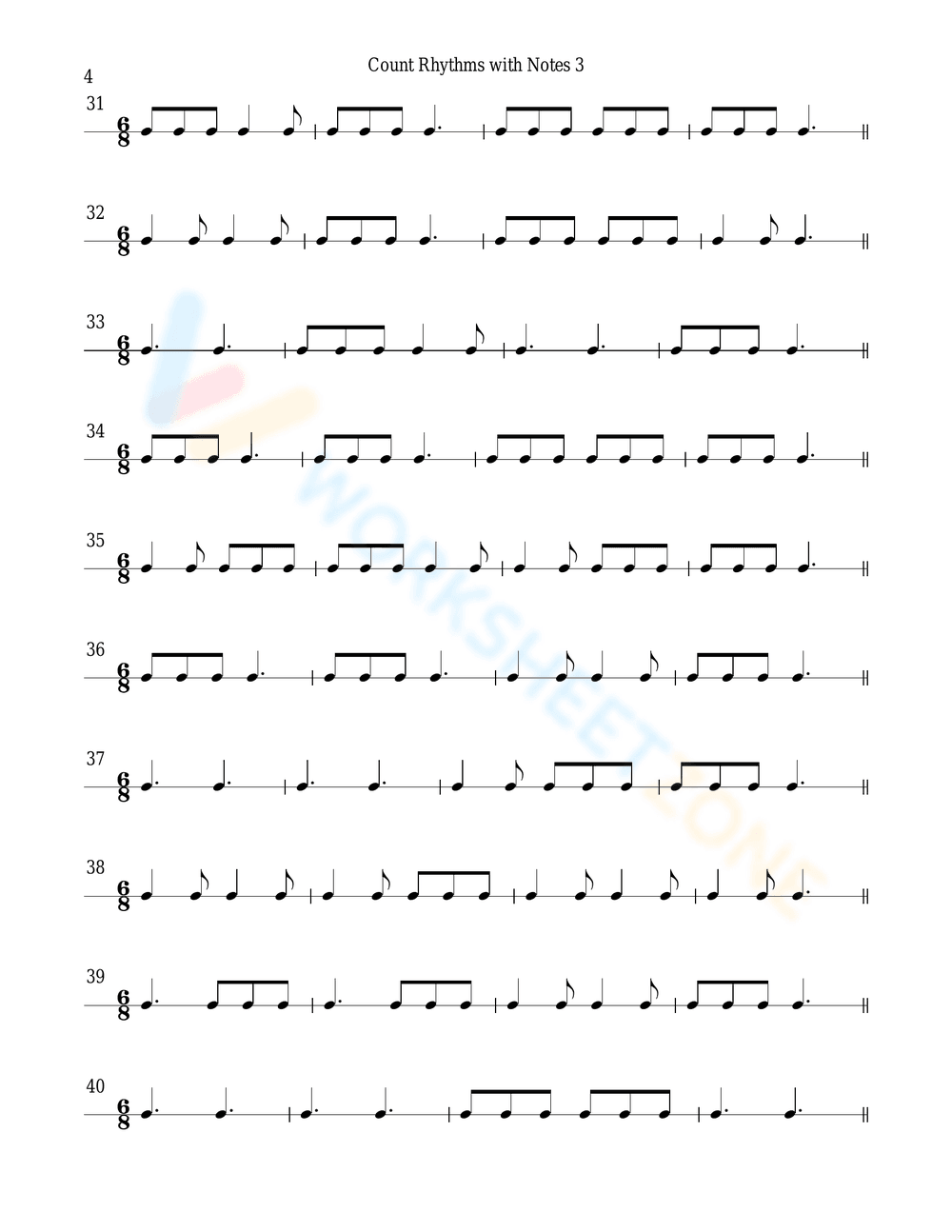
This is a music theory worksheet titled 'Count Rhythms with Notes 3'. It features ten lines of musical notation in 2/4 and 3/4 time signatures. Each line contains a different rhythmic pattern using quarter notes, eighth notes (singly and beamed), and quarter rests. The student is meant to count the rhythms on each line.
Grade Level Suitability:
This worksheet is suitable for grades 3-6. It requires a basic understanding of musical notation, including time signatures, quarter notes, eighth notes, and rests. The complexity of the rhythmic patterns increases slightly with each line, making it appropriate for students with some prior experience.
Why Use It:
This worksheet helps students develop their rhythmic reading skills and reinforces their understanding of note values and time signatures. It improves their ability to visually recognize and mentally count rhythmic patterns, which is crucial for musicianship.
How to Use It:
Students should examine each line of music and count the rhythm aloud or silently. They can write the counts above each note and rest to help them stay organized. The worksheet can be used for individual practice, classroom activities, or as part of a music theory lesson.
Target Users:
This worksheet is designed for elementary and middle school students learning to read music and understand rhythm. It is also helpful for band and orchestra students who need to improve their rhythmic accuracy. Music teachers and private instructors can use it as a supplementary resource.
This is a music theory worksheet titled 'Count Rhythms with Notes 3'. It features ten lines of musical notation in 2/4 and 3/4 time signatures. Each line contains a different rhythmic pattern using quarter notes, eighth notes (singly and beamed), and quarter rests. The student is meant to count the rhythms on each line.
Grade Level Suitability:
This worksheet is suitable for grades 3-6. It requires a basic understanding of musical notation, including time signatures, quarter notes, eighth notes, and rests. The complexity of the rhythmic patterns increases slightly with each line, making it appropriate for students with some prior experience.
Why Use It:
This worksheet helps students develop their rhythmic reading skills and reinforces their understanding of note values and time signatures. It improves their ability to visually recognize and mentally count rhythmic patterns, which is crucial for musicianship.
How to Use It:
Students should examine each line of music and count the rhythm aloud or silently. They can write the counts above each note and rest to help them stay organized. The worksheet can be used for individual practice, classroom activities, or as part of a music theory lesson.
Target Users:
This worksheet is designed for elementary and middle school students learning to read music and understand rhythm. It is also helpful for band and orchestra students who need to improve their rhythmic accuracy. Music teachers and private instructors can use it as a supplementary resource.


