


























1 / 5
0
Views
0
Downloads




0.0
0
0 Likes
Cranial Nerve Table Worksheet: Anatomy Study
0 Views
0 Downloads
Paste this activity's link or code into your existing LMS (Google Classroom, Canvas, Teams, Schoology, Moodle, etc.).
Students can open and work on the activity right away, with no student login required.
You'll still be able to track student progress and results from your teacher account.
Information
Description
What It Is:
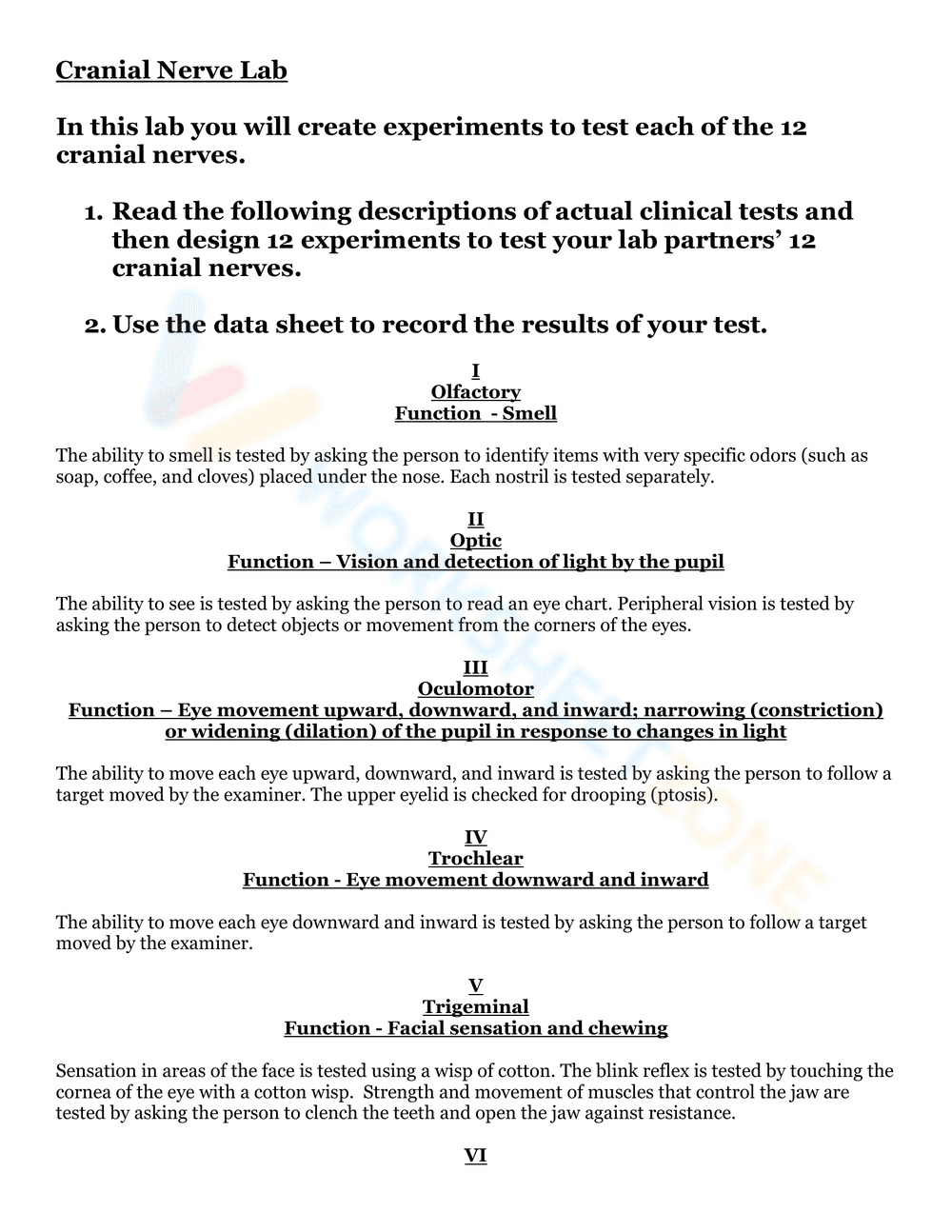
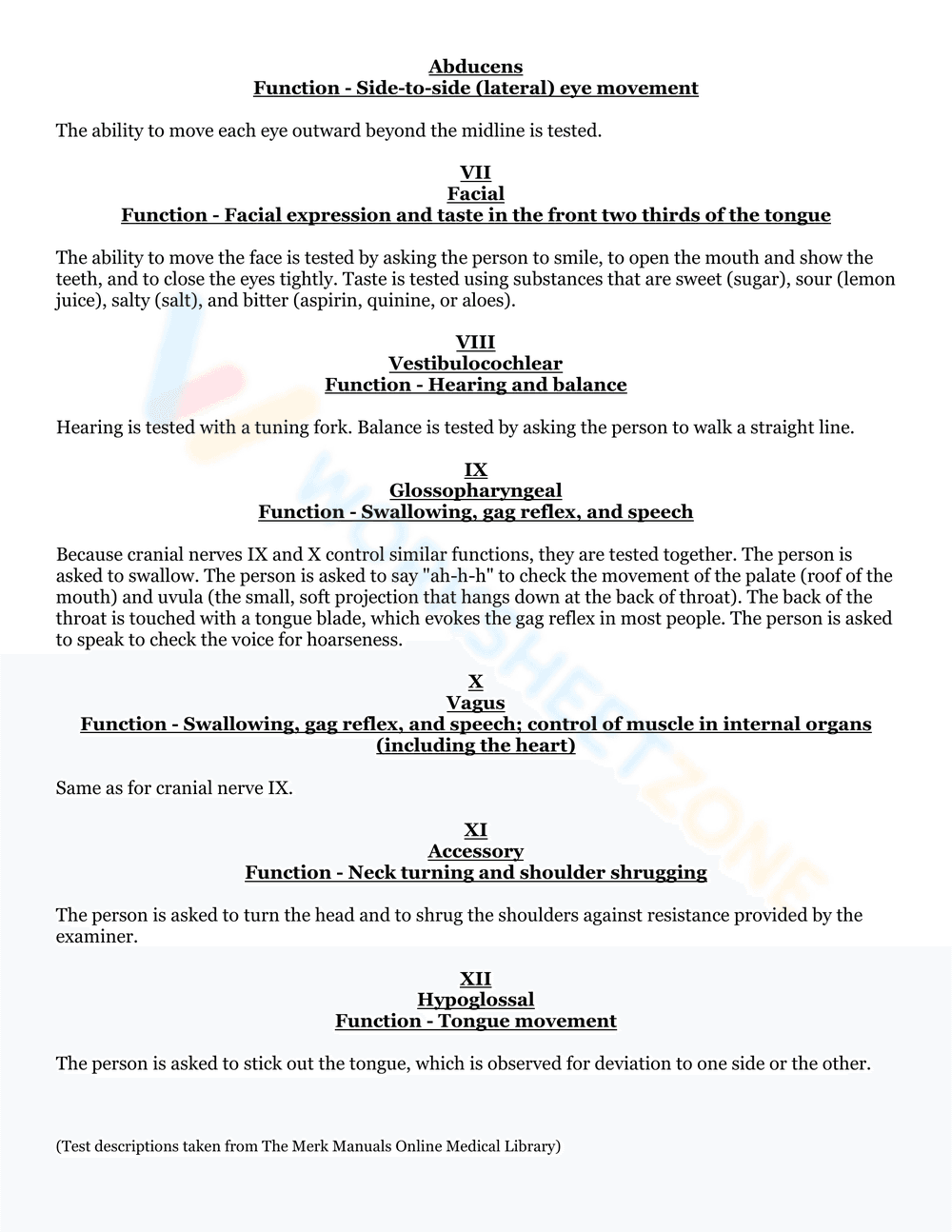
This is an anatomy worksheet focused on cranial nerves. The worksheet features a table with columns for each of the twelve cranial nerves (Olfactory, Optic, Oculomotor, Trochlear, Trigeminal, Abducens, Facial, Vestibulocochlear, Glossopharyngeal, Vagus, Accessory, Hypoglossal). Students are asked to identify whether each nerve is motor, sensory, or both, the location where the nerve innervates, the test performed to assess the nerve, the results of the test, and an assessment of the nerve function.
Grade Level Suitability:
This worksheet is most suitable for high school and college-level anatomy and physiology courses. The complexity of the cranial nerves and their functions requires a solid understanding of anatomical terminology and concepts typically taught at these levels.
Why Use It:
This worksheet helps students to learn and memorize the cranial nerves and their functions. It promotes critical thinking by requiring students to analyze the type of nerve, its innervation location, relevant tests, and the overall assessment of its function. This reinforces understanding of the nervous system.
How to Use It:
Students should use textbooks, notes, or online resources to research each cranial nerve. They then fill in the table, identifying the nerve type (motor, sensory, or both), its innervation location, the appropriate test performed, the results expected from a normal test, and an overall assessment of the nerve's function. This can be completed individually or in groups.
Target Users:
The target users are high school and college students studying anatomy and physiology, nursing students, pre-med students, and anyone learning about the human nervous system. It's also helpful for instructors teaching these subjects as a review or assessment tool.
This is an anatomy worksheet focused on cranial nerves. The worksheet features a table with columns for each of the twelve cranial nerves (Olfactory, Optic, Oculomotor, Trochlear, Trigeminal, Abducens, Facial, Vestibulocochlear, Glossopharyngeal, Vagus, Accessory, Hypoglossal). Students are asked to identify whether each nerve is motor, sensory, or both, the location where the nerve innervates, the test performed to assess the nerve, the results of the test, and an assessment of the nerve function.
Grade Level Suitability:
This worksheet is most suitable for high school and college-level anatomy and physiology courses. The complexity of the cranial nerves and their functions requires a solid understanding of anatomical terminology and concepts typically taught at these levels.
Why Use It:
This worksheet helps students to learn and memorize the cranial nerves and their functions. It promotes critical thinking by requiring students to analyze the type of nerve, its innervation location, relevant tests, and the overall assessment of its function. This reinforces understanding of the nervous system.
How to Use It:
Students should use textbooks, notes, or online resources to research each cranial nerve. They then fill in the table, identifying the nerve type (motor, sensory, or both), its innervation location, the appropriate test performed, the results expected from a normal test, and an overall assessment of the nerve's function. This can be completed individually or in groups.
Target Users:
The target users are high school and college students studying anatomy and physiology, nursing students, pre-med students, and anyone learning about the human nervous system. It's also helpful for instructors teaching these subjects as a review or assessment tool.


