


























0
Views
0
Downloads

0.0
0
0 Likes
Dive into Documentary Analysis Worksheet
0 Views
0 Downloads
Paste this activity's link or code into your existing LMS (Google Classroom, Canvas, Teams, Schoology, Moodle, etc.).
Students can open and work on the activity right away, with no student login required.
You'll still be able to track student progress and results from your teacher account.
Information
Description
What It Is:
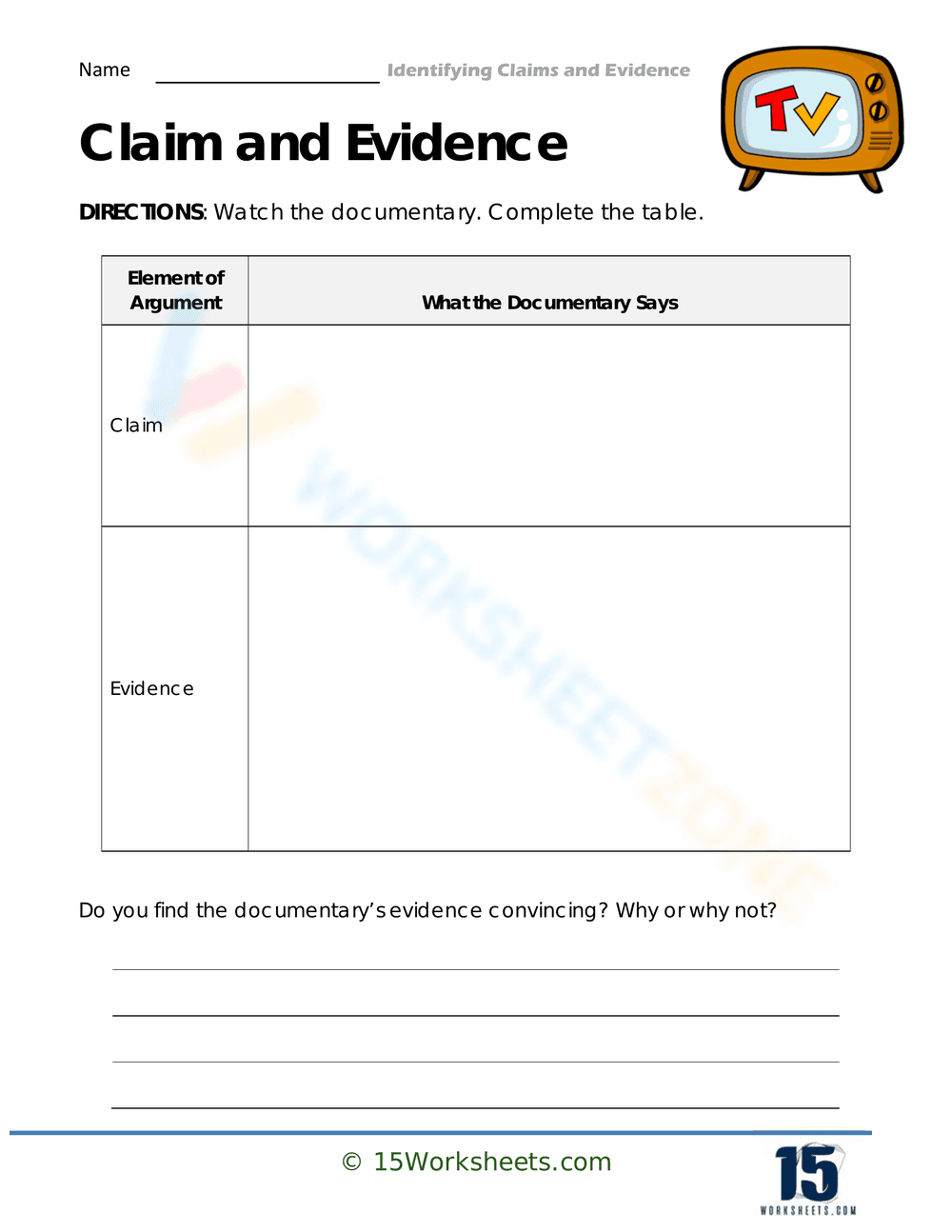
This is an educational worksheet titled 'Claim and Evidence.' The worksheet instructs students to watch a documentary and complete a table. The table has two columns: 'Element of Argument' and 'What the Documentary Says.' The rows are labeled 'Claim' and 'Evidence.' At the bottom of the worksheet, there's a question asking students if they find the documentary's evidence convincing and to explain why or why not.
Grade Level Suitability:
This worksheet is suitable for grades 6-8. It requires students to understand the concepts of claims and evidence, analyze information presented in a documentary, and formulate their own opinions with supporting reasons.
Why Use It:
This worksheet helps students develop critical thinking skills by analyzing arguments presented in a documentary. It reinforces the ability to identify claims and evidence, which are essential components of effective communication and persuasive writing. It also encourages students to form their own opinions based on the evidence presented.
How to Use It:
First, have students watch the assigned documentary. Then, guide them to identify the main claim presented in the documentary and write it in the 'Claim' row under 'What the Documentary Says.' Next, have them identify specific evidence presented in the documentary that supports the claim and write it in the 'Evidence' row. Finally, have them answer the question at the bottom, explaining whether they found the evidence convincing and providing reasons for their answer.
Target Users:
This worksheet is ideal for middle school students learning about argumentation, critical thinking, and media literacy. It can be used by teachers in English Language Arts, social studies, or any subject where analyzing claims and evidence is important.
This is an educational worksheet titled 'Claim and Evidence.' The worksheet instructs students to watch a documentary and complete a table. The table has two columns: 'Element of Argument' and 'What the Documentary Says.' The rows are labeled 'Claim' and 'Evidence.' At the bottom of the worksheet, there's a question asking students if they find the documentary's evidence convincing and to explain why or why not.
Grade Level Suitability:
This worksheet is suitable for grades 6-8. It requires students to understand the concepts of claims and evidence, analyze information presented in a documentary, and formulate their own opinions with supporting reasons.
Why Use It:
This worksheet helps students develop critical thinking skills by analyzing arguments presented in a documentary. It reinforces the ability to identify claims and evidence, which are essential components of effective communication and persuasive writing. It also encourages students to form their own opinions based on the evidence presented.
How to Use It:
First, have students watch the assigned documentary. Then, guide them to identify the main claim presented in the documentary and write it in the 'Claim' row under 'What the Documentary Says.' Next, have them identify specific evidence presented in the documentary that supports the claim and write it in the 'Evidence' row. Finally, have them answer the question at the bottom, explaining whether they found the evidence convincing and providing reasons for their answer.
Target Users:
This worksheet is ideal for middle school students learning about argumentation, critical thinking, and media literacy. It can be used by teachers in English Language Arts, social studies, or any subject where analyzing claims and evidence is important.


