


























1 / 2
0
Views
0
Downloads

0.0
0
0 Likes
Dred Scott and Sandford (1857) Worksheet Analysis
0 Views
0 Downloads
Paste this activity's link or code into your existing LMS (Google Classroom, Canvas, Teams, Schoology, Moodle, etc.).
Students can open and work on the activity right away, with no student login required.
You'll still be able to track student progress and results from your teacher account.
Information
Description
What It Is:
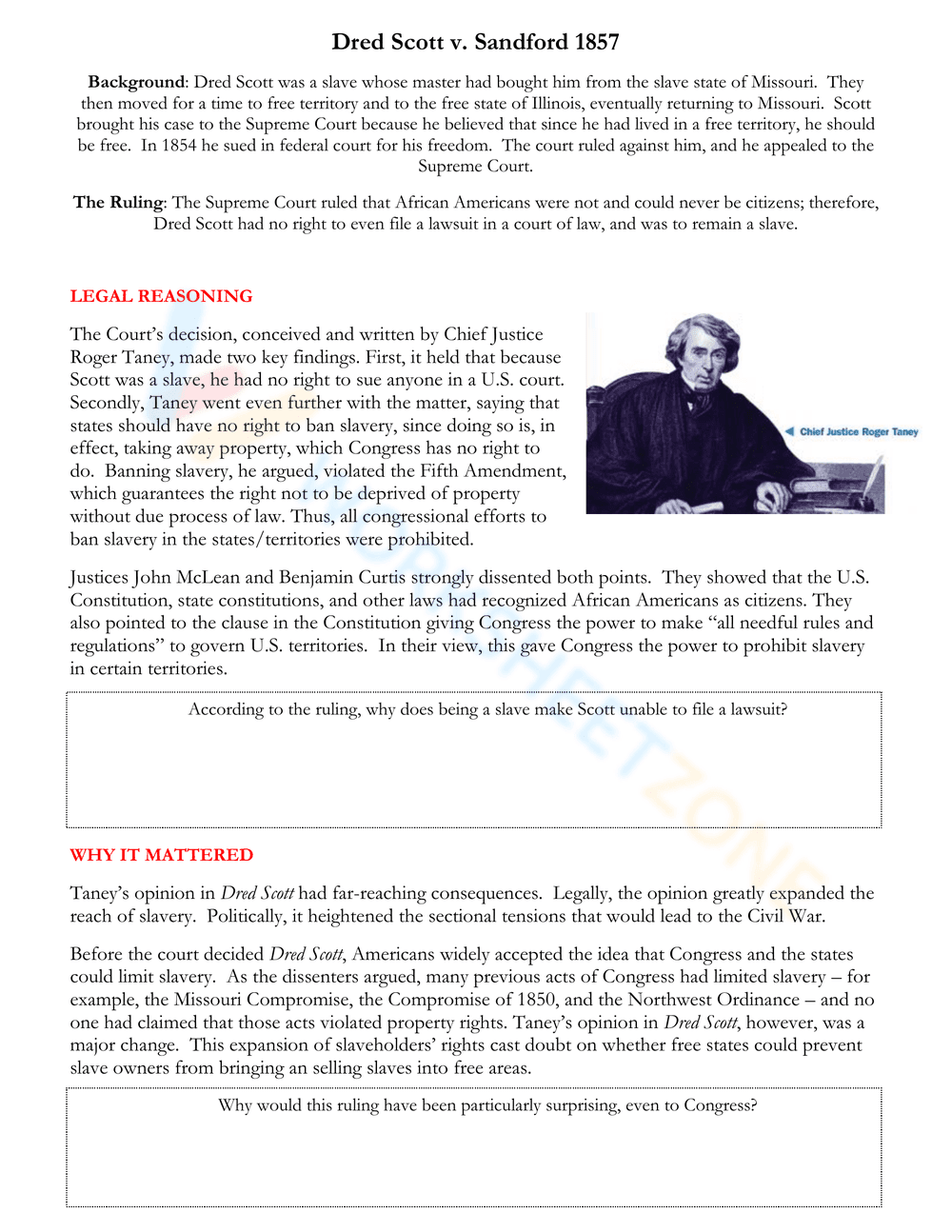
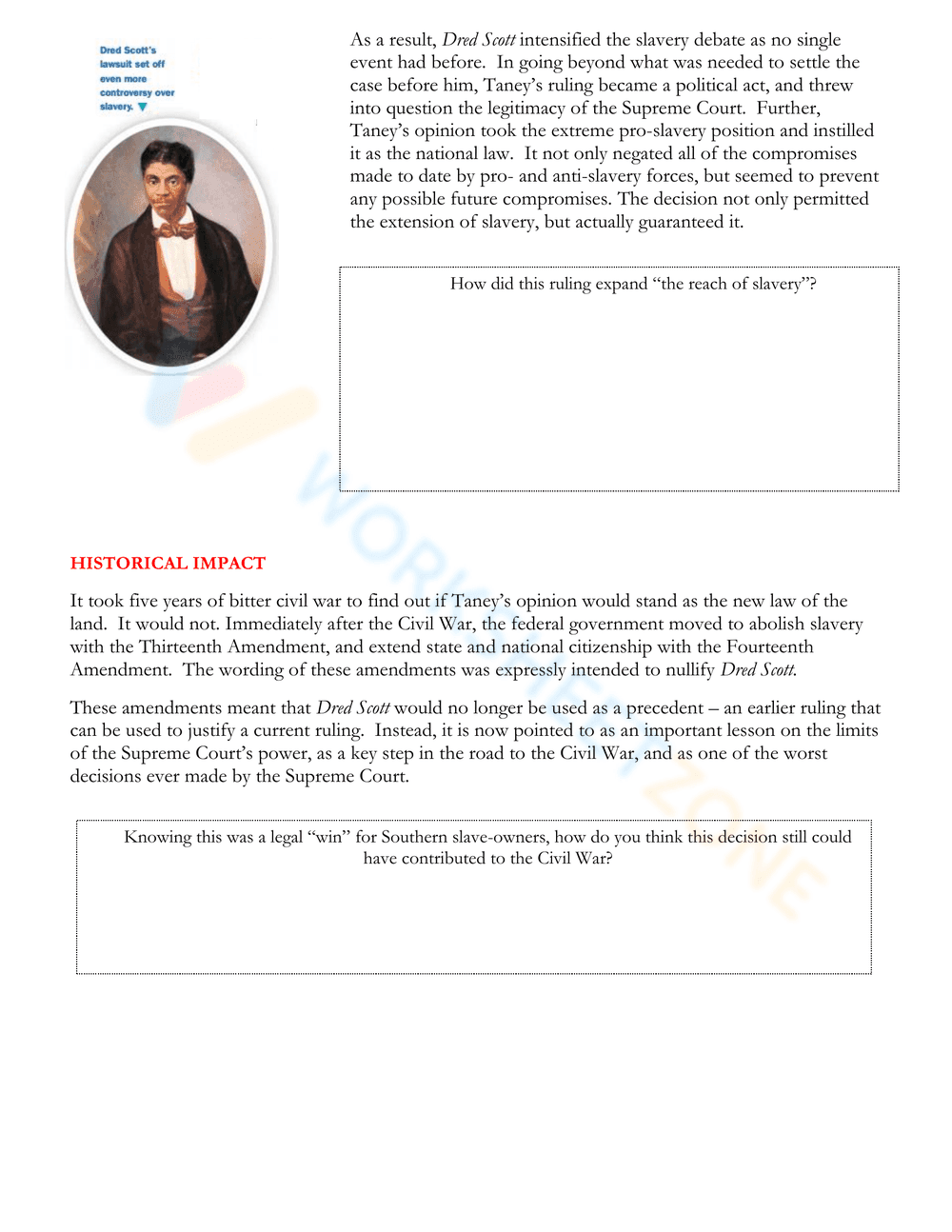
This is an educational worksheet about the Dred Scott v. Sandford Supreme Court case of 1857. It includes a background summary of the case, the ruling, legal reasoning behind the decision, and why the ruling mattered. There are also questions for students to answer related to the legal reasoning and impact of the ruling. A portrait of Chief Justice Roger Taney is included.
Grade Level Suitability:
This worksheet is suitable for grades 8-12, particularly in US History or Civics classes. The legal concepts and historical context require a level of reading comprehension and critical thinking typically found in middle and high school students.
Why Use It:
This worksheet helps students understand the complexities of the Dred Scott decision, including its legal justification, the dissenting opinions, and the long-term impact on the expansion of slavery and the lead-up to the Civil War. It encourages critical thinking about the role of the Supreme Court and the Constitution.
How to Use It:
Students should read the background information, the ruling, and the legal reasoning sections carefully. They should then answer the provided questions, referencing the text to support their answers. The worksheet can be used as an in-class activity, a homework assignment, or as a review of the Dred Scott case.
Target Users:
The target users are students in middle school and high school studying American History, Civics, or Government. It would also be helpful for anyone wanting to learn more about the Dred Scott decision and its historical context.
This is an educational worksheet about the Dred Scott v. Sandford Supreme Court case of 1857. It includes a background summary of the case, the ruling, legal reasoning behind the decision, and why the ruling mattered. There are also questions for students to answer related to the legal reasoning and impact of the ruling. A portrait of Chief Justice Roger Taney is included.
Grade Level Suitability:
This worksheet is suitable for grades 8-12, particularly in US History or Civics classes. The legal concepts and historical context require a level of reading comprehension and critical thinking typically found in middle and high school students.
Why Use It:
This worksheet helps students understand the complexities of the Dred Scott decision, including its legal justification, the dissenting opinions, and the long-term impact on the expansion of slavery and the lead-up to the Civil War. It encourages critical thinking about the role of the Supreme Court and the Constitution.
How to Use It:
Students should read the background information, the ruling, and the legal reasoning sections carefully. They should then answer the provided questions, referencing the text to support their answers. The worksheet can be used as an in-class activity, a homework assignment, or as a review of the Dred Scott case.
Target Users:
The target users are students in middle school and high school studying American History, Civics, or Government. It would also be helpful for anyone wanting to learn more about the Dred Scott decision and its historical context.


