


























1 / 2
0
Views
0
Downloads


0.0
0
0 Likes
Drugs and the Brain Web Quest
0 Views
0 Downloads
Paste this activity's link or code into your existing LMS (Google Classroom, Canvas, Teams, Schoology, Moodle, etc.).
Students can open and work on the activity right away, with no student login required.
You'll still be able to track student progress and results from your teacher account.
Information
Description
What It Is:
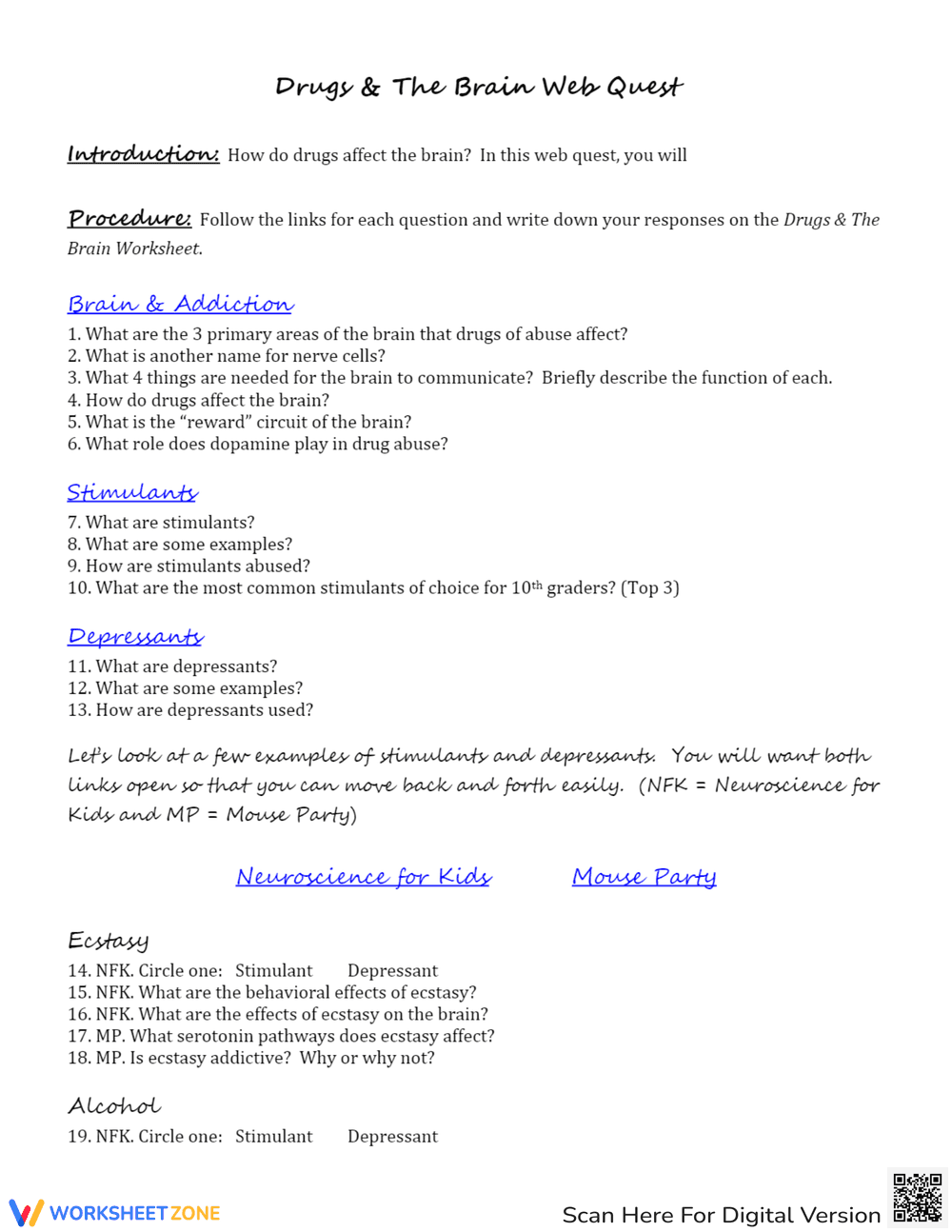
This is a 'Drugs & The Brain Web Quest' worksheet. It includes an introduction about how drugs affect the brain and directs students to follow links to answer questions about brain areas affected by drugs, addiction, stimulants, depressants, ecstasy, and alcohol. It includes questions about the effects of these substances on the brain and behavior, with references to external websites like 'Neuroscience for Kids' and 'Mouse Party'.
Grade Level Suitability:
This worksheet is suitable for grades 9-12, specifically high school students. The questions delve into complex topics like brain function, neurotransmitters (dopamine, serotonin), and the effects of different types of drugs, requiring a level of scientific understanding typically found in high school curricula. Question 10 specifically mentions 10th graders.
Why Use It:
This worksheet helps students understand the impact of drugs on the brain and body. It promotes research skills by directing students to external websites for information. It encourages critical thinking by asking students to analyze the effects of drugs on behavior and brain function, and to consider the addictive potential of substances.
How to Use It:
Students should follow the provided links ('Neuroscience for Kids' and 'Mouse Party') to research the answers to the questions. They should write their responses directly on the worksheet. For questions referencing 'NFK' or 'MP', students should use the corresponding website. For questions 14 and 19, students should circle either 'Stimulant' or 'Depressant' based on the drug being discussed.
Target Users:
The target users are high school students (grades 9-12) in a health, biology, or psychology class studying the effects of drugs on the brain and body. It is also suitable for educators looking for interactive and research-based activities to supplement their lessons on substance abuse and brain science.
This is a 'Drugs & The Brain Web Quest' worksheet. It includes an introduction about how drugs affect the brain and directs students to follow links to answer questions about brain areas affected by drugs, addiction, stimulants, depressants, ecstasy, and alcohol. It includes questions about the effects of these substances on the brain and behavior, with references to external websites like 'Neuroscience for Kids' and 'Mouse Party'.
Grade Level Suitability:
This worksheet is suitable for grades 9-12, specifically high school students. The questions delve into complex topics like brain function, neurotransmitters (dopamine, serotonin), and the effects of different types of drugs, requiring a level of scientific understanding typically found in high school curricula. Question 10 specifically mentions 10th graders.
Why Use It:
This worksheet helps students understand the impact of drugs on the brain and body. It promotes research skills by directing students to external websites for information. It encourages critical thinking by asking students to analyze the effects of drugs on behavior and brain function, and to consider the addictive potential of substances.
How to Use It:
Students should follow the provided links ('Neuroscience for Kids' and 'Mouse Party') to research the answers to the questions. They should write their responses directly on the worksheet. For questions referencing 'NFK' or 'MP', students should use the corresponding website. For questions 14 and 19, students should circle either 'Stimulant' or 'Depressant' based on the drug being discussed.
Target Users:
The target users are high school students (grades 9-12) in a health, biology, or psychology class studying the effects of drugs on the brain and body. It is also suitable for educators looking for interactive and research-based activities to supplement their lessons on substance abuse and brain science.


