


























1 / 3
0
Views
0
Downloads


0.0
0
0 Likes
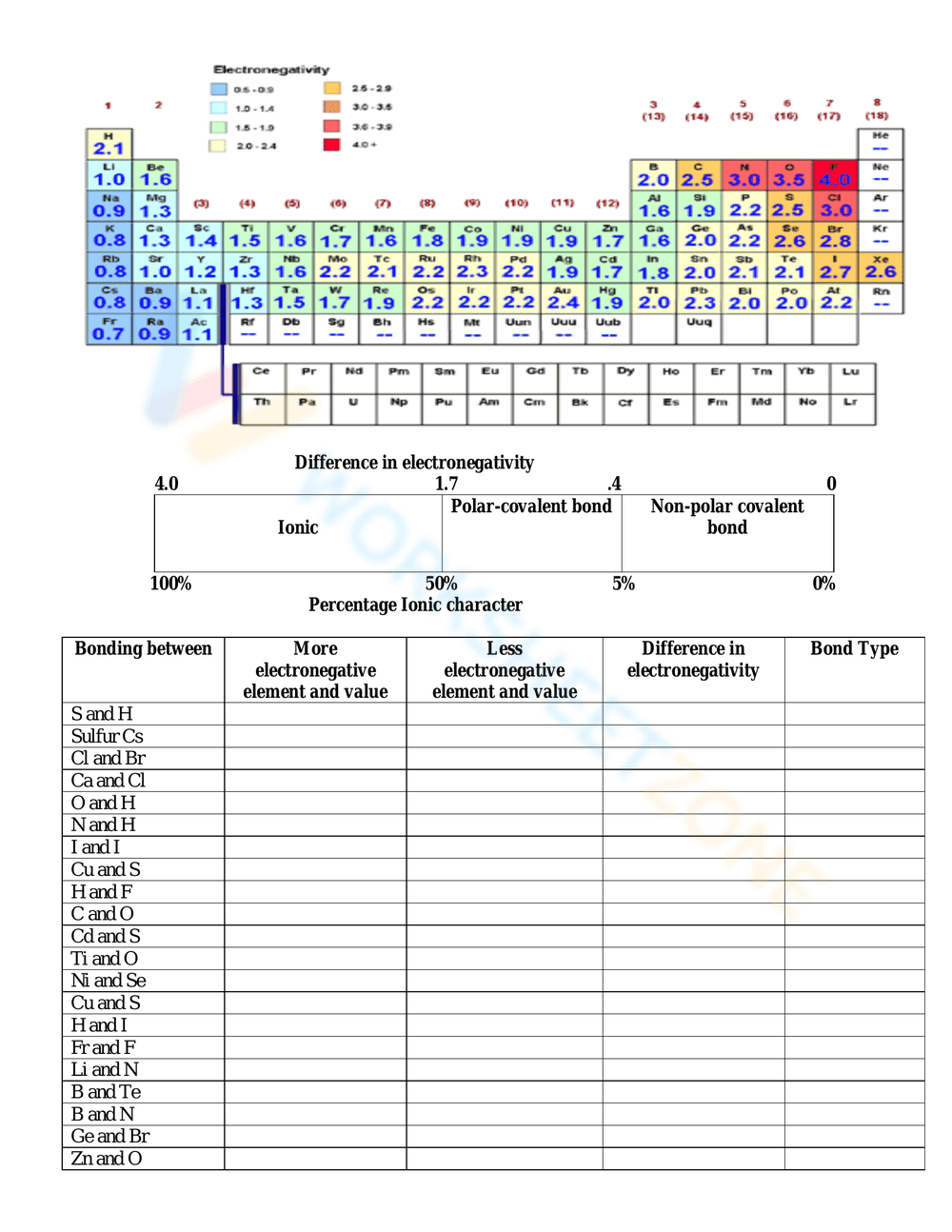
Electronegativity Worksheet for Chemistry
0 Views
0 Downloads
Paste this activity's link or code into your existing LMS (Google Classroom, Canvas, Teams, Schoology, Moodle, etc.).
Students can open and work on the activity right away, with no student login required.
You'll still be able to track student progress and results from your teacher account.
Information
Description
What It Is:
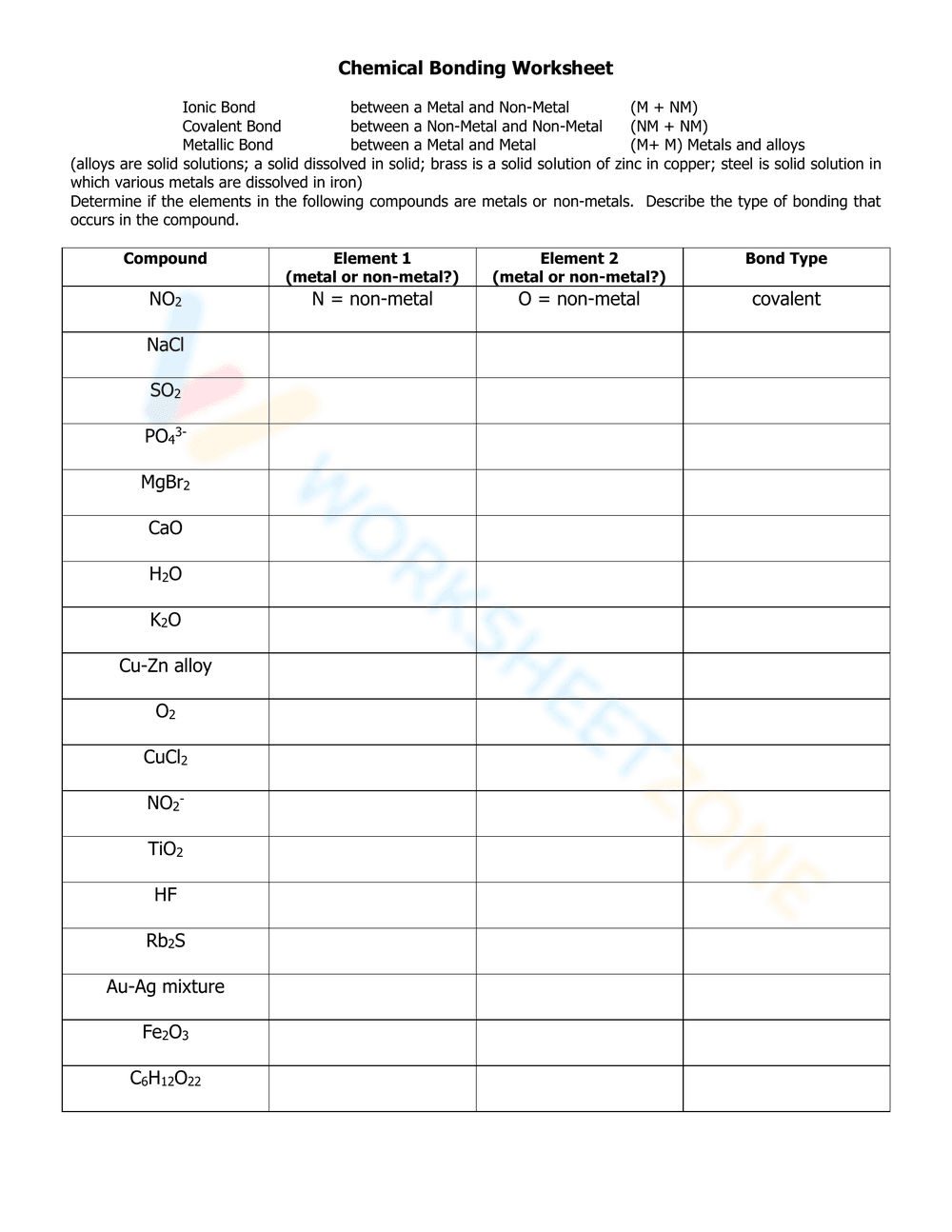
This is a chemical bonding worksheet. It requires students to determine if elements in a compound are metals or non-metals and then identify the type of bonding (ionic, covalent, or metallic) present. It includes a table with columns for the compound, element 1 (metal or non-metal?), element 2 (metal or non-metal?), and bond type. Example compounds include NO₂, NaCl, SO₂, PO₄³⁻, MgBr₂, CaO, H₂O, K₂O, Cu-Zn alloy, O₂, CuCl₂, NO₂⁻, TiO₂, HF, Rb₂S, Au-Ag mixture, Fe₂O₃, and C₆H₁₂O₆. The first row is filled out as an example showing NO₂ has N and O as non-metals and is a covalent bond.
Grade Level Suitability:
This worksheet is suitable for high school chemistry, specifically grades 9-12. It requires an understanding of the periodic table, the properties of metals and non-metals, and the different types of chemical bonds.
Why Use It:
This worksheet reinforces the concepts of chemical bonding by providing students with practice in identifying the elements within compounds as metals or non-metals and determining the resulting bond type. It promotes critical thinking and problem-solving skills related to chemical structures and properties.
How to Use It:
Students should first identify each element in the given compound. Then, using their knowledge of the periodic table, they should determine if each element is a metal or a non-metal. Finally, based on the types of elements present, they should determine the type of chemical bond (ionic, covalent, or metallic) that occurs in the compound and write it in the last column.
Target Users:
The target users are high school students taking chemistry, particularly those learning about chemical bonding. It can also be used as a review activity for students who have already covered the topic.
This is a chemical bonding worksheet. It requires students to determine if elements in a compound are metals or non-metals and then identify the type of bonding (ionic, covalent, or metallic) present. It includes a table with columns for the compound, element 1 (metal or non-metal?), element 2 (metal or non-metal?), and bond type. Example compounds include NO₂, NaCl, SO₂, PO₄³⁻, MgBr₂, CaO, H₂O, K₂O, Cu-Zn alloy, O₂, CuCl₂, NO₂⁻, TiO₂, HF, Rb₂S, Au-Ag mixture, Fe₂O₃, and C₆H₁₂O₆. The first row is filled out as an example showing NO₂ has N and O as non-metals and is a covalent bond.
Grade Level Suitability:
This worksheet is suitable for high school chemistry, specifically grades 9-12. It requires an understanding of the periodic table, the properties of metals and non-metals, and the different types of chemical bonds.
Why Use It:
This worksheet reinforces the concepts of chemical bonding by providing students with practice in identifying the elements within compounds as metals or non-metals and determining the resulting bond type. It promotes critical thinking and problem-solving skills related to chemical structures and properties.
How to Use It:
Students should first identify each element in the given compound. Then, using their knowledge of the periodic table, they should determine if each element is a metal or a non-metal. Finally, based on the types of elements present, they should determine the type of chemical bond (ionic, covalent, or metallic) that occurs in the compound and write it in the last column.
Target Users:
The target users are high school students taking chemistry, particularly those learning about chemical bonding. It can also be used as a review activity for students who have already covered the topic.


