


























1 / 4
0
Views
0
Downloads


0.0
0
0 Likes
Exploring the Evidence of Evolution
0 Views
0 Downloads
Paste this activity's link or code into your existing LMS (Google Classroom, Canvas, Teams, Schoology, Moodle, etc.).
Students can open and work on the activity right away, with no student login required.
You'll still be able to track student progress and results from your teacher account.
Information
Description
What It Is:
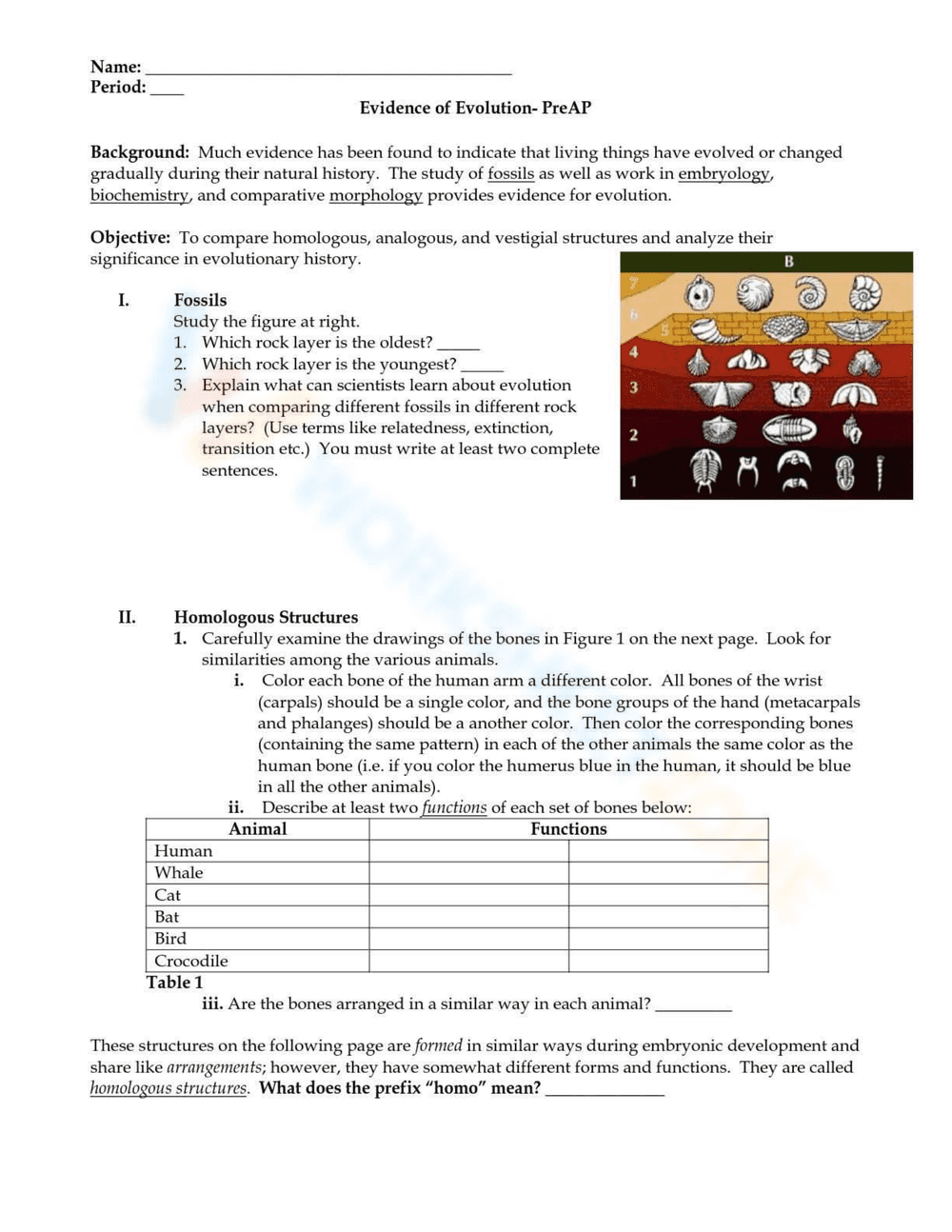
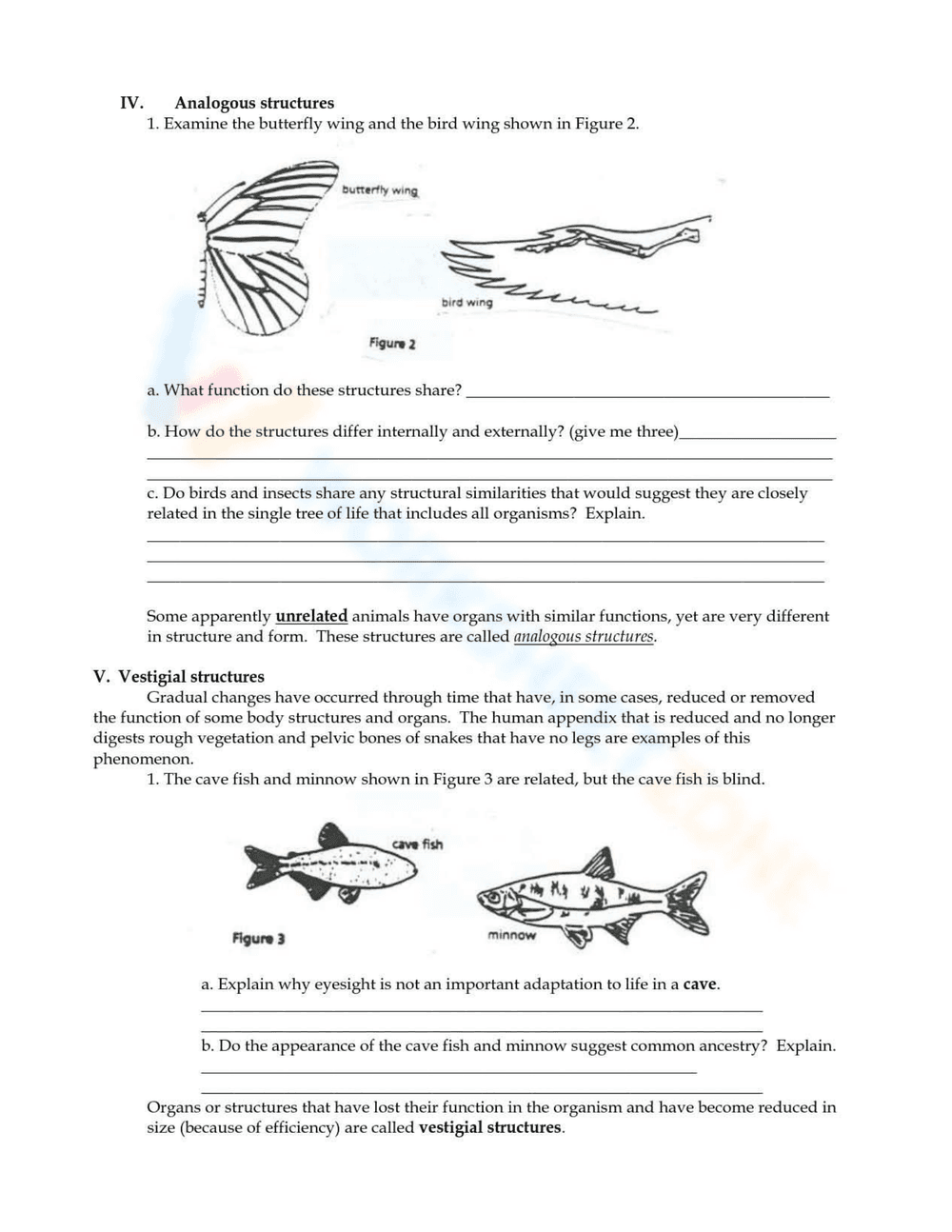
This is an educational worksheet focused on evidence of evolution. It includes sections on fossils and homologous structures. The fossil section asks students to analyze a diagram of rock layers and identify the oldest and youngest layers, and explain what can be learned about evolution by comparing fossils in different rock layers. The homologous structures section involves coloring bones in different animals based on similarities and describing at least two functions of each set of bones for different animals (Human, Whale, Cat, Bat, Bird, Crocodile). There is also a question about whether the bones are arranged in a similar way in each animal and what the prefix 'homo' means.
Grade Level Suitability:
This worksheet appears suitable for high school biology, particularly grades 9-12, potentially including Pre-AP biology. The content covers concepts like fossil analysis, homologous structures, and evolutionary relationships, which are typically part of a high school biology curriculum. The complexity of the analysis and the vocabulary used suggest a high school level.
Why Use It:
This worksheet helps students understand the evidence supporting evolution. It allows them to analyze fossil records, compare homologous structures in different animals, and make connections between anatomical similarities and evolutionary relationships. It promotes critical thinking and analytical skills while reinforcing key concepts in evolutionary biology.
How to Use It:
Students should first read the background information and objective. Then, they should carefully examine the provided diagrams of rock layers and animal bones. For the fossil section, they should answer the questions based on their observations of the diagram. For the homologous structures section, they should follow the coloring instructions, analyze the bone structures, and complete the table by describing the functions of the bones in each animal.
Target Users:
The target users are high school biology students, particularly those in grades 9-12, including those taking Pre-AP biology. It is also suitable for students learning about evolution, comparative anatomy, and fossil records.
This is an educational worksheet focused on evidence of evolution. It includes sections on fossils and homologous structures. The fossil section asks students to analyze a diagram of rock layers and identify the oldest and youngest layers, and explain what can be learned about evolution by comparing fossils in different rock layers. The homologous structures section involves coloring bones in different animals based on similarities and describing at least two functions of each set of bones for different animals (Human, Whale, Cat, Bat, Bird, Crocodile). There is also a question about whether the bones are arranged in a similar way in each animal and what the prefix 'homo' means.
Grade Level Suitability:
This worksheet appears suitable for high school biology, particularly grades 9-12, potentially including Pre-AP biology. The content covers concepts like fossil analysis, homologous structures, and evolutionary relationships, which are typically part of a high school biology curriculum. The complexity of the analysis and the vocabulary used suggest a high school level.
Why Use It:
This worksheet helps students understand the evidence supporting evolution. It allows them to analyze fossil records, compare homologous structures in different animals, and make connections between anatomical similarities and evolutionary relationships. It promotes critical thinking and analytical skills while reinforcing key concepts in evolutionary biology.
How to Use It:
Students should first read the background information and objective. Then, they should carefully examine the provided diagrams of rock layers and animal bones. For the fossil section, they should answer the questions based on their observations of the diagram. For the homologous structures section, they should follow the coloring instructions, analyze the bone structures, and complete the table by describing the functions of the bones in each animal.
Target Users:
The target users are high school biology students, particularly those in grades 9-12, including those taking Pre-AP biology. It is also suitable for students learning about evolution, comparative anatomy, and fossil records.


