


























1 / 5
0
Views
0
Downloads




0.0
0
0 Likes
Exothermic and Endothermic Processes
0 Views
0 Downloads
Paste this activity's link or code into your existing LMS (Google Classroom, Canvas, Teams, Schoology, Moodle, etc.).
Students can open and work on the activity right away, with no student login required.
You'll still be able to track student progress and results from your teacher account.
Information
Description
What It Is:
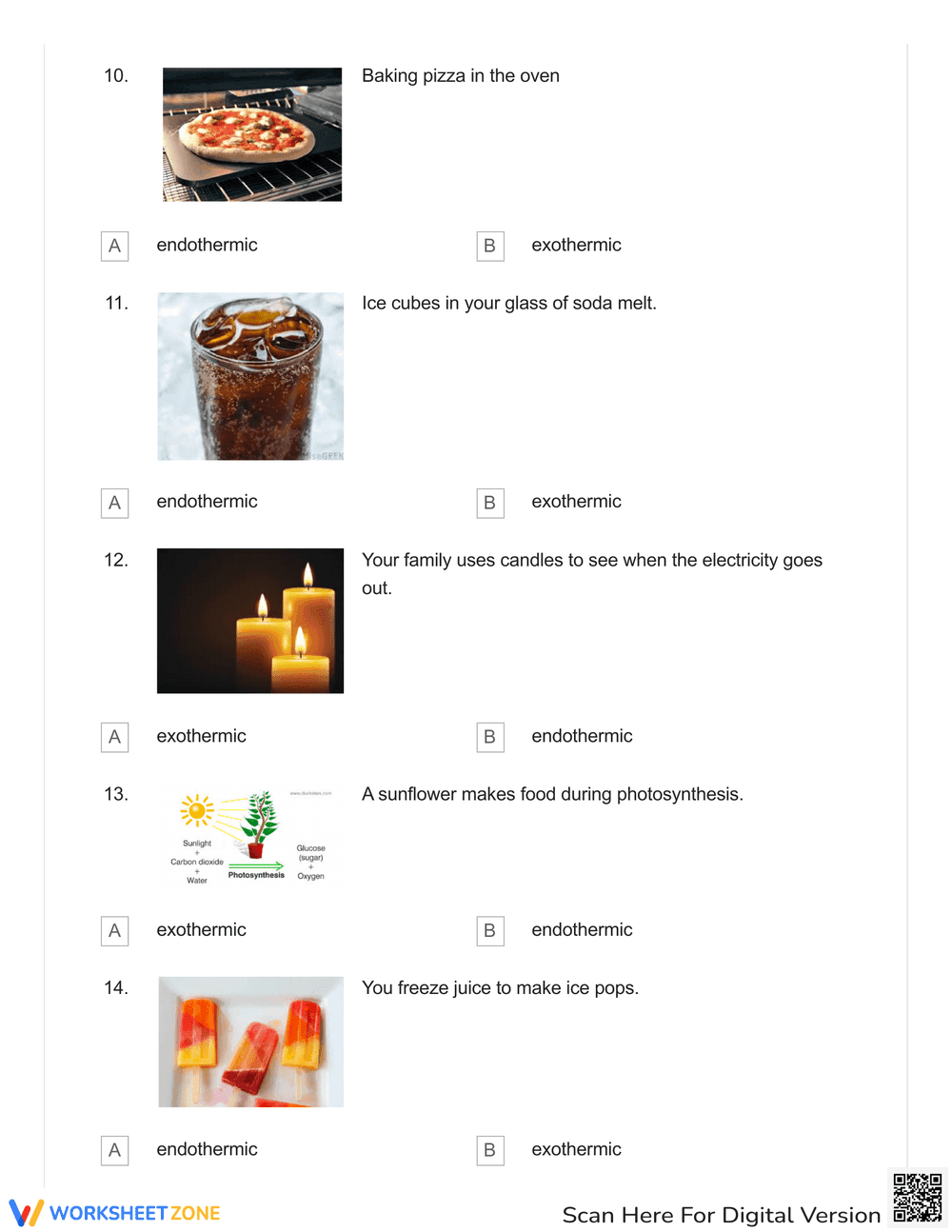
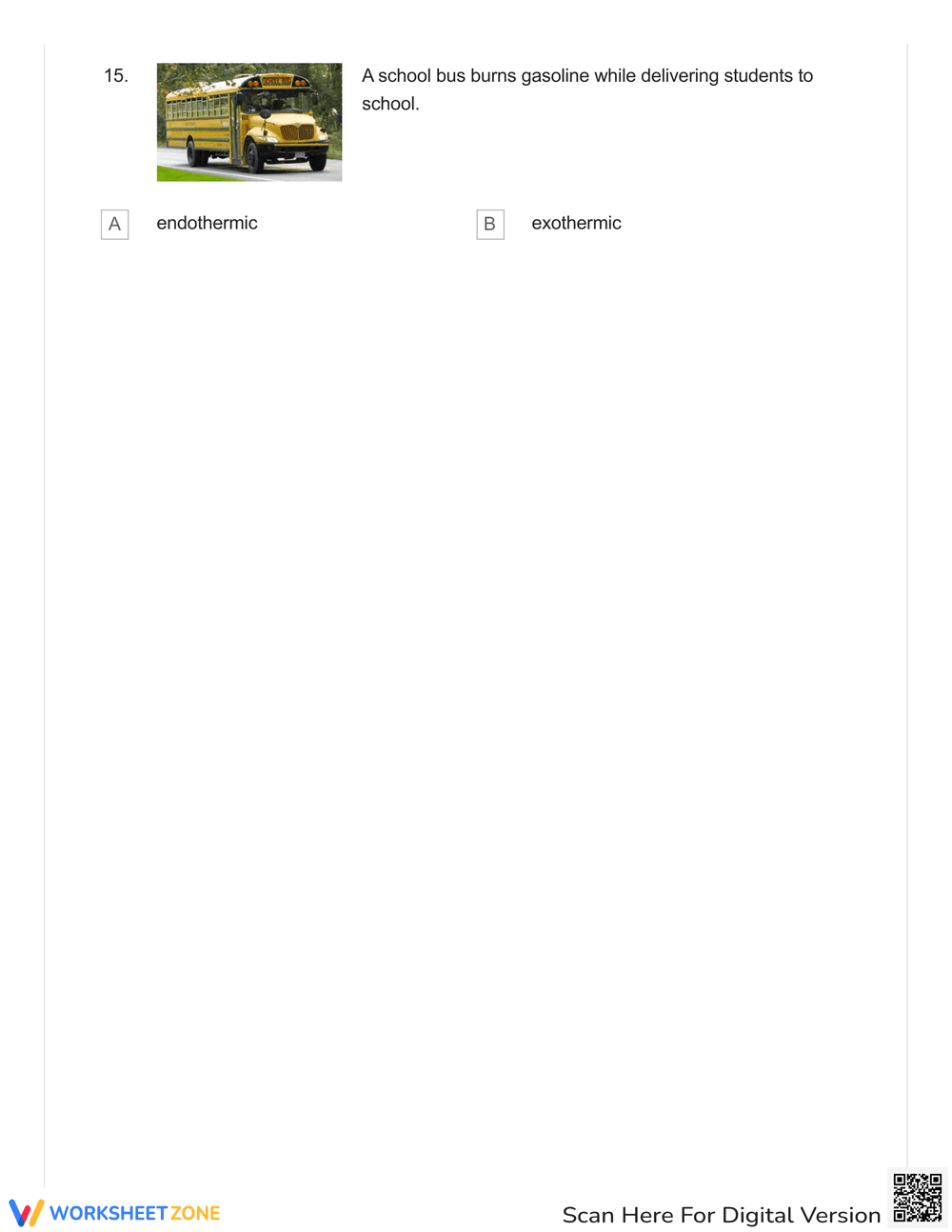
This is a science worksheet focused on exothermic and endothermic reactions. It contains multiple-choice questions. The first question asks about energy in endothermic reactions. Questions 2 and 3 include images (fire and ice) and ask if the reactions feel hot or cold, requiring students to identify them as exothermic or endothermic. Question 4 asks about the type of reaction when a solid turns into a liquid and then into a gas. The worksheet includes spaces for the student's name, class, and date.
Grade Level Suitability:
This worksheet is suitable for grades 8-10. The concepts of exothermic and endothermic reactions, along with changes of state, are typically introduced in middle school or early high school science courses. The multiple-choice format makes it accessible for this age range.
Why Use It:
This worksheet reinforces understanding of exothermic and endothermic reactions. It helps students associate real-world examples (fire, ice) with the concepts and tests their knowledge of energy changes during phase transitions. It provides practice with multiple-choice questions, preparing students for assessments.
How to Use It:
Students should read each question carefully and select the best answer from the multiple-choice options. They should use their knowledge of exothermic and endothermic reactions to determine whether energy is released or absorbed. The images can be used as visual aids to help students recall the characteristics of each type of reaction.
Target Users:
The target users are middle school and high school students learning about chemistry and physical science, specifically the concepts of exothermic and endothermic reactions. It is also useful for teachers looking for practice or assessment materials on this topic.
This is a science worksheet focused on exothermic and endothermic reactions. It contains multiple-choice questions. The first question asks about energy in endothermic reactions. Questions 2 and 3 include images (fire and ice) and ask if the reactions feel hot or cold, requiring students to identify them as exothermic or endothermic. Question 4 asks about the type of reaction when a solid turns into a liquid and then into a gas. The worksheet includes spaces for the student's name, class, and date.
Grade Level Suitability:
This worksheet is suitable for grades 8-10. The concepts of exothermic and endothermic reactions, along with changes of state, are typically introduced in middle school or early high school science courses. The multiple-choice format makes it accessible for this age range.
Why Use It:
This worksheet reinforces understanding of exothermic and endothermic reactions. It helps students associate real-world examples (fire, ice) with the concepts and tests their knowledge of energy changes during phase transitions. It provides practice with multiple-choice questions, preparing students for assessments.
How to Use It:
Students should read each question carefully and select the best answer from the multiple-choice options. They should use their knowledge of exothermic and endothermic reactions to determine whether energy is released or absorbed. The images can be used as visual aids to help students recall the characteristics of each type of reaction.
Target Users:
The target users are middle school and high school students learning about chemistry and physical science, specifically the concepts of exothermic and endothermic reactions. It is also useful for teachers looking for practice or assessment materials on this topic.


