


























0
Views
0
Downloads

0.0
0
0 Likes
Comparative Adjectives Fill-in Worksheet
0 Views
0 Downloads
Paste this activity's link or code into your existing LMS (Google Classroom, Canvas, Teams, Schoology, Moodle, etc.).
Students can open and work on the activity right away, with no student login required.
You'll still be able to track student progress and results from your teacher account.
Information
Description
What It Is:
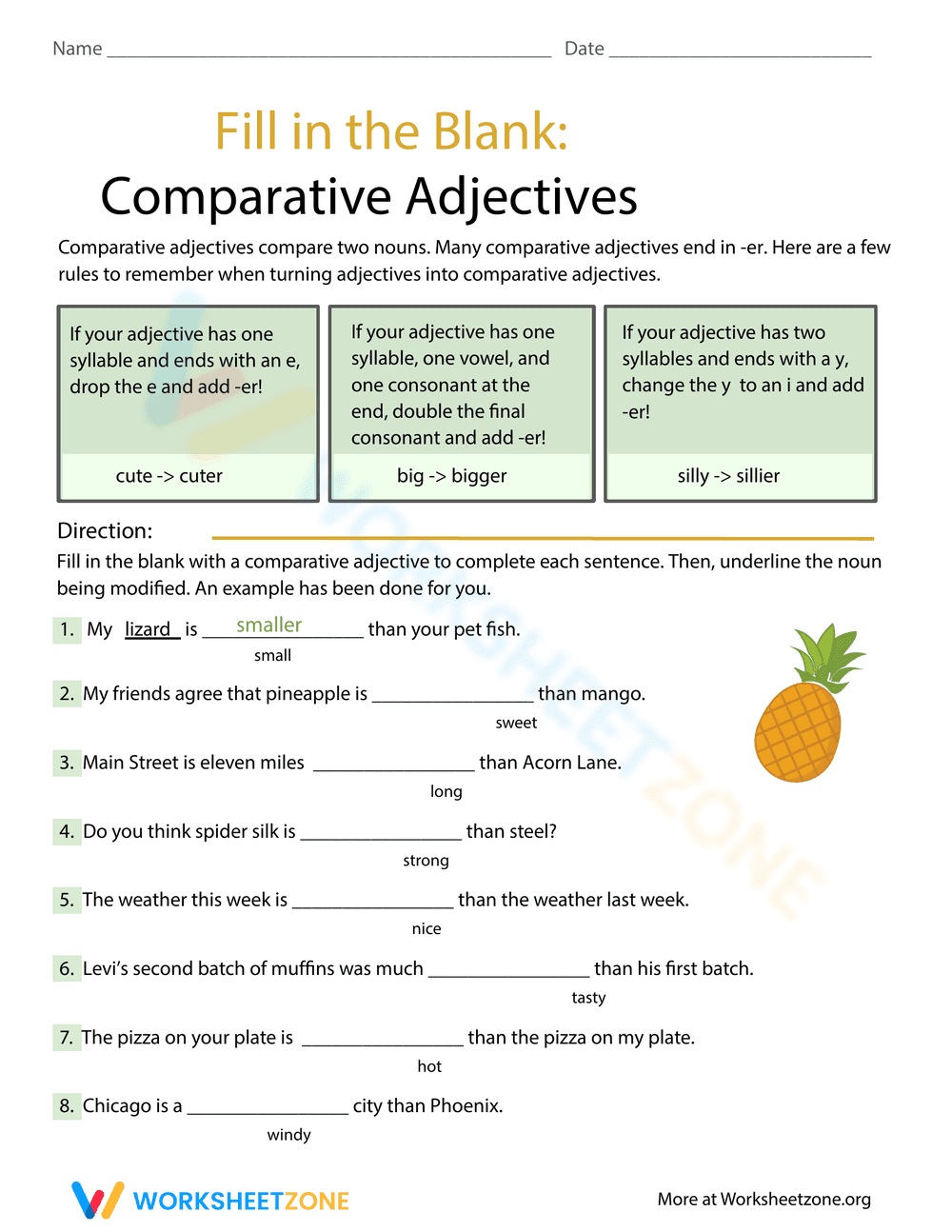
This is an educational worksheet focused on comparative adjectives. It includes fill-in-the-blank sentences where students must use the comparative form of an adjective. The worksheet provides rules for forming comparative adjectives based on syllable count and ending letters, with examples like 'cute -> cuter', 'big -> bigger', and 'silly -> sillier'. Students are also instructed to underline the noun being modified in each sentence.
Grade Level Suitability:
This worksheet is suitable for 2nd to 4th grade students. It reinforces grammar skills and vocabulary development by focusing on the correct usage and formation of comparative adjectives. The sentences are simple and relatable, making it accessible for this age group.
Why Use It:
This worksheet helps students understand and practice using comparative adjectives correctly. It reinforces grammar rules and improves sentence construction skills. By underlining the modified noun, it helps students understand the relationship between adjectives and nouns.
How to Use It:
Students should read the instructions and examples provided at the top of the worksheet. Then, they should read each sentence and fill in the blank with the correct comparative form of the adjective provided in parentheses. Finally, they should underline the noun that the adjective is modifying in each sentence.
Target Users:
The target users are elementary school students in grades 2-4 who are learning about comparative adjectives. It's also helpful for ESL students who need practice with English grammar and vocabulary.
This is an educational worksheet focused on comparative adjectives. It includes fill-in-the-blank sentences where students must use the comparative form of an adjective. The worksheet provides rules for forming comparative adjectives based on syllable count and ending letters, with examples like 'cute -> cuter', 'big -> bigger', and 'silly -> sillier'. Students are also instructed to underline the noun being modified in each sentence.
Grade Level Suitability:
This worksheet is suitable for 2nd to 4th grade students. It reinforces grammar skills and vocabulary development by focusing on the correct usage and formation of comparative adjectives. The sentences are simple and relatable, making it accessible for this age group.
Why Use It:
This worksheet helps students understand and practice using comparative adjectives correctly. It reinforces grammar rules and improves sentence construction skills. By underlining the modified noun, it helps students understand the relationship between adjectives and nouns.
How to Use It:
Students should read the instructions and examples provided at the top of the worksheet. Then, they should read each sentence and fill in the blank with the correct comparative form of the adjective provided in parentheses. Finally, they should underline the noun that the adjective is modifying in each sentence.
Target Users:
The target users are elementary school students in grades 2-4 who are learning about comparative adjectives. It's also helpful for ESL students who need practice with English grammar and vocabulary.


