


























1 / 3
0
Views
0
Downloads

0 Likes
Fourth Step Inventory: Fear Assessment
0 Views
0 Downloads
Paste this activity's link or code into your existing LMS (Google Classroom, Canvas, Teams, Schoology, Moodle, etc.).
Students can open and work on the activity right away, with no student login required.
You'll still be able to track student progress and results from your teacher account.
Information
Description
What It Is:
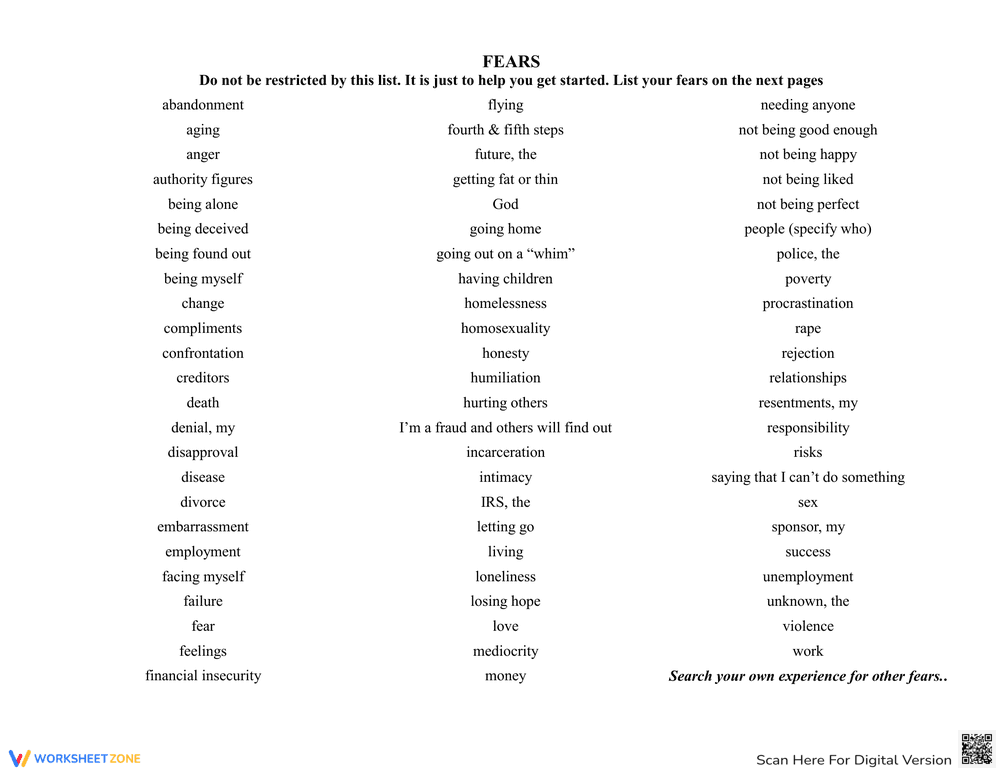
This is a worksheet designed to help individuals explore and identify their fears. It provides a list of common fears such as abandonment, aging, flying, being alone, homelessness, incarceration, intimacy, rejection, and unemployment, among many others. The worksheet encourages users to consider these listed fears as a starting point and then expand upon them by listing their own personal fears on subsequent pages.
Grade Level Suitability:
This worksheet is most suitable for high school students (grades 9-12) and adults. The vocabulary and concepts explored are more appropriate for older audiences who have the emotional maturity and cognitive ability to reflect on their fears in a meaningful way.
Why Use It:
This worksheet can be used to promote self-awareness and emotional intelligence. By identifying and acknowledging their fears, individuals can begin to understand the root causes of their anxieties and develop coping mechanisms. It can also serve as a starting point for discussions about mental health and well-being.
How to Use It:
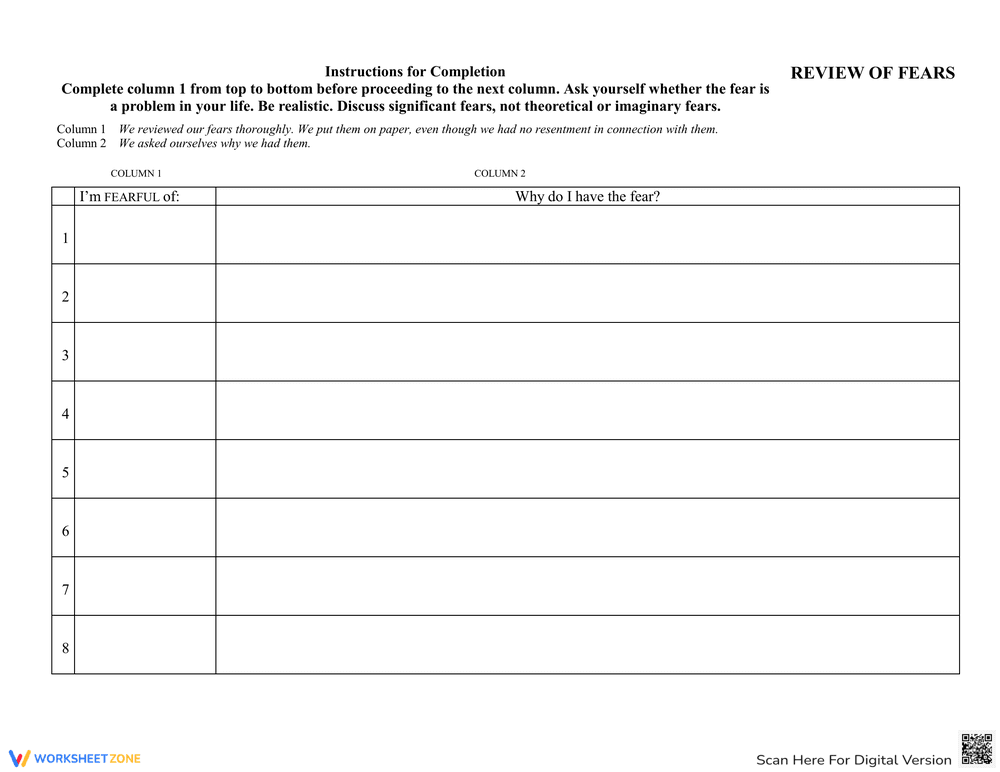
Begin by reading through the list of fears provided. Consider which fears resonate with you and why. Use the space provided on the following pages to list any additional fears that are not included in the initial list. Reflect on the origins and impact of each fear. This worksheet can be completed independently or as part of a group activity with guided discussion.
Target Users:
This worksheet is beneficial for high school students, college students, adults, individuals in therapy, and anyone interested in exploring their emotional landscape and gaining a better understanding of their fears.
This is a worksheet designed to help individuals explore and identify their fears. It provides a list of common fears such as abandonment, aging, flying, being alone, homelessness, incarceration, intimacy, rejection, and unemployment, among many others. The worksheet encourages users to consider these listed fears as a starting point and then expand upon them by listing their own personal fears on subsequent pages.
Grade Level Suitability:
This worksheet is most suitable for high school students (grades 9-12) and adults. The vocabulary and concepts explored are more appropriate for older audiences who have the emotional maturity and cognitive ability to reflect on their fears in a meaningful way.
Why Use It:
This worksheet can be used to promote self-awareness and emotional intelligence. By identifying and acknowledging their fears, individuals can begin to understand the root causes of their anxieties and develop coping mechanisms. It can also serve as a starting point for discussions about mental health and well-being.
How to Use It:
Begin by reading through the list of fears provided. Consider which fears resonate with you and why. Use the space provided on the following pages to list any additional fears that are not included in the initial list. Reflect on the origins and impact of each fear. This worksheet can be completed independently or as part of a group activity with guided discussion.
Target Users:
This worksheet is beneficial for high school students, college students, adults, individuals in therapy, and anyone interested in exploring their emotional landscape and gaining a better understanding of their fears.


