


























1 / 5
0
Views
0
Downloads


0.0
0
0 Likes
Genetics Vocabulary: Practice Worksheet for Biology
0 Views
0 Downloads
Paste this activity's link or code into your existing LMS (Google Classroom, Canvas, Teams, Schoology, Moodle, etc.).
Students can open and work on the activity right away, with no student login required.
You'll still be able to track student progress and results from your teacher account.
Information
Description
What It Is:
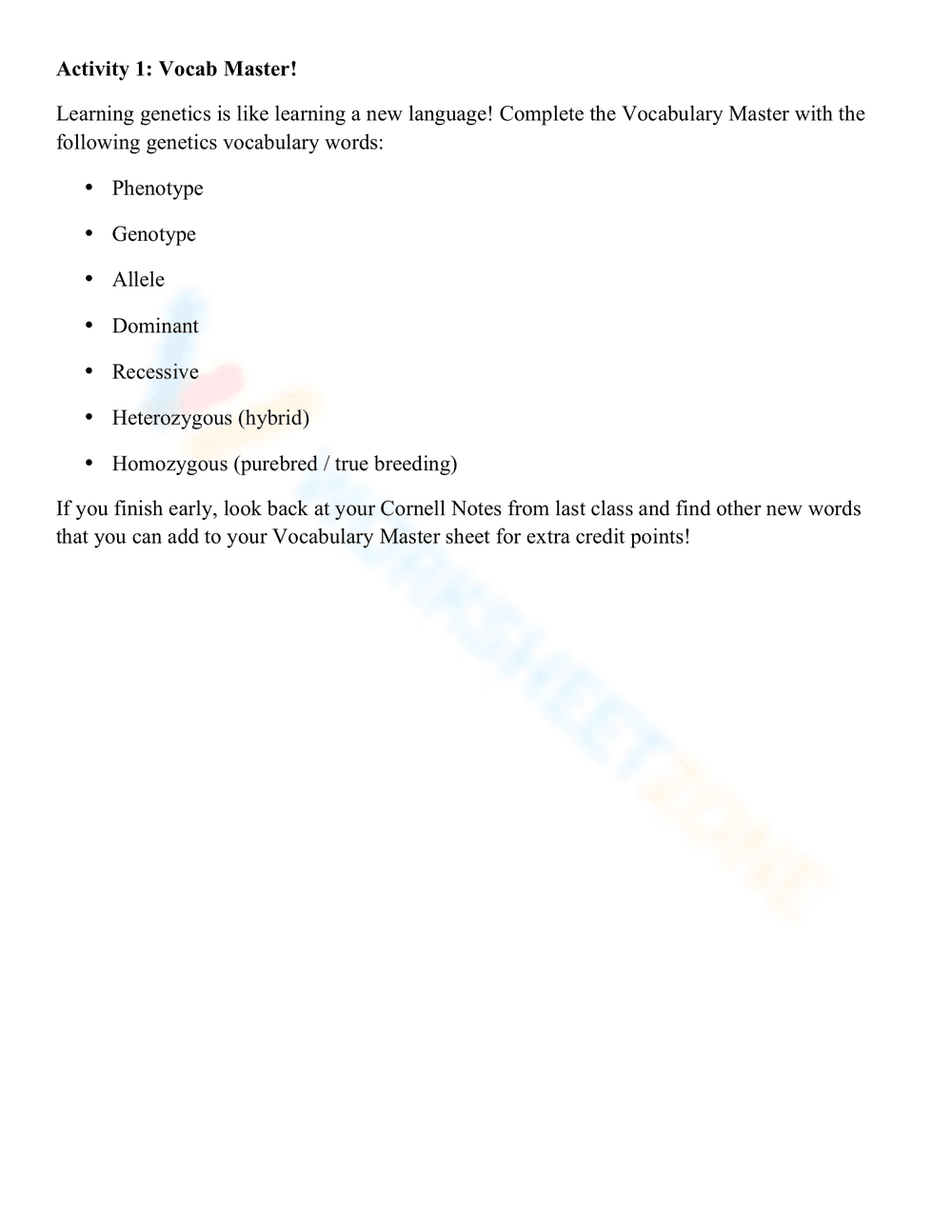
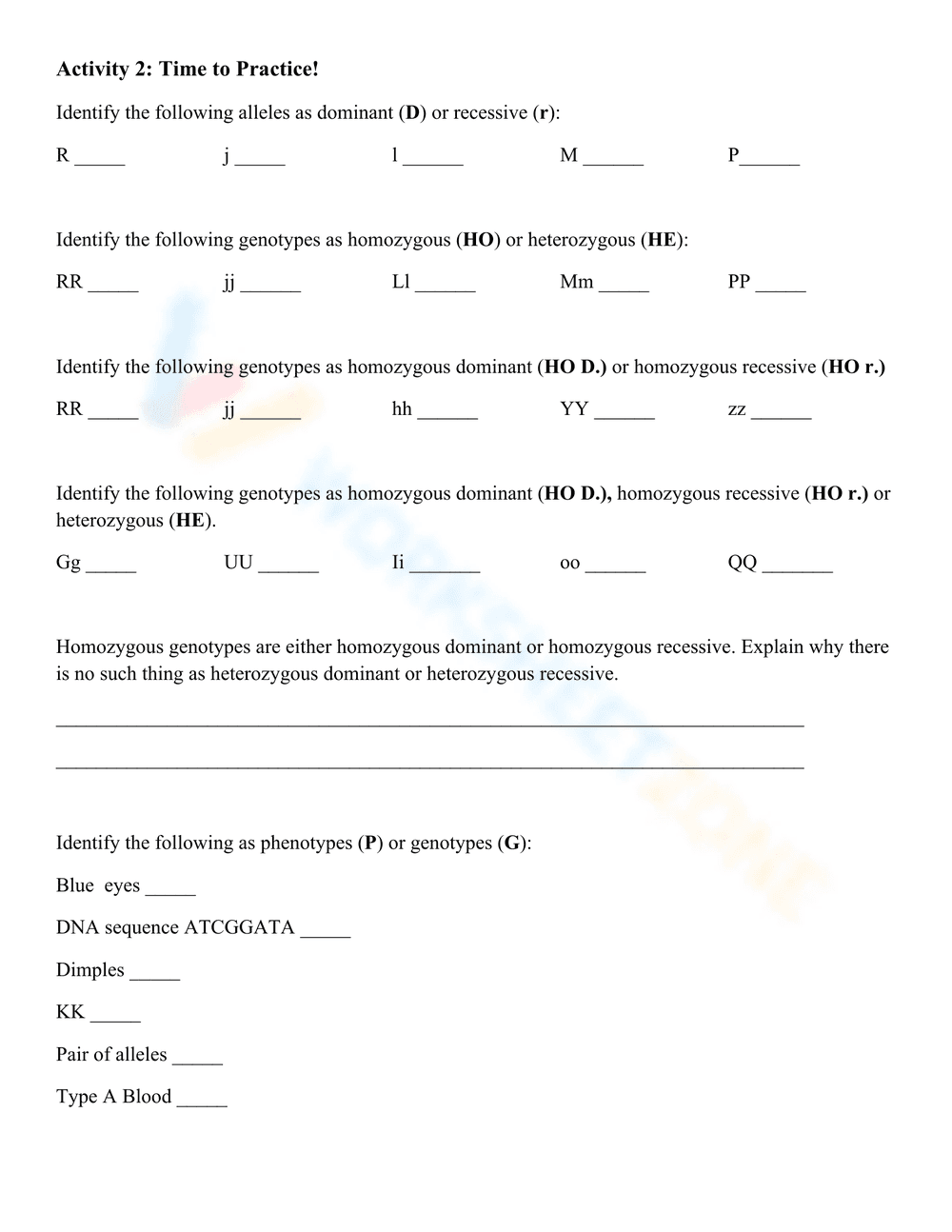
This is a Biology I worksheet, 'Daysheet 53: Genetics Vocabulary Practice', focused on basic genetics concepts. It includes definitions and examples of terms like heredity, traits, phenotype, alleles, genotype, dominant allele, recessive allele, homozygous, and heterozygous. The worksheet contains sections where students identify examples of phenotypes/genotypes and dominant/recessive alleles, and homozygous/heterozygous genotypes. It references Gregor Mendel's work with pea plants.
Grade Level Suitability:
This worksheet is suitable for high school Biology I students, likely around grades 9-10. The content covers fundamental genetics vocabulary and concepts that are typically introduced at this level. The activities require reading comprehension and the application of definitions to specific examples.
Why Use It:
This worksheet reinforces understanding of basic genetics vocabulary. It helps students differentiate between related concepts like genotype and phenotype, and dominant and recessive alleles. It also introduces the historical context of genetics through Gregor Mendel's experiments. The activities promote active learning and vocabulary retention.
How to Use It:
Students should read the provided text, highlighting or underlining the definitions of the bolded vocabulary words. Then, they should complete the sections in the margins by identifying examples of phenotypes/genotypes, dominant/recessive alleles, and homozygous/heterozygous genotypes based on the text. The worksheet can be used as an in-class activity, homework assignment, or review tool.
Target Users:
The target users are high school Biology I students who are learning about basic genetics concepts. It is also suitable for students who need a review of genetics vocabulary. The worksheet can be used by teachers as part of a genetics unit or by students for self-study.
This is a Biology I worksheet, 'Daysheet 53: Genetics Vocabulary Practice', focused on basic genetics concepts. It includes definitions and examples of terms like heredity, traits, phenotype, alleles, genotype, dominant allele, recessive allele, homozygous, and heterozygous. The worksheet contains sections where students identify examples of phenotypes/genotypes and dominant/recessive alleles, and homozygous/heterozygous genotypes. It references Gregor Mendel's work with pea plants.
Grade Level Suitability:
This worksheet is suitable for high school Biology I students, likely around grades 9-10. The content covers fundamental genetics vocabulary and concepts that are typically introduced at this level. The activities require reading comprehension and the application of definitions to specific examples.
Why Use It:
This worksheet reinforces understanding of basic genetics vocabulary. It helps students differentiate between related concepts like genotype and phenotype, and dominant and recessive alleles. It also introduces the historical context of genetics through Gregor Mendel's experiments. The activities promote active learning and vocabulary retention.
How to Use It:
Students should read the provided text, highlighting or underlining the definitions of the bolded vocabulary words. Then, they should complete the sections in the margins by identifying examples of phenotypes/genotypes, dominant/recessive alleles, and homozygous/heterozygous genotypes based on the text. The worksheet can be used as an in-class activity, homework assignment, or review tool.
Target Users:
The target users are high school Biology I students who are learning about basic genetics concepts. It is also suitable for students who need a review of genetics vocabulary. The worksheet can be used by teachers as part of a genetics unit or by students for self-study.


