


























0
Views
0
Downloads

0 Likes
Exploring the Process of Germination
0 Views
0 Downloads
Paste this activity's link or code into your existing LMS (Google Classroom, Canvas, Teams, Schoology, Moodle, etc.).
Students can open and work on the activity right away, with no student login required.
You'll still be able to track student progress and results from your teacher account.
Information
Description
What It Is:
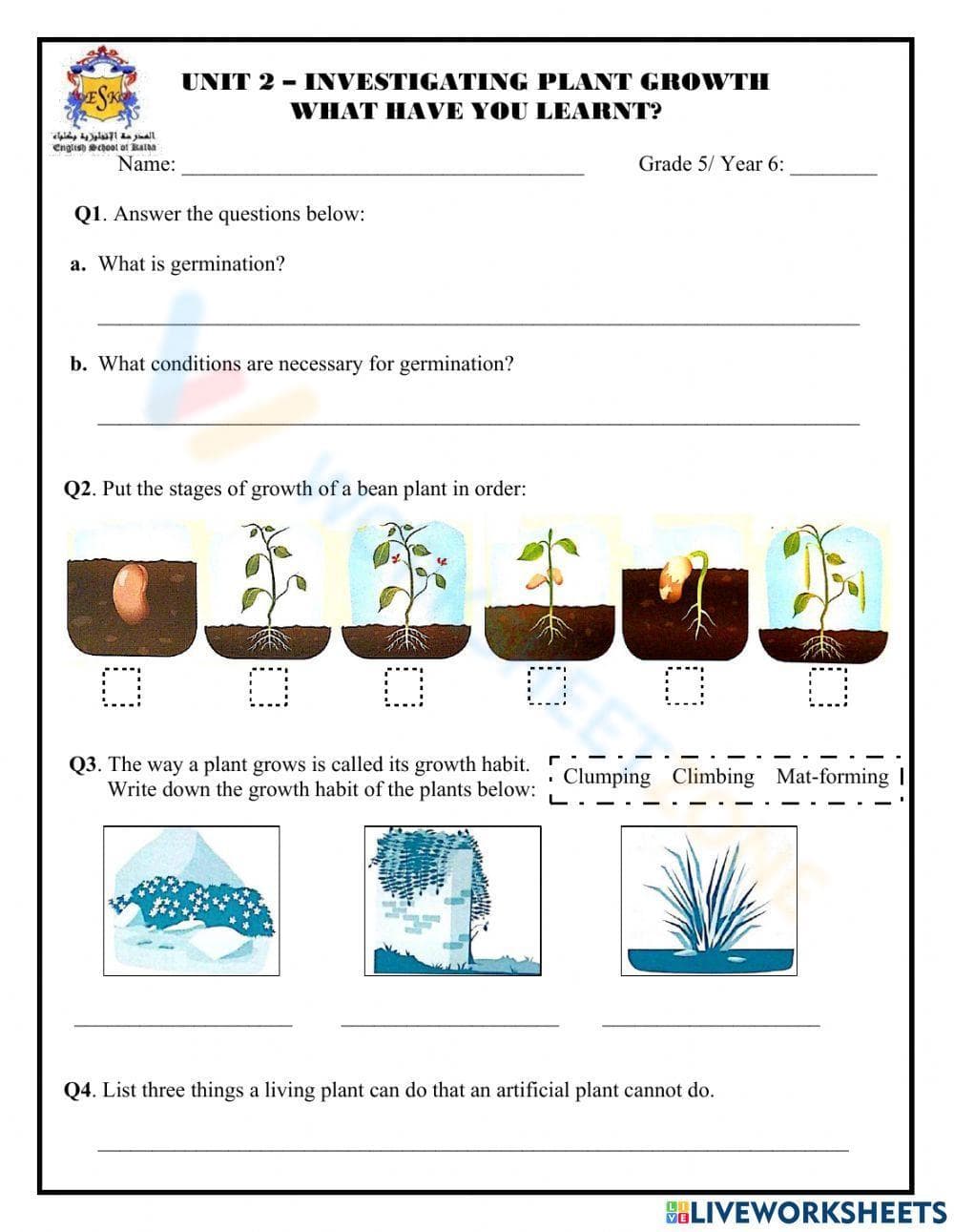
This is an educational worksheet titled 'Unit 2 - Investigating Plant Growth: What Have You Learnt?'. It contains questions about plant germination, including defining germination and listing necessary conditions. It also includes an activity where students must order the stages of bean plant growth depicted in a series of images. Additionally, it asks students to identify the growth habit (clumping, climbing, or mat-forming) of different plants shown in images and to list three things a living plant can do that an artificial plant cannot.
Grade Level Suitability:
This worksheet is suitable for Grade 5 and Year 6 students. The questions require a basic understanding of plant biology concepts, such as germination, growth stages, and growth habits, which are typically covered in these grade levels.
Why Use It:
This worksheet reinforces learning about plant growth and development. It helps students understand the process of germination, the different stages of plant growth, and how plants adapt to their environment through different growth habits. It also encourages critical thinking by comparing living and artificial plants.
How to Use It:
Students should first read the questions carefully and recall what they have learned about plant growth. They should then write their answers to the questions about germination. Next, they should examine the images of the bean plant's growth stages and number them in the correct order. After that, they need to identify the growth habit of each plant pictured and write it down. Finally, they should list three differences between living and artificial plants.
Target Users:
The target users are elementary school students in Grade 5 or Year 6 who are studying plant biology. It is also useful for teachers looking for assessment tools or supplemental activities to reinforce their lessons on plant growth.
This is an educational worksheet titled 'Unit 2 - Investigating Plant Growth: What Have You Learnt?'. It contains questions about plant germination, including defining germination and listing necessary conditions. It also includes an activity where students must order the stages of bean plant growth depicted in a series of images. Additionally, it asks students to identify the growth habit (clumping, climbing, or mat-forming) of different plants shown in images and to list three things a living plant can do that an artificial plant cannot.
Grade Level Suitability:
This worksheet is suitable for Grade 5 and Year 6 students. The questions require a basic understanding of plant biology concepts, such as germination, growth stages, and growth habits, which are typically covered in these grade levels.
Why Use It:
This worksheet reinforces learning about plant growth and development. It helps students understand the process of germination, the different stages of plant growth, and how plants adapt to their environment through different growth habits. It also encourages critical thinking by comparing living and artificial plants.
How to Use It:
Students should first read the questions carefully and recall what they have learned about plant growth. They should then write their answers to the questions about germination. Next, they should examine the images of the bean plant's growth stages and number them in the correct order. After that, they need to identify the growth habit of each plant pictured and write it down. Finally, they should list three differences between living and artificial plants.
Target Users:
The target users are elementary school students in Grade 5 or Year 6 who are studying plant biology. It is also useful for teachers looking for assessment tools or supplemental activities to reinforce their lessons on plant growth.


