


























1 / 2
0
Views
0
Plays

0.0
0
0 Likes
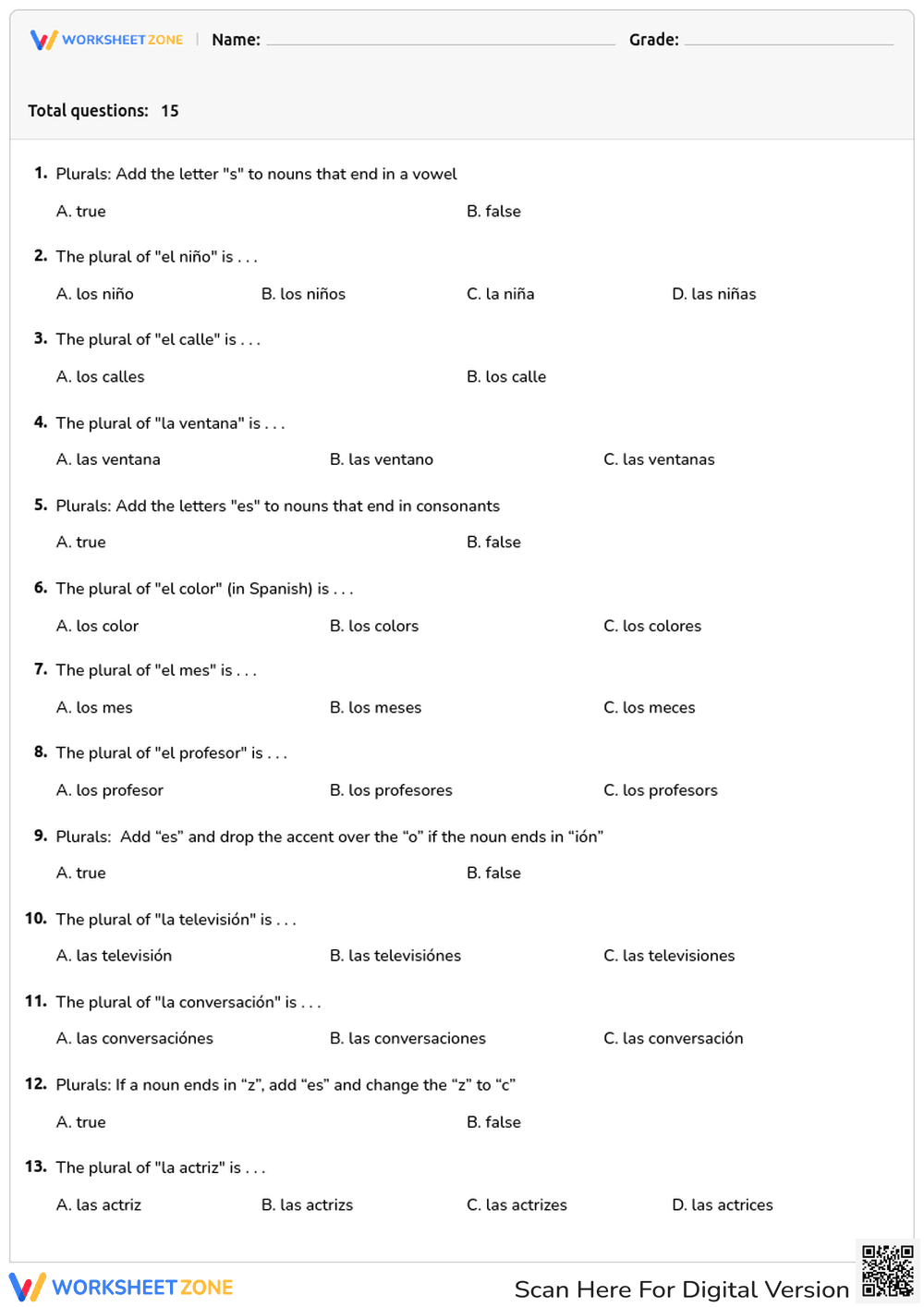
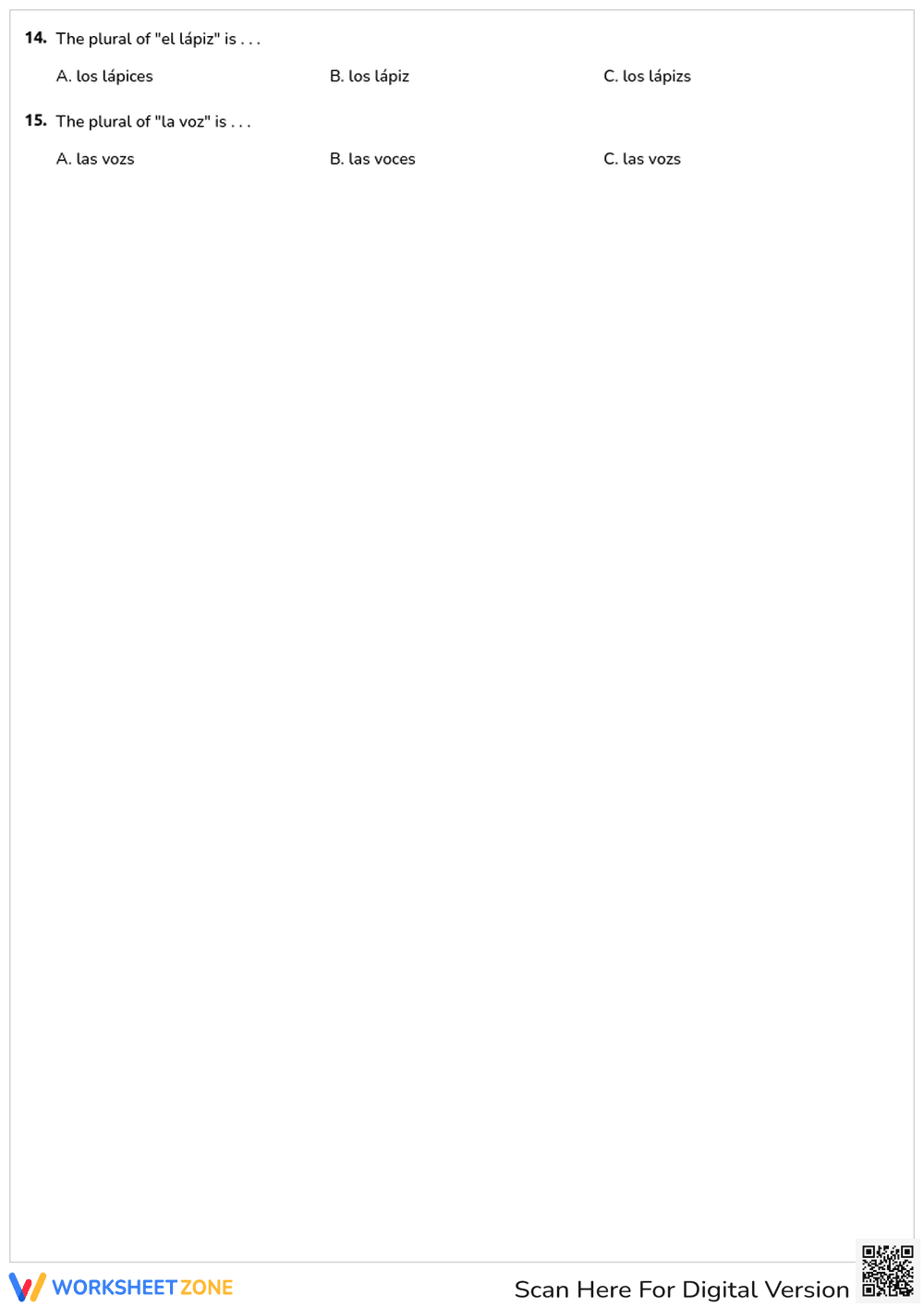
Forming Plural Nouns in Spanish
0 Views
0 Plays
Paste this activity's link or code into your existing LMS (Google Classroom, Canvas, Teams, Schoology, Moodle, etc.).
Students can open and work on the activity right away, with no student login required.
You'll still be able to track student progress and results from your teacher account.
Information
Description
What It Is:
This is a reference chart or poster about commonly confused words in English. It includes examples such as 'loose vs. lose,' 'then vs. than,' 'you're vs. your,' 'we're vs. where vs. were,' 'they're vs. their vs. there,' 'it's vs. its,' 'who's vs. whose,' 'lay vs. lie,' 'too vs. to vs. two,' and 'affect vs. effect.' Each example provides a brief definition and an example sentence to illustrate the correct usage. The chart is color-coded for easy reading.
Grade Level Suitability:
This resource is suitable for grades 4-8, and even high school students who need a refresher on basic grammar. The examples and explanations are clear and concise, making it accessible to a wide range of learners. It can also be useful for ESL students.
Why Use It:
This chart helps students understand and correctly use commonly confused words, improving their writing and communication skills. It provides a quick reference guide for students to check their work and avoid common grammatical errors. It reinforces vocabulary and grammar concepts in a visually appealing way.
How to Use It:
Display this chart in the classroom as a visual aid or provide individual copies to students for reference. Use it as a teaching tool to explain the differences between the listed words. Encourage students to consult the chart when writing and editing their work. It can also be used for grammar exercises and quizzes.
Target Users:
This resource is ideal for elementary, middle, and high school students, ESL learners, and anyone who wants to improve their understanding of English grammar and vocabulary. Teachers, tutors, and parents can use this chart to support students' learning.
This is a reference chart or poster about commonly confused words in English. It includes examples such as 'loose vs. lose,' 'then vs. than,' 'you're vs. your,' 'we're vs. where vs. were,' 'they're vs. their vs. there,' 'it's vs. its,' 'who's vs. whose,' 'lay vs. lie,' 'too vs. to vs. two,' and 'affect vs. effect.' Each example provides a brief definition and an example sentence to illustrate the correct usage. The chart is color-coded for easy reading.
Grade Level Suitability:
This resource is suitable for grades 4-8, and even high school students who need a refresher on basic grammar. The examples and explanations are clear and concise, making it accessible to a wide range of learners. It can also be useful for ESL students.
Why Use It:
This chart helps students understand and correctly use commonly confused words, improving their writing and communication skills. It provides a quick reference guide for students to check their work and avoid common grammatical errors. It reinforces vocabulary and grammar concepts in a visually appealing way.
How to Use It:
Display this chart in the classroom as a visual aid or provide individual copies to students for reference. Use it as a teaching tool to explain the differences between the listed words. Encourage students to consult the chart when writing and editing their work. It can also be used for grammar exercises and quizzes.
Target Users:
This resource is ideal for elementary, middle, and high school students, ESL learners, and anyone who wants to improve their understanding of English grammar and vocabulary. Teachers, tutors, and parents can use this chart to support students' learning.


