


























1 / 12
0
Views
0
Downloads







0.0
0
0 Likes
Enhance Your Knowledge of Graph Theory
0 Views
0 Downloads
Paste this activity's link or code into your existing LMS (Google Classroom, Canvas, Teams, Schoology, Moodle, etc.).
Students can open and work on the activity right away, with no student login required.
You'll still be able to track student progress and results from your teacher account.
Information
Description
What It Is:
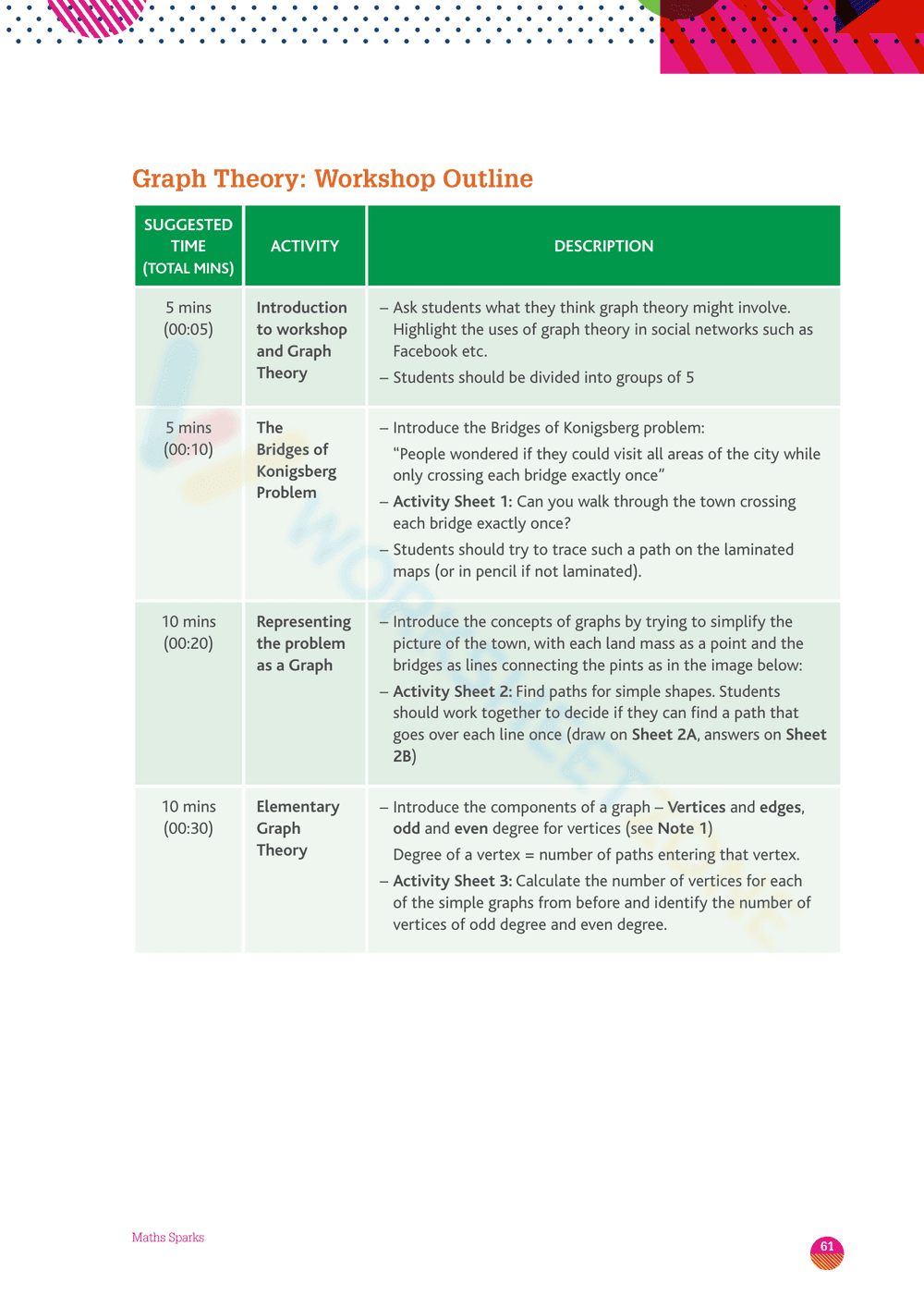
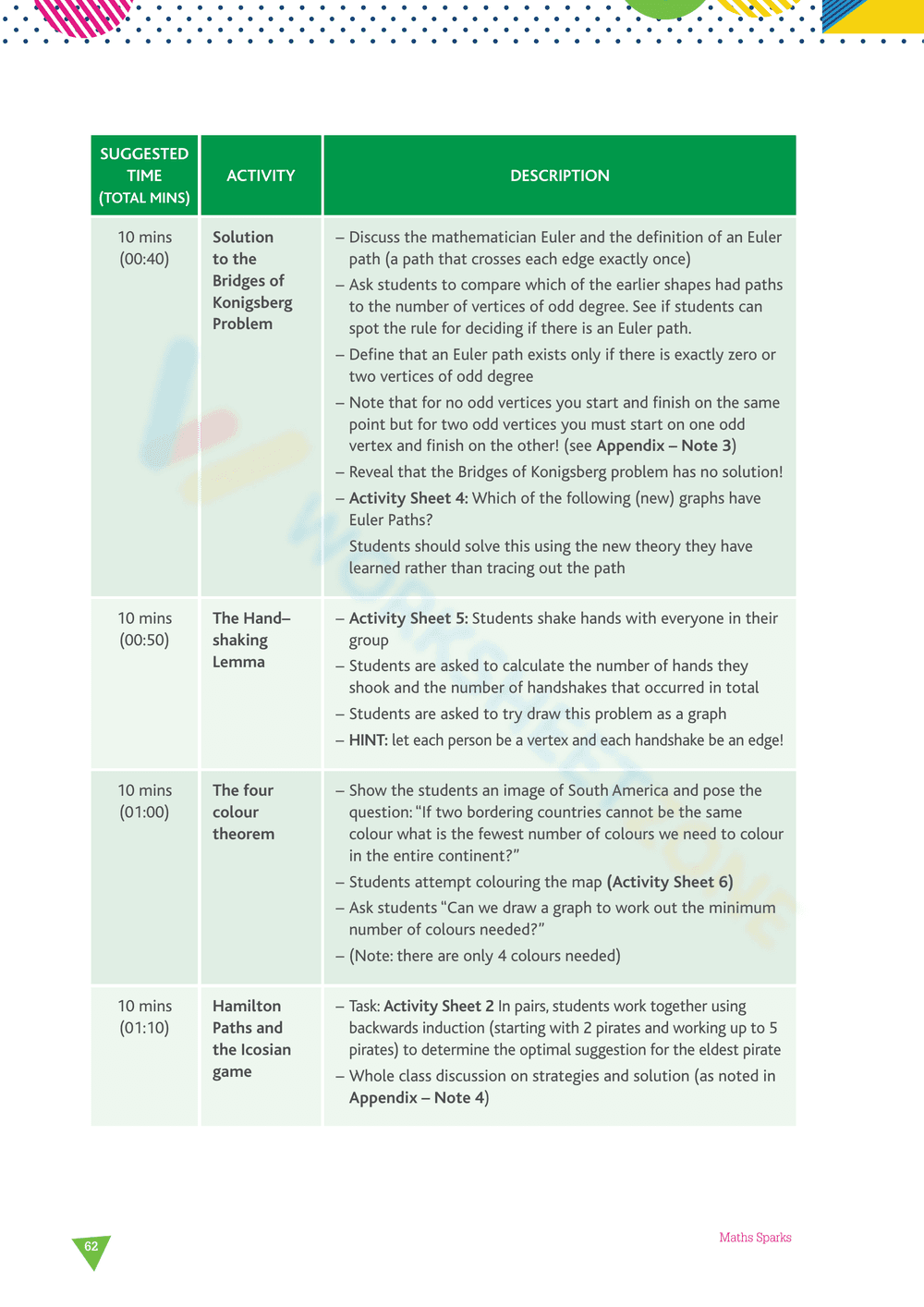
This is an educational worksheet introducing the topic of Graph Theory. It includes an introduction to graph theory, explaining its use in modeling relationships between objects, even on social networks. It outlines the aim of a workshop to introduce students to graph theory through the Bridges of Königsberg problem. The worksheet also lists required materials (paper, pens, activity sheets, whiteboard marker, tissues/erasers), learning outcomes such as representing problems graphically and defining Euler paths, and key words like 'Graph', 'Bridges of Konigsberg', 'Euler/Euler Path', and 'Vertex/Edges'.
Grade Level Suitability:
The worksheet appears suitable for high school students (Grades 9-12) or introductory college courses. The concepts of graph theory, Euler paths, and the Bridges of Königsberg problem are typically introduced at these levels. The mention of Hand-Shaking Lemma and the 4 Colour Theorem also suggest a higher level of mathematical understanding.
Why Use It:
This worksheet introduces fundamental concepts of graph theory, including its applications in diverse fields. It helps students develop problem-solving skills by exploring the Bridges of Königsberg problem. The learning outcomes provide clear objectives for student understanding and assessment. It connects abstract mathematical concepts to real-world examples, such as social networks.
How to Use It:
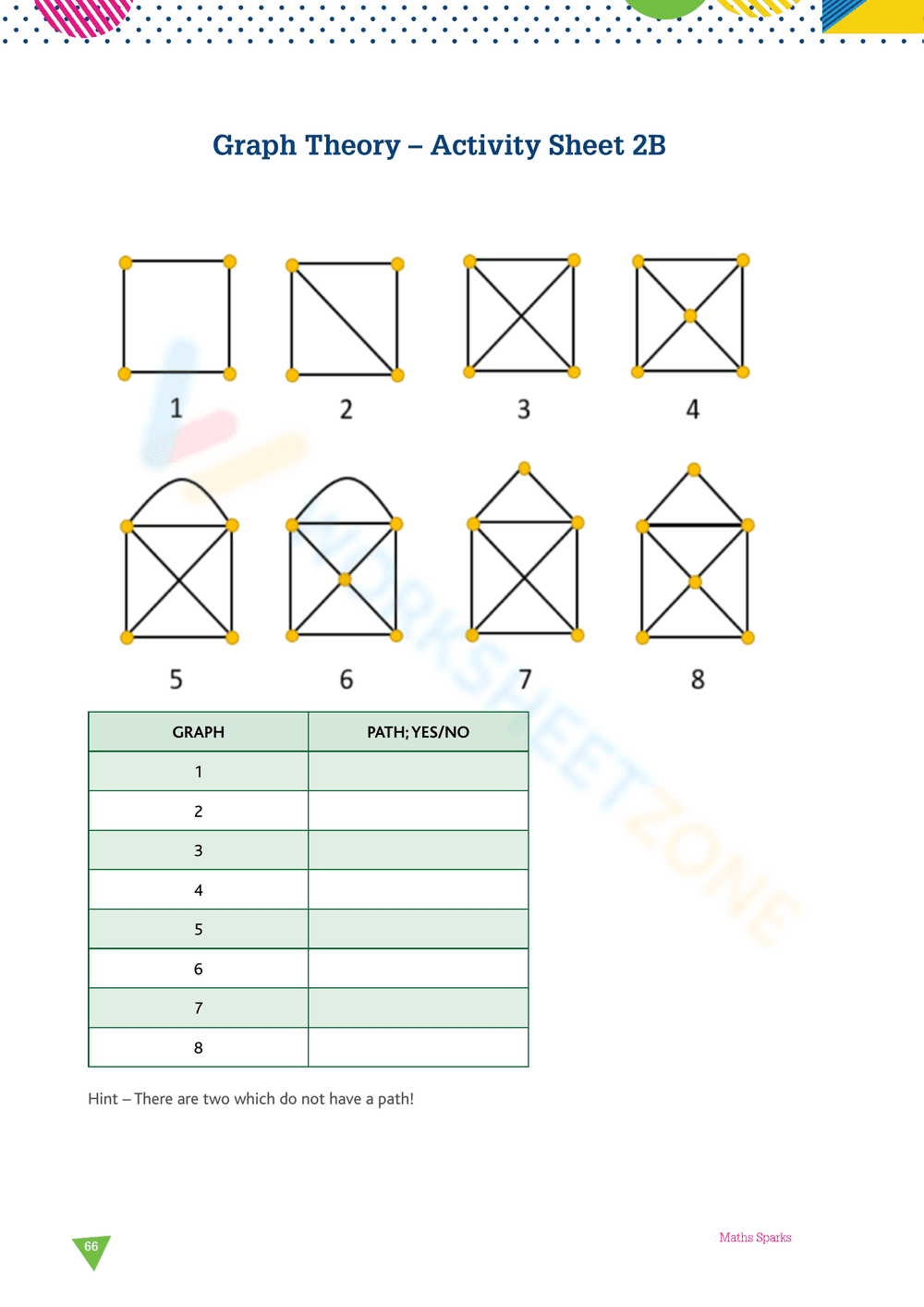
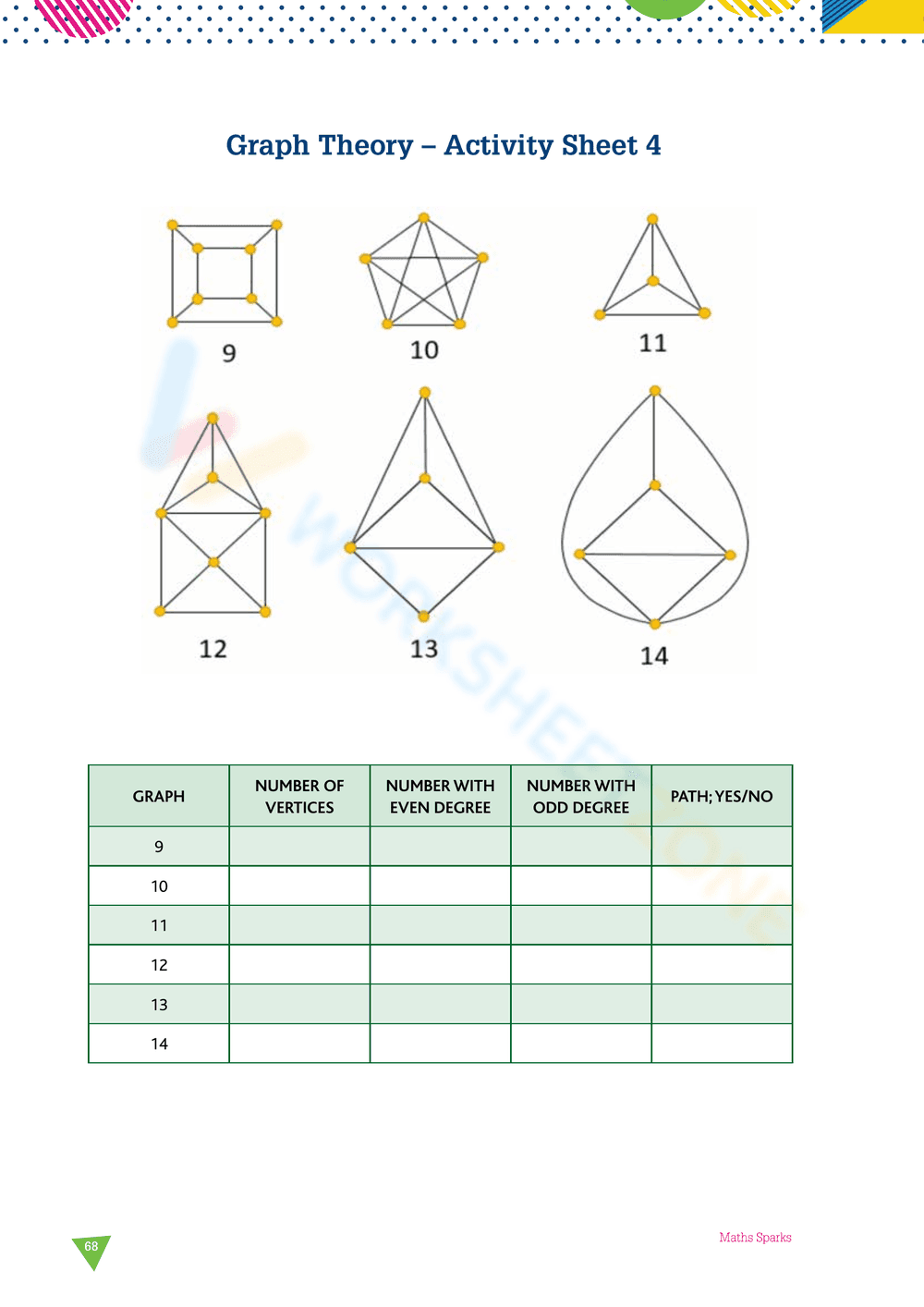
Begin by reading the introduction to understand the basic principles of graph theory. Review the key words and their definitions. Work through the Bridges of Königsberg problem, attempting to solve it before looking at the solution. Use the activity sheets (mentioned in materials) to practice representing problems graphically and identifying Euler paths. Refer to Appendix Note 1 for more information on Vertex/Edges.
Target Users:
This worksheet is designed for high school students, college students, or anyone interested in learning the basics of graph theory. It is particularly useful for students studying mathematics, computer science, or engineering. Teachers can use this as an introductory material for a graph theory lesson or workshop.
This is an educational worksheet introducing the topic of Graph Theory. It includes an introduction to graph theory, explaining its use in modeling relationships between objects, even on social networks. It outlines the aim of a workshop to introduce students to graph theory through the Bridges of Königsberg problem. The worksheet also lists required materials (paper, pens, activity sheets, whiteboard marker, tissues/erasers), learning outcomes such as representing problems graphically and defining Euler paths, and key words like 'Graph', 'Bridges of Konigsberg', 'Euler/Euler Path', and 'Vertex/Edges'.
Grade Level Suitability:
The worksheet appears suitable for high school students (Grades 9-12) or introductory college courses. The concepts of graph theory, Euler paths, and the Bridges of Königsberg problem are typically introduced at these levels. The mention of Hand-Shaking Lemma and the 4 Colour Theorem also suggest a higher level of mathematical understanding.
Why Use It:
This worksheet introduces fundamental concepts of graph theory, including its applications in diverse fields. It helps students develop problem-solving skills by exploring the Bridges of Königsberg problem. The learning outcomes provide clear objectives for student understanding and assessment. It connects abstract mathematical concepts to real-world examples, such as social networks.
How to Use It:
Begin by reading the introduction to understand the basic principles of graph theory. Review the key words and their definitions. Work through the Bridges of Königsberg problem, attempting to solve it before looking at the solution. Use the activity sheets (mentioned in materials) to practice representing problems graphically and identifying Euler paths. Refer to Appendix Note 1 for more information on Vertex/Edges.
Target Users:
This worksheet is designed for high school students, college students, or anyone interested in learning the basics of graph theory. It is particularly useful for students studying mathematics, computer science, or engineering. Teachers can use this as an introductory material for a graph theory lesson or workshop.


