


























1 / 2
0
Views
0
Downloads

0.0
0
0 Likes
How to Support Your Friends Social Skills
0 Views
0 Downloads
Paste this activity's link or code into your existing LMS (Google Classroom, Canvas, Teams, Schoology, Moodle, etc.).
Students can open and work on the activity right away, with no student login required.
You'll still be able to track student progress and results from your teacher account.
Information
Description
What It Is:
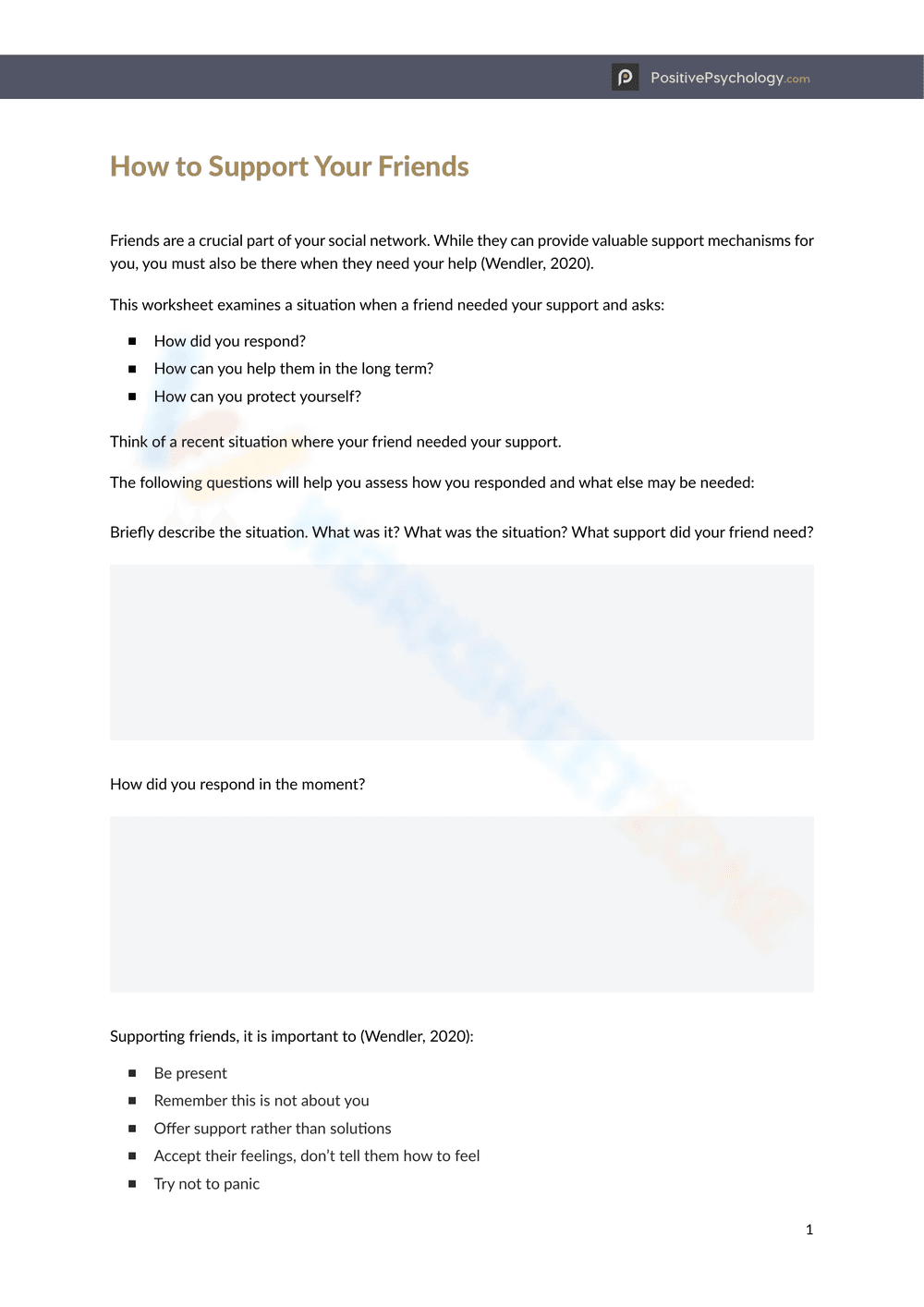
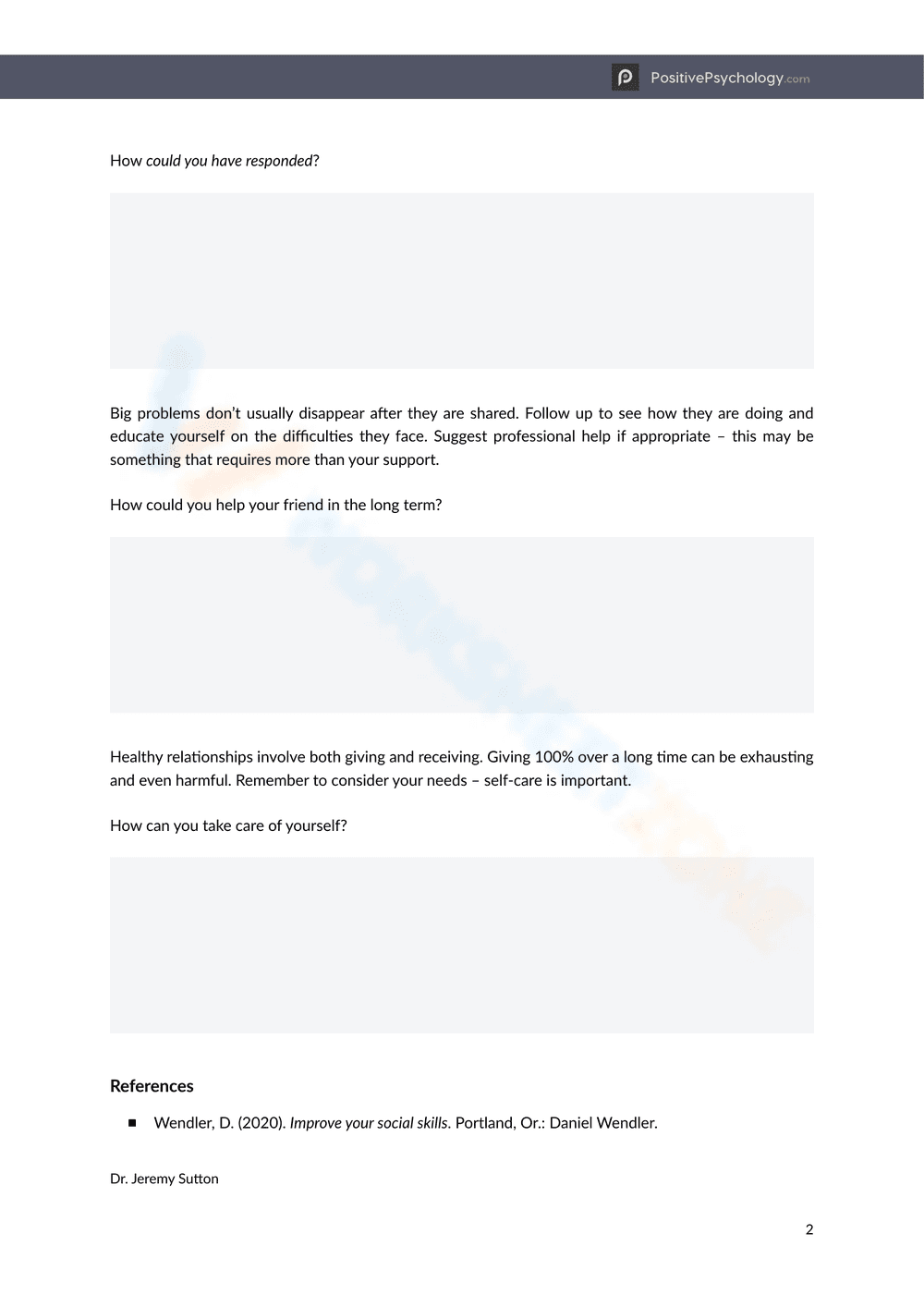
This is a worksheet titled 'How to Support Your Friends'. It prompts the user to reflect on a time when a friend needed support, describing the situation and their response. It includes questions like 'How did you respond?', 'How can you help them in the long term?', and 'How can you protect yourself?'. It also provides a list of tips for supporting friends, such as being present, offering support rather than solutions, and accepting their feelings.
Grade Level Suitability:
This worksheet is suitable for late middle school and high school students (Grades 7-12). The content requires a certain level of emotional maturity and self-reflection to understand and apply the concepts.
Why Use It:
This worksheet helps students develop empathy and improve their friendship skills. It encourages them to analyze their own responses to friends in need and consider ways to provide better support. It also promotes self-awareness and emotional intelligence.
How to Use It:
First, have the student think of a specific situation where a friend needed their support. Then, guide them to briefly describe the situation, focusing on what happened and what support the friend needed. Next, have them answer the questions about how they responded and how they can help in the future. Finally, discuss the tips for supporting friends and how they can be applied in different situations.
Target Users:
This worksheet is designed for teenagers and young adults who want to improve their ability to support their friends. It can be used by students in social skills groups, counseling sessions, or as a self-help tool. It is also helpful for anyone interested in strengthening their relationships and becoming a better friend.
This is a worksheet titled 'How to Support Your Friends'. It prompts the user to reflect on a time when a friend needed support, describing the situation and their response. It includes questions like 'How did you respond?', 'How can you help them in the long term?', and 'How can you protect yourself?'. It also provides a list of tips for supporting friends, such as being present, offering support rather than solutions, and accepting their feelings.
Grade Level Suitability:
This worksheet is suitable for late middle school and high school students (Grades 7-12). The content requires a certain level of emotional maturity and self-reflection to understand and apply the concepts.
Why Use It:
This worksheet helps students develop empathy and improve their friendship skills. It encourages them to analyze their own responses to friends in need and consider ways to provide better support. It also promotes self-awareness and emotional intelligence.
How to Use It:
First, have the student think of a specific situation where a friend needed their support. Then, guide them to briefly describe the situation, focusing on what happened and what support the friend needed. Next, have them answer the questions about how they responded and how they can help in the future. Finally, discuss the tips for supporting friends and how they can be applied in different situations.
Target Users:
This worksheet is designed for teenagers and young adults who want to improve their ability to support their friends. It can be used by students in social skills groups, counseling sessions, or as a self-help tool. It is also helpful for anyone interested in strengthening their relationships and becoming a better friend.


