


























0
Views
0
Downloads

0.0
0
0 Likes
Identify Emotions: A Practice Worksheet
0 Views
0 Downloads
Paste this activity's link or code into your existing LMS (Google Classroom, Canvas, Teams, Schoology, Moodle, etc.).
Students can open and work on the activity right away, with no student login required.
You'll still be able to track student progress and results from your teacher account.
Information
Description
What It Is:
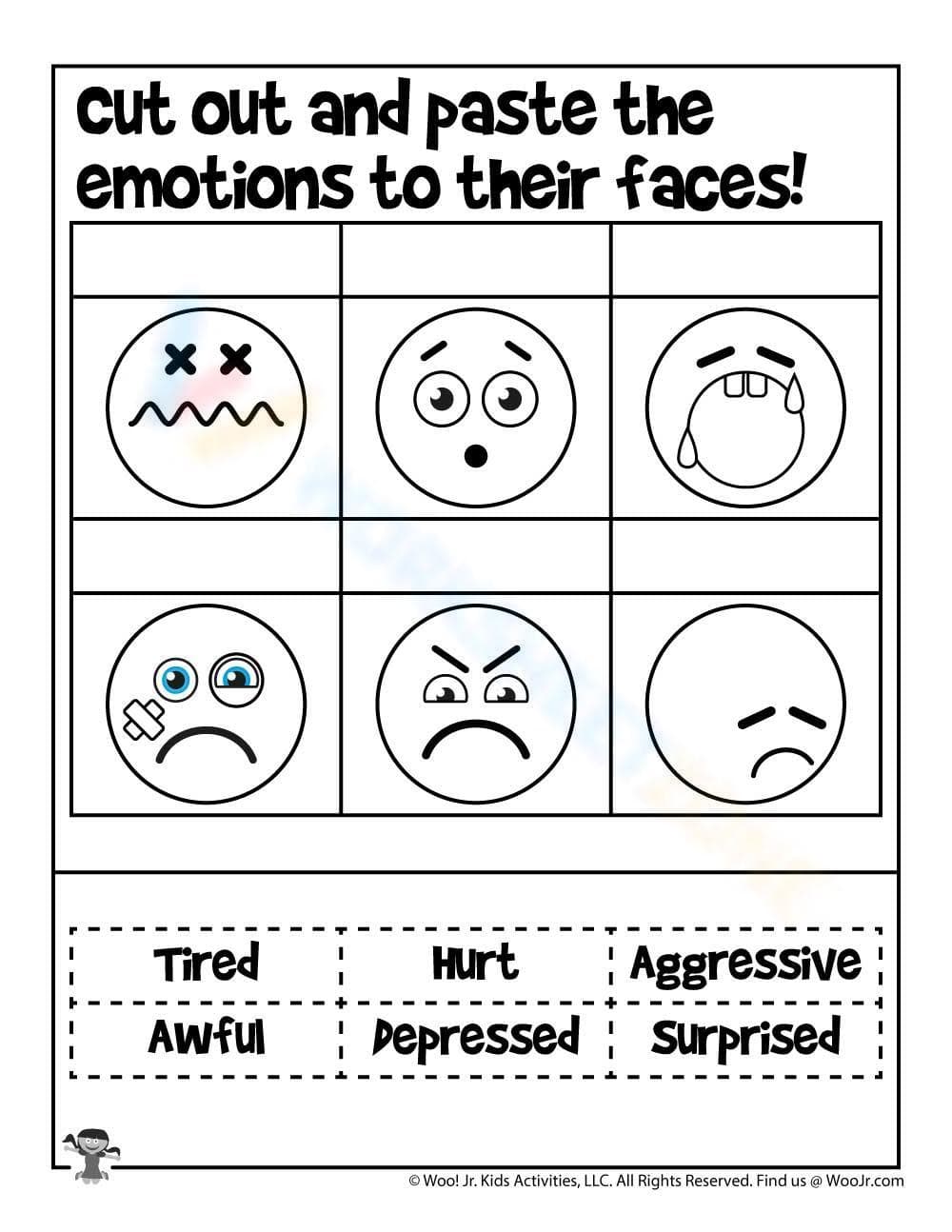
This is a cut-and-paste worksheet designed to help children identify and match emotions to facial expressions. The worksheet features six blank-faced emoji outlines in a grid, and a set of six emotion labels ('Tired,' 'Hurt,' 'Aggressive,' 'Awful,' 'Depressed,' and 'Surprised') to cut out and paste under the corresponding emoji face. The emoji faces depict emotions such as being dizzy, surprised, crying, injured, angry, and sad.
Grade Level Suitability:
This worksheet is suitable for preschool and early elementary grades (Kindergarten - 2nd grade). The activity is straightforward and involves basic emotional recognition, cutting, and pasting skills, making it accessible to young children.
Why Use It:
This worksheet promotes emotional literacy by helping children recognize and associate specific emotions with corresponding facial expressions. It enhances fine motor skills through cutting and pasting. It encourages visual discrimination and matching skills.
How to Use It:
First, have the child cut out the emotion labels at the bottom of the page. Then, discuss each emoji face and the emotion it represents. Finally, guide the child to paste each emotion label under the emoji face that best matches it.
Target Users:
This worksheet is ideal for young children learning about emotions, children with autism spectrum disorder (ASD) who may benefit from visual aids to understand emotions, early childhood educators, parents, and therapists working on social-emotional development.
This is a cut-and-paste worksheet designed to help children identify and match emotions to facial expressions. The worksheet features six blank-faced emoji outlines in a grid, and a set of six emotion labels ('Tired,' 'Hurt,' 'Aggressive,' 'Awful,' 'Depressed,' and 'Surprised') to cut out and paste under the corresponding emoji face. The emoji faces depict emotions such as being dizzy, surprised, crying, injured, angry, and sad.
Grade Level Suitability:
This worksheet is suitable for preschool and early elementary grades (Kindergarten - 2nd grade). The activity is straightforward and involves basic emotional recognition, cutting, and pasting skills, making it accessible to young children.
Why Use It:
This worksheet promotes emotional literacy by helping children recognize and associate specific emotions with corresponding facial expressions. It enhances fine motor skills through cutting and pasting. It encourages visual discrimination and matching skills.
How to Use It:
First, have the child cut out the emotion labels at the bottom of the page. Then, discuss each emoji face and the emotion it represents. Finally, guide the child to paste each emotion label under the emoji face that best matches it.
Target Users:
This worksheet is ideal for young children learning about emotions, children with autism spectrum disorder (ASD) who may benefit from visual aids to understand emotions, early childhood educators, parents, and therapists working on social-emotional development.


