


























1 / 3
0
Views
0
Plays


0.0
0
0 Likes
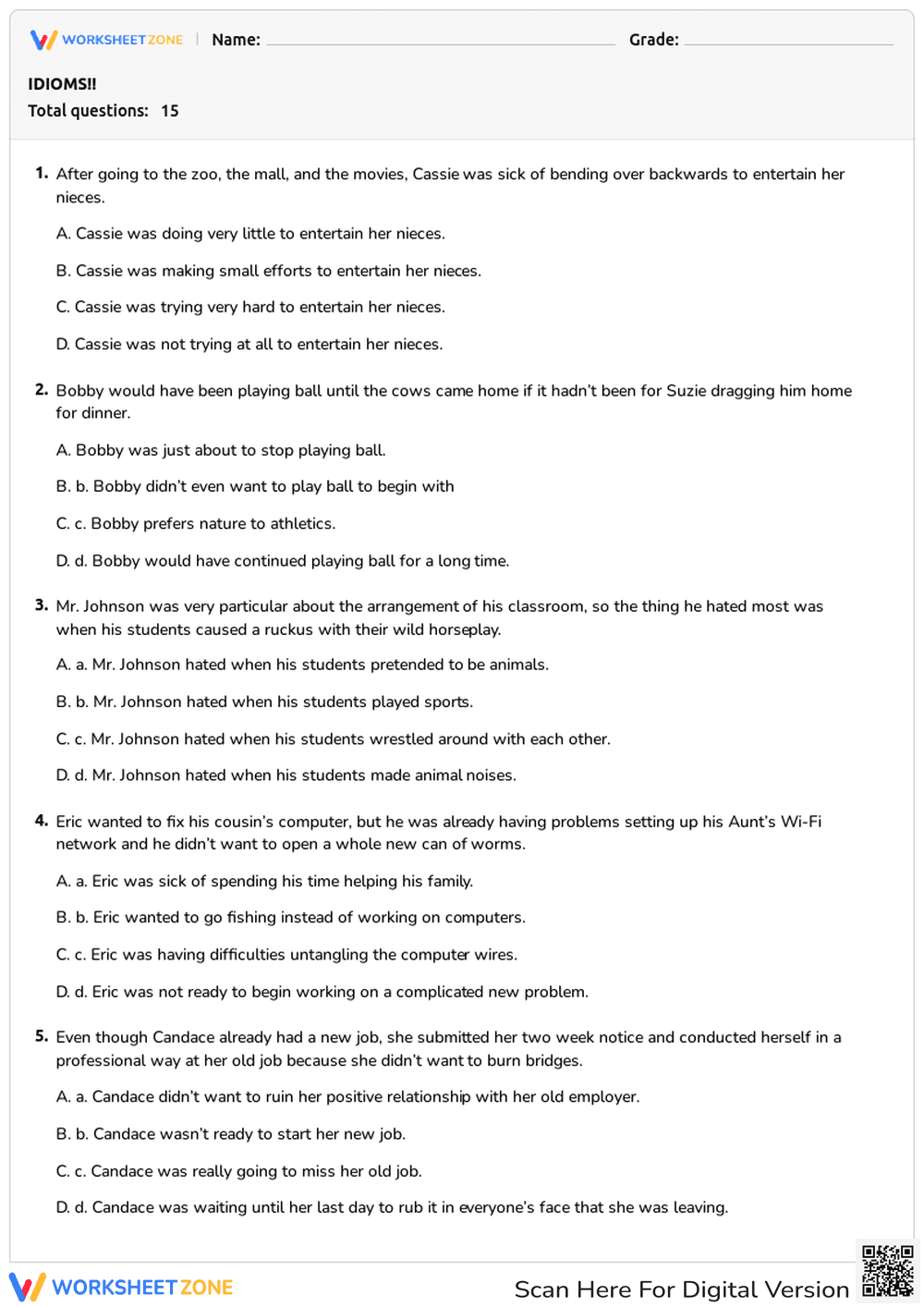
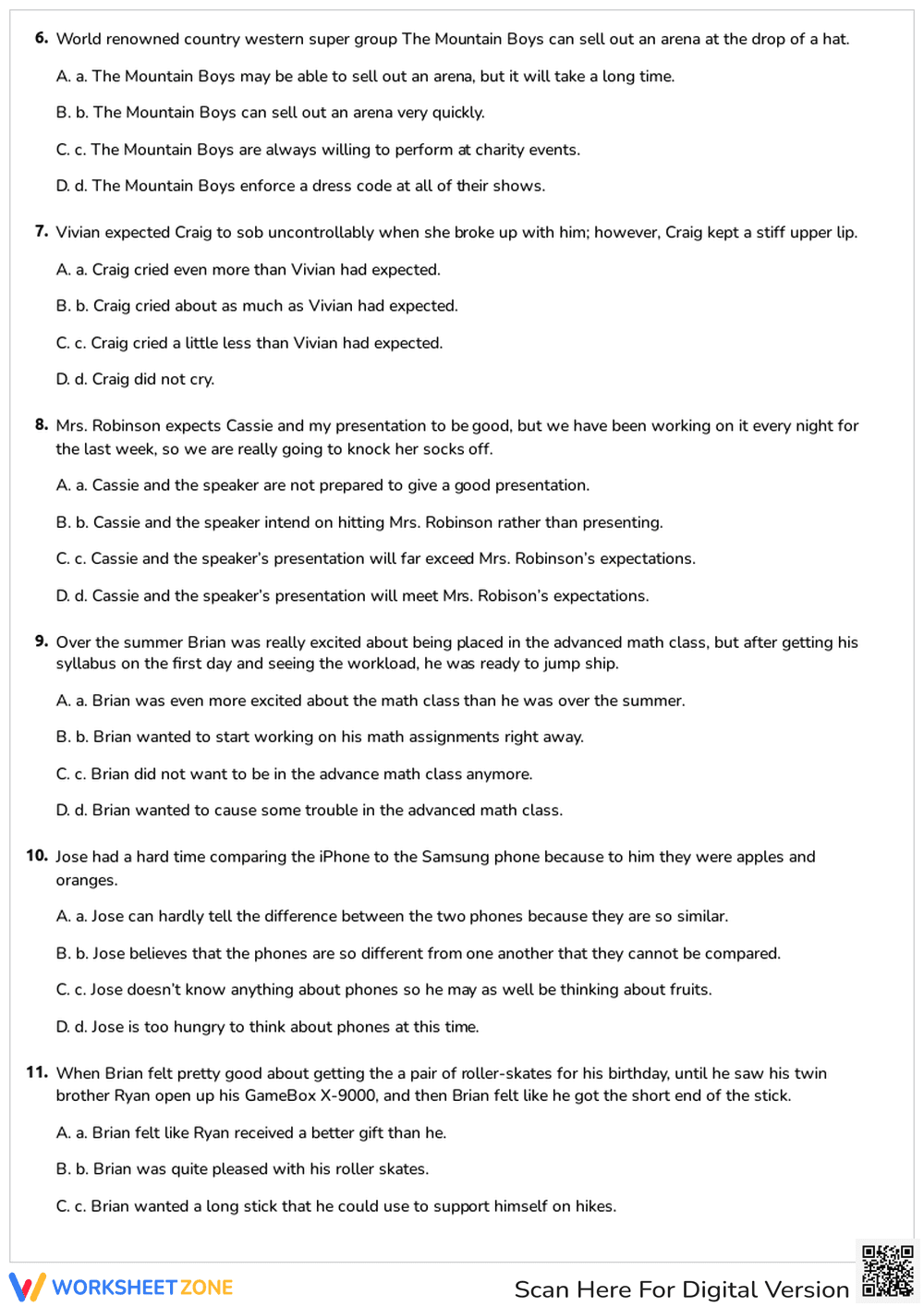
Understanding Idioms: Contextual Meaning Quiz
0 Views
0 Plays
Paste this activity's link or code into your existing LMS (Google Classroom, Canvas, Teams, Schoology, Moodle, etc.).
Students can open and work on the activity right away, with no student login required.
You'll still be able to track student progress and results from your teacher account.
Information
Description
What It Is:
This is an emotion wheel or chart visually representing a range of feelings organized by core emotions like Joy, Love, Anger, Sadness, Fear, and Peace. Each section of the wheel branches out from the core emotion to more specific and nuanced feelings. For example, under 'Joy' are emotions like 'Happy', 'Optimistic', 'Cheerful', and 'Grateful'.
Grade Level Suitability:
This resource is suitable for late elementary (grades 4-5), middle school (grades 6-8), and even high school (grades 9-12). Younger students can use it to expand their basic emotional vocabulary, while older students can use it to explore more complex feelings and improve emotional intelligence.
Why Use It:
This emotion wheel helps individuals identify and articulate their feelings more precisely. It promotes emotional awareness, empathy, and self-regulation by providing a visual aid for understanding the spectrum of human emotions. It can be used to improve communication skills and emotional intelligence.
How to Use It:
Users can refer to the wheel when trying to understand their own feelings or the feelings of others. Start by identifying the core emotion and then explore the related feelings in that section. It can be used as a reference during journaling, therapy sessions, or conflict resolution.
Target Users:
This resource is beneficial for students of all ages, educators, therapists, counselors, and anyone interested in improving their emotional vocabulary and understanding. It's especially helpful for individuals who struggle to express their feelings or identify the emotions of others.
This is an emotion wheel or chart visually representing a range of feelings organized by core emotions like Joy, Love, Anger, Sadness, Fear, and Peace. Each section of the wheel branches out from the core emotion to more specific and nuanced feelings. For example, under 'Joy' are emotions like 'Happy', 'Optimistic', 'Cheerful', and 'Grateful'.
Grade Level Suitability:
This resource is suitable for late elementary (grades 4-5), middle school (grades 6-8), and even high school (grades 9-12). Younger students can use it to expand their basic emotional vocabulary, while older students can use it to explore more complex feelings and improve emotional intelligence.
Why Use It:
This emotion wheel helps individuals identify and articulate their feelings more precisely. It promotes emotional awareness, empathy, and self-regulation by providing a visual aid for understanding the spectrum of human emotions. It can be used to improve communication skills and emotional intelligence.
How to Use It:
Users can refer to the wheel when trying to understand their own feelings or the feelings of others. Start by identifying the core emotion and then explore the related feelings in that section. It can be used as a reference during journaling, therapy sessions, or conflict resolution.
Target Users:
This resource is beneficial for students of all ages, educators, therapists, counselors, and anyone interested in improving their emotional vocabulary and understanding. It's especially helpful for individuals who struggle to express their feelings or identify the emotions of others.


