


























1 / 16
0
Views
0
Downloads





0.0
0
0 Likes
Inscribed Angle Worksheet for Geometry Practice
0 Views
0 Downloads
Paste this activity's link or code into your existing LMS (Google Classroom, Canvas, Teams, Schoology, Moodle, etc.).
Students can open and work on the activity right away, with no student login required.
You'll still be able to track student progress and results from your teacher account.
Information
Description
What It Is:
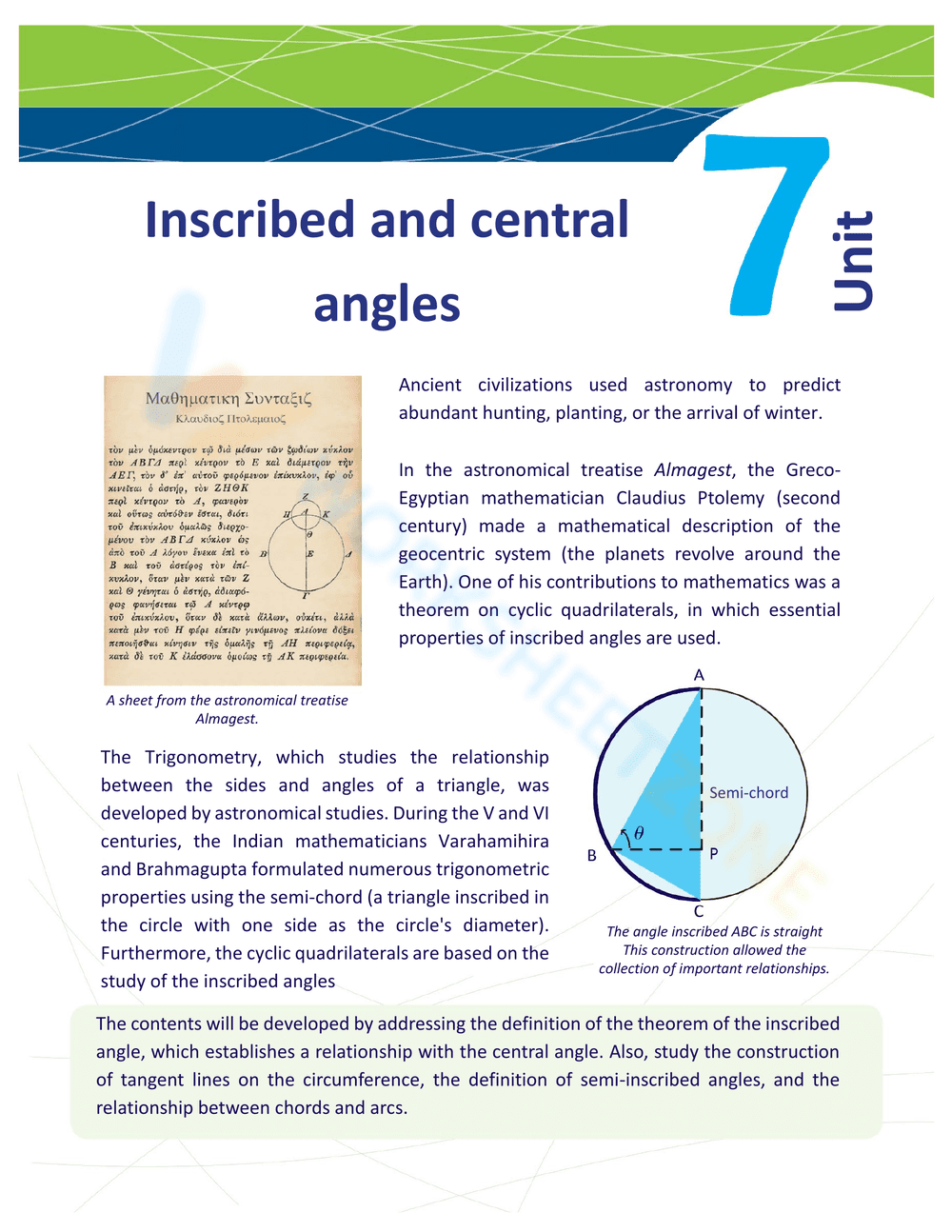
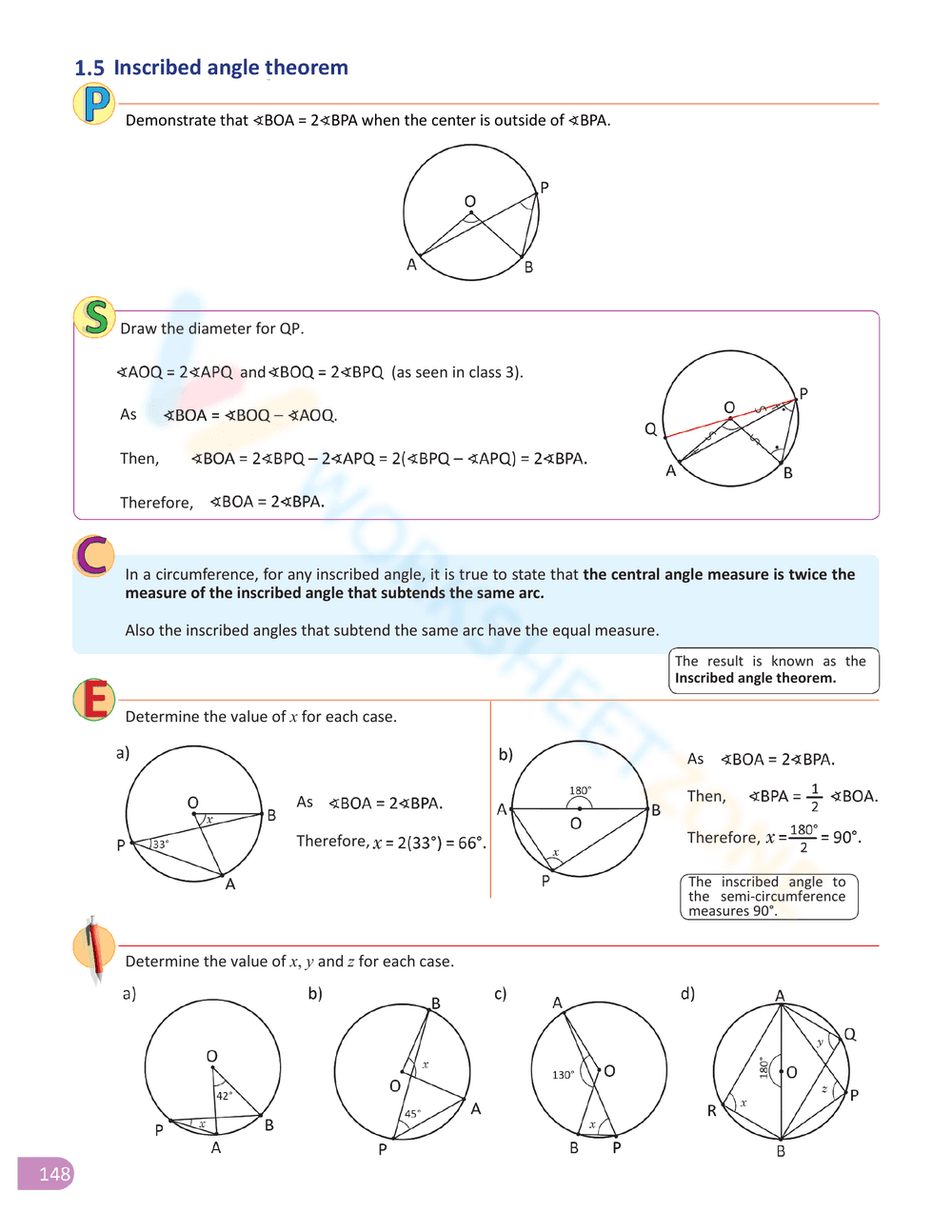
This is an educational worksheet page, titled 'Inscribed and Central Angles,' from Unit 7. It includes a discussion of how ancient civilizations used astronomy, and specifically mentions the mathematician Claudius Ptolemy. It also discusses the historical development of trigonometry and its relationship to astronomy, referencing Varahamihira and Brahmagupta. The worksheet includes a diagram of a circle with an inscribed angle and a semi-chord labeled with points A, B, and C. The text refers to the relationship between sides and angles of a triangle and cyclic quadrilaterals.
Grade Level Suitability:
The worksheet appears suitable for high school geometry, likely grades 9-10. The concepts of inscribed and central angles, trigonometry, and cyclic quadrilaterals are typically covered in high school geometry courses. The historical context also suggests a higher grade level.
Why Use It:
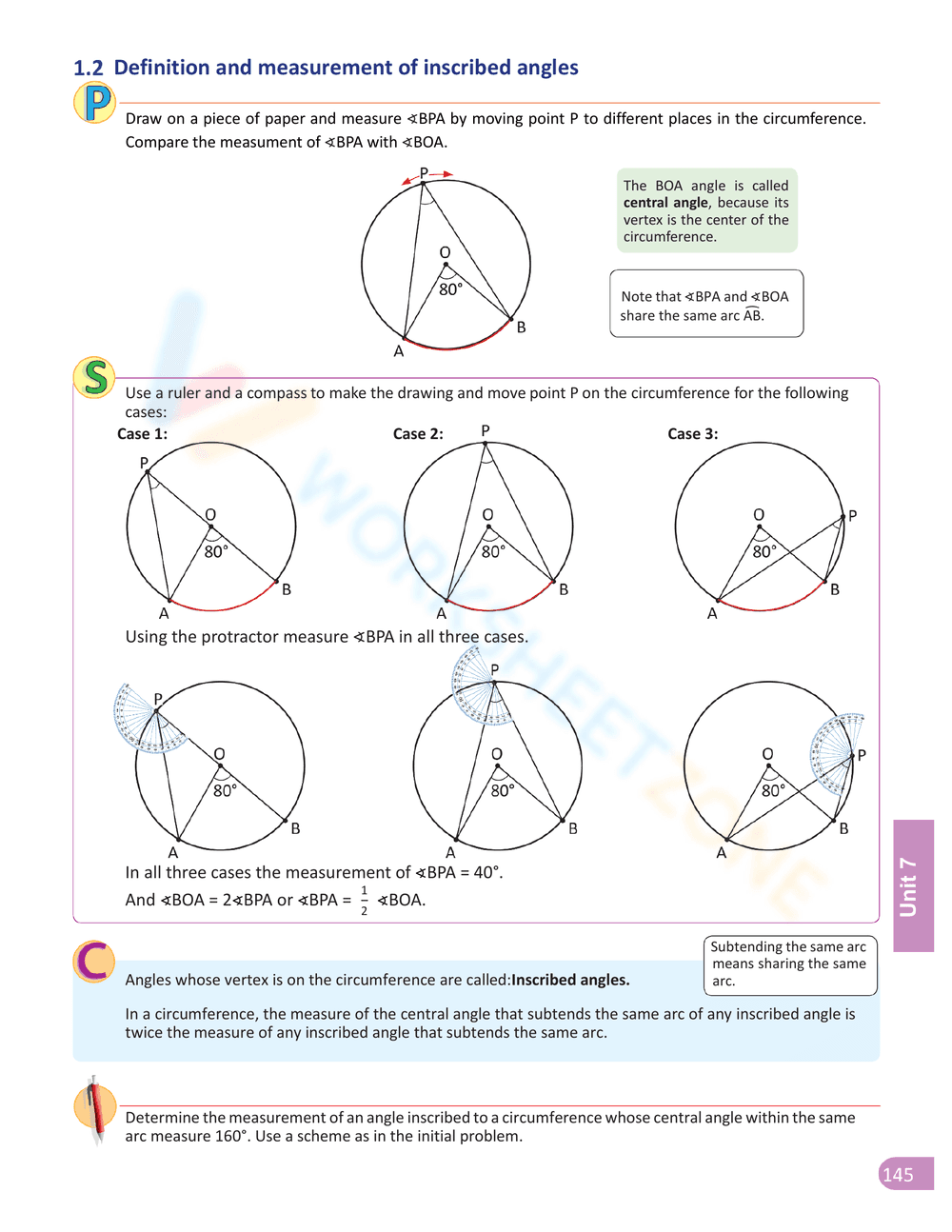
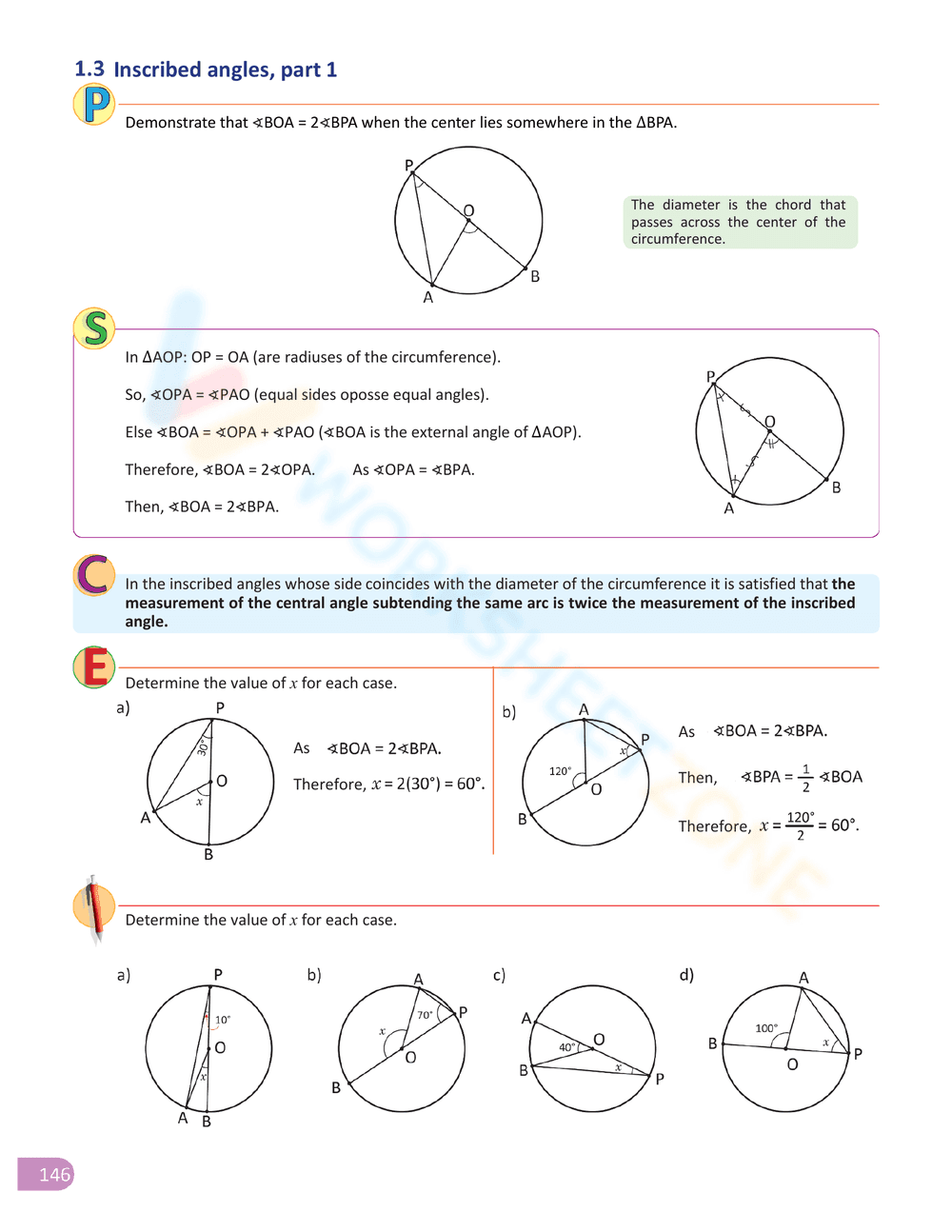
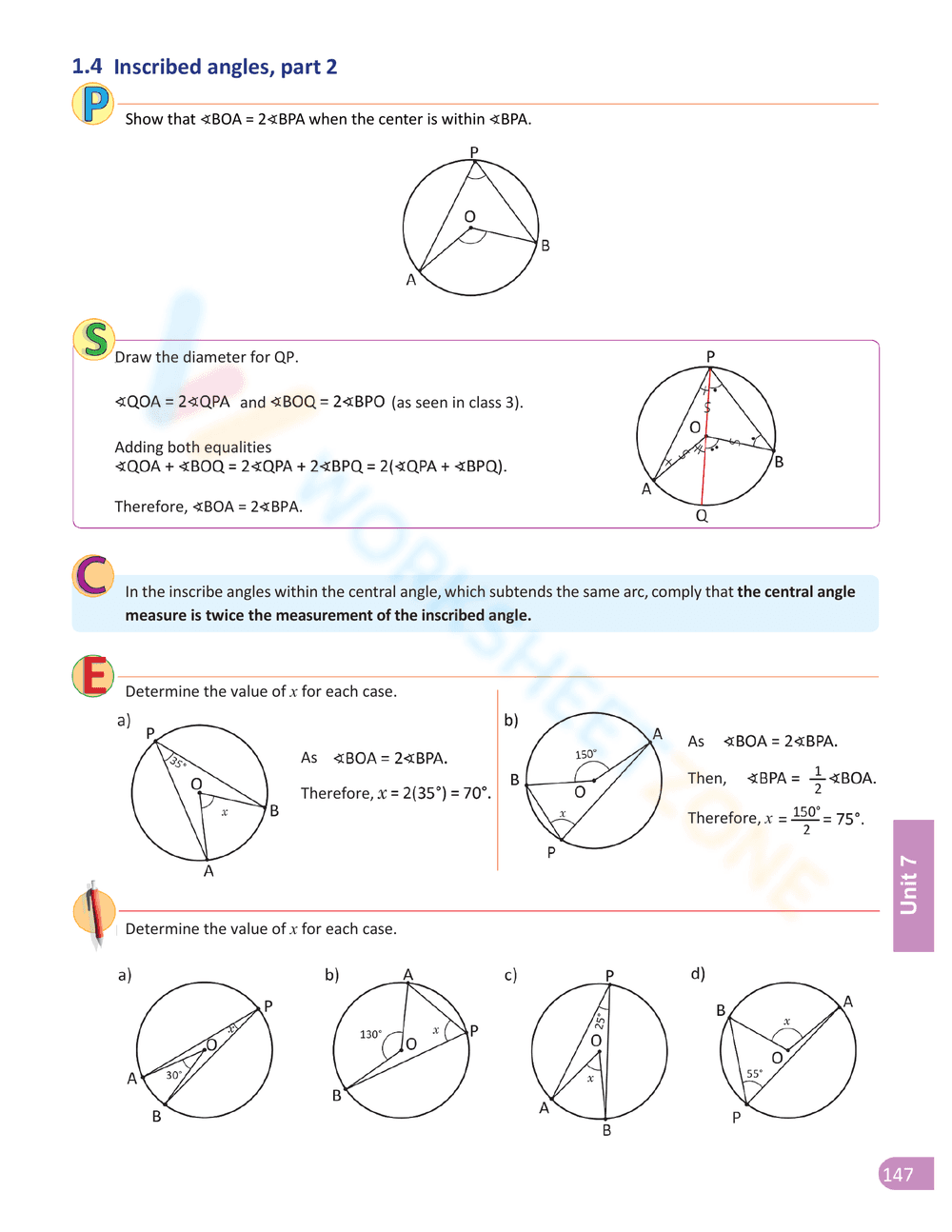
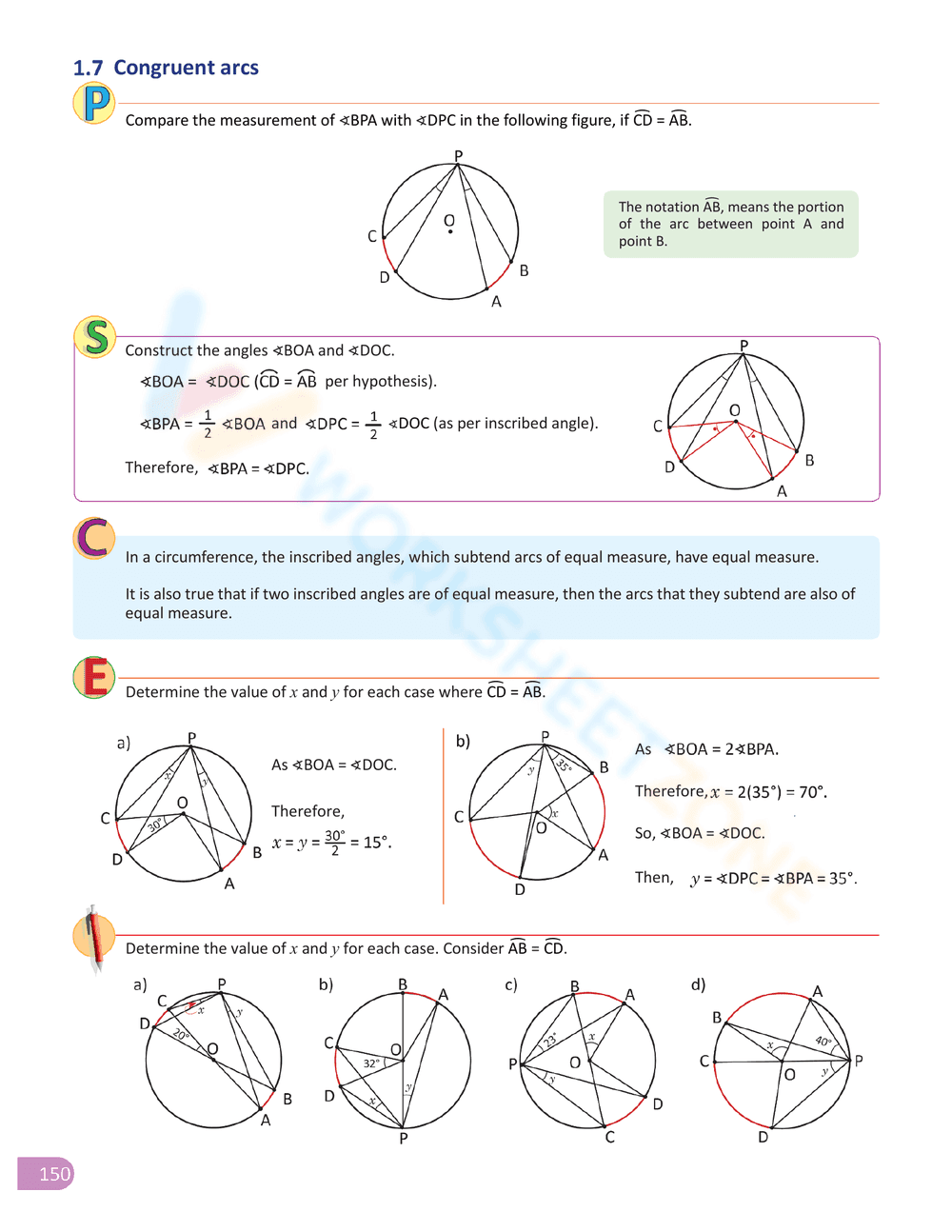
This worksheet can be used to introduce or reinforce the concepts of inscribed and central angles in circles. It provides historical context by connecting these concepts to astronomy and the work of ancient mathematicians. It helps students understand the relationship between geometry, trigonometry, and historical applications.
How to Use It:
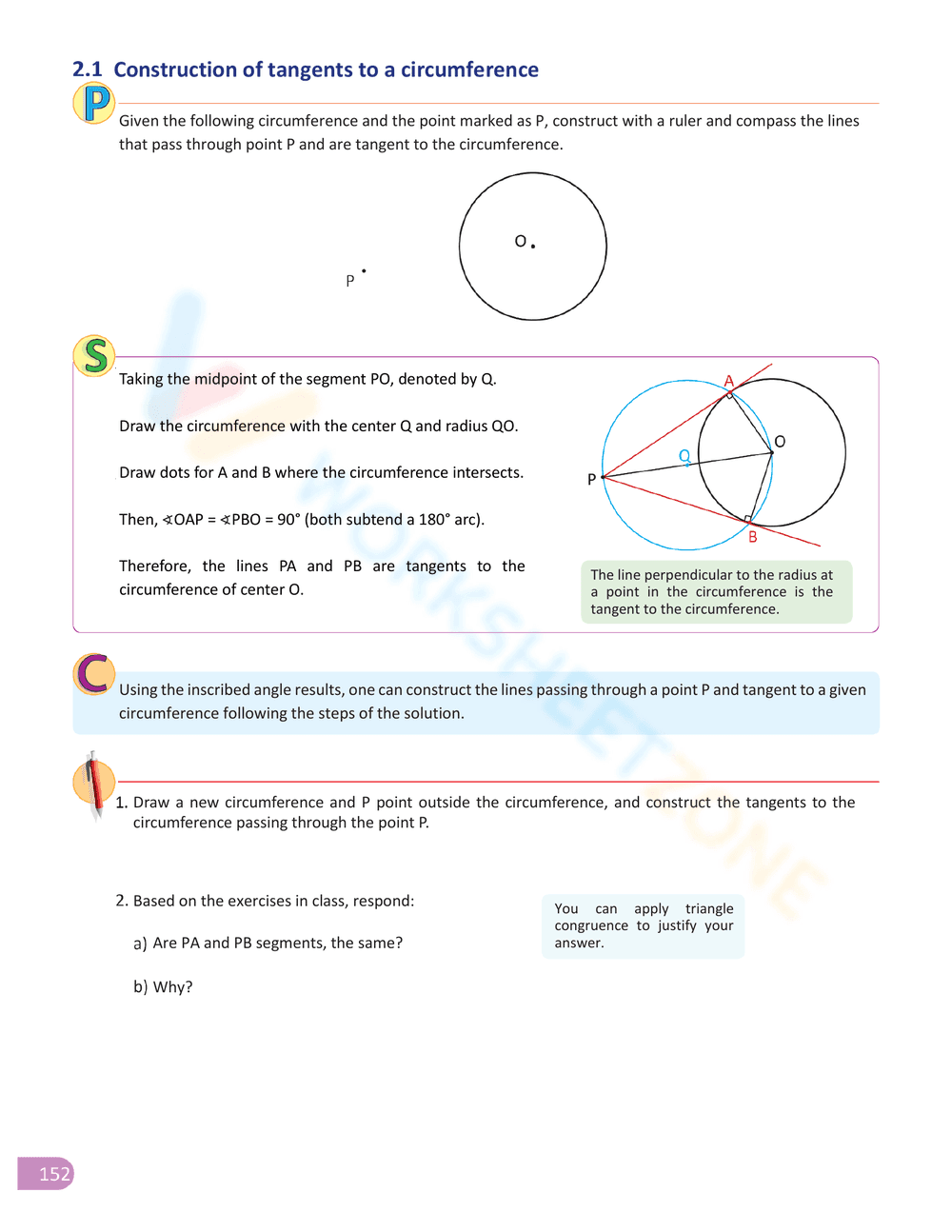
The worksheet can be used as a reading assignment, followed by a class discussion of the concepts. Students can use the diagram to identify inscribed and central angles and understand their relationship. The information can be used as a starting point for solving problems related to inscribed angles and cyclic quadrilaterals.
Target Users:
The target users are high school students studying geometry, particularly those learning about circles, angles, and basic trigonometry. Teachers can use it as part of a unit on circle theorems. Students interested in the history of mathematics may also find it engaging.
This is an educational worksheet page, titled 'Inscribed and Central Angles,' from Unit 7. It includes a discussion of how ancient civilizations used astronomy, and specifically mentions the mathematician Claudius Ptolemy. It also discusses the historical development of trigonometry and its relationship to astronomy, referencing Varahamihira and Brahmagupta. The worksheet includes a diagram of a circle with an inscribed angle and a semi-chord labeled with points A, B, and C. The text refers to the relationship between sides and angles of a triangle and cyclic quadrilaterals.
Grade Level Suitability:
The worksheet appears suitable for high school geometry, likely grades 9-10. The concepts of inscribed and central angles, trigonometry, and cyclic quadrilaterals are typically covered in high school geometry courses. The historical context also suggests a higher grade level.
Why Use It:
This worksheet can be used to introduce or reinforce the concepts of inscribed and central angles in circles. It provides historical context by connecting these concepts to astronomy and the work of ancient mathematicians. It helps students understand the relationship between geometry, trigonometry, and historical applications.
How to Use It:
The worksheet can be used as a reading assignment, followed by a class discussion of the concepts. Students can use the diagram to identify inscribed and central angles and understand their relationship. The information can be used as a starting point for solving problems related to inscribed angles and cyclic quadrilaterals.
Target Users:
The target users are high school students studying geometry, particularly those learning about circles, angles, and basic trigonometry. Teachers can use it as part of a unit on circle theorems. Students interested in the history of mathematics may also find it engaging.


