


























This lesson will teach and distinguish the concepts of relations and functions. The properties that separate linear functions from other functions will be addressed, leading to the connections between different representations of linear functions. Students will:
- determine the distinction between a relation and a function.
- determine whether or not a function is linear.
- calculate the missing values for a specified function or function pattern.
- recognize numerous representations of linear functions.
- How are relationships expressed mathematically?
- How may data be arranged and portrayed to reveal the link between quantities?
- How may patterns be used to describe mathematical relationships?
- Function: A relation whereby each input value is mapped/related to one and only one output value. In other words, for each input value, there is exactly one output value.
- Linear Function: A function that has a constant rate of change, or slope
- Mapping: The “matching” of an input value to an output value.
- Nonlinear Function: A function with a degree of two or higher. For example, f(x) = 3\(x^2\) – 1 is a nonlinear function because the degree of the independent variable is 2.
- Rate of Change: Of a function, the slope of the tangent to the graph of the function.
- Relation: Ordered pairs that relate an input value and an output value
- Slope: The measure of the steepness of a line. The slope of a line is calculated by finding the ratio in the change of the y-values to the change in the x-values.
- Vocabulary Journal page (M-8-3-1_Vocabulary Journal)
- Linear or Not? worksheet (M-8-3-1_Linear or Not and KEY)
- grid paper
- three-section spinner marked 1, 2, and 3 or standard number cube
- whiteboards with coordinate grid markings (optional)
- Observe and assess student performance during each discussion and activity. Determine if students understand the difference between input and output values for functions, as well as whether they can identify what makes one relation a function and another relation not a function.
- Formally assess students' comprehension during the presentations of Activities 1 and 2. Check incorrect responses to see if the input and output are correctly distinguished.
Scaffolding, Active Engagement, Modeling, and Explicit Instruction
W: Students analyze examples of relations and functions to predict values from limited data. Students will study about functions, relations, and, specifically, linear function representations.
H: The prediction element in the beginning discussion encourages students to use tables or graphs to forecast future values and improve their grasp of functions and relations.
E: Students investigate various linear and nonlinear interactions and functions. The lesson covers both abstract and concrete elements, with the ultimate goal of improving procedural and conceptual comprehension of relations and linear functions.
R: Students evaluate their learning by providing arguments, debating perspectives, and applying functional knowledge. Throughout the lesson, students are invited to provide solutions and arguments. Both the students presenting and the audience are encouraged to think about and revise their solutions.
E: Students analyze and reflect on their understanding through open-ended activities and class discussions. Students may be evaluated informally during class discussions and work time.
T: Use the Extension ideas to personalize the lesson to the requirements of your students. The routine is appropriate for any student. The small-group exercise is appropriate for students who require extra practice, and it may be done with the entire class, whereas the expansion and station activities are appropriate for students who have demonstrated proficiency and are ready for a challenge.
O: This lesson covers linear functions and relations. First, students determine if certain relations are functions. Then, students learn how to identify whether certain functions are linear. Students discover that linear functions can be represented in several ways.
Before the start of the lesson, display three or four function representations on the board. Here are a few examples:
- the cost of paying for a gym membership includes an initial membership fee.
- the cost for renting movies if there is no membership fee.
- the profit from selling cookies can be calculated by subtracting the cost of baking supplies and a specific selling price.
Illustrate one scenario through a description, one as a table, and one as a graph.
Instruct students to make predictions about values that are both within and beyond the given data. (Students may have initial challenges in making some of these predictions, which is fine at this stage.)
"The situations we just looked at are referred to as relations and functions. This lesson aims to assist you with representing various circumstances in multiple formats and enhancing your ability to interpret them."
"To start, let's establish the meaning of the term 'relation'. Could you define a mathematical relation in your own terms?" (Example response: how long it takes to travel between two points, depending on how fast you are travelling.)
Accept ideas, making modest modifications as needed to correct any mistakes. Following the sharing of student replies, provide a formal summary. Distribute a Vocabulary Journal Page (M-8-3-1_Vocabulary Journal) to students to record the definition. Promote the utilization of this page by students whenever a new term is presented during the unit. Keep a supply of journal pages available in the room for students to use once they have finished the first page.
"A relation relates two things. A relation can establish a connection between two numbers, two symbols, two things, or two names. In the field of mathematics, a relation establishes a connection between an input value and an output value. A relation does not have restrictions on the output values for any given input value. A relation can be depicted using several methods, such as a list of ordered pairs, a series, an equation, a table, or a graph. Often, a relation is drawn using two sets, with values or elements mapped to one another. Based on this description of a relation, can you provide examples of various relations?"
Provide sufficient time for students to record different relations. Call on some students to come to the board and present their examples. Try to include a variety of different representations.
Here are some potential examples of relations. Ensure to include at least one of each of these if a student does not already possess them. Instruct students to provide examples in their own list.
Example 1: (0, −3), (2, 1), (4, 8), (−7, −2), (0, 1)
Example 2: 4, 10, 16, 22, …
Example 3: y = –2x – 3
Example 4:
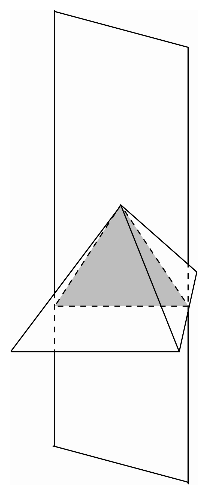
Example 5:
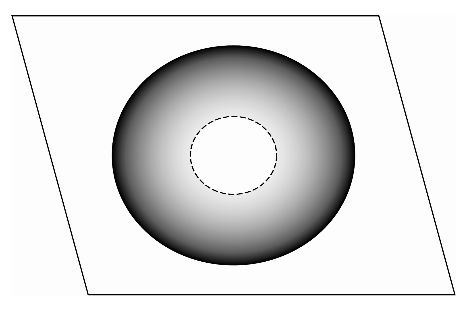
"Among the examples we recently examined, as well as the ones you generated, some were simply relations, while others were both relations and functions."
At this point, assist students with comprehending the distinction between a relation and a function. Students should possess the ability to discern the distinction and comprehend that a function encompasses both a relation and a function.
"As you have determined, the topic of relations is associated with functions. Here are two significant questions to ponder."
Transcribe the following questions on the board.
1. Are all relations also function? (no)
2. Are all functions also relations? (yes)
Enable students to make conjectures. Create a tally chart in the classroom to record the number of students who said "yes" to questions 1 and those who said "yes" to question 2.
"Based on our analysis of questions 1 and 2, we must develop an understanding of functions in order to provide precise answers to these questions. Firstly, it is necessary to define a function. Try to write down a definition on a piece of paper or in your Vocabulary Journal. If you find it challenging to express the definition in words, try to illustrate your thoughts by using a table, graph, or another form of visual representation."
Allocate sufficient time for students to express the concept of a function, either through verbal description or through alternative means. Instruct students to communicate their thoughts to the entire class.
"A function is essentially a type of relation. Remember that relations have no limits on which input values can be mapped to which output values. Functions, on the other hand, have a very important restriction. A function is a relation in which each input value is mapped or related to exactly one output value. In other words, each input value yields exactly one output value. This restriction only applies in one way, as one output value can be mapped to many input values."
Go over the following examples, explaining the input and output relations that make functions (and relations) in the first and third examples, but only a relation in the second.
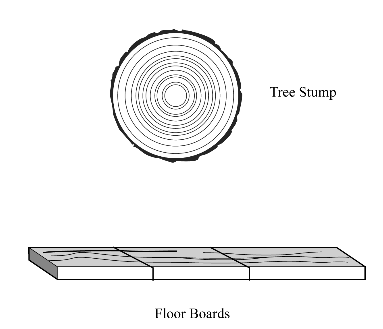
"With this definition, we can conclude that all functions are relations, but not all relations are functions. This statement represents a significant distinction."
Before moving on, review the students' definitions and/or representations of functions. Allow time for discussion and debate on the accuracy of the definitions and representations. If your discussion leads to an example that is not a function, ask students to explain how it could be converted into a function.
"As with relations, we will examine different representations of functions. Before we do so, let's go over some of the relations from earlier in the lesson and determine which are also functions."
Activity 1: Identifying Functions
Display the following examples on the board or indicate their possible location from earlier in the lesson. Students will determine which relations are functions. Request that students present a brief justification. Answers should not be given to students until after the activity, (Answers are given in italics.)
Example 1:
(0, −3), (2, 1), (4, 8), (−7, −2), (0, 1) Not a function; 0 is mapped to −3 and 1.
Example 2:
4, 10, 16, 22, … This function maps each input value to only one output value. The input values are natural numbers such as 1, 2, 3, ...
Example 3:
y = −2x + 3 Is a function; for each different x that is substituted into the equation, a unique output for the value of y is created.
Example 4:
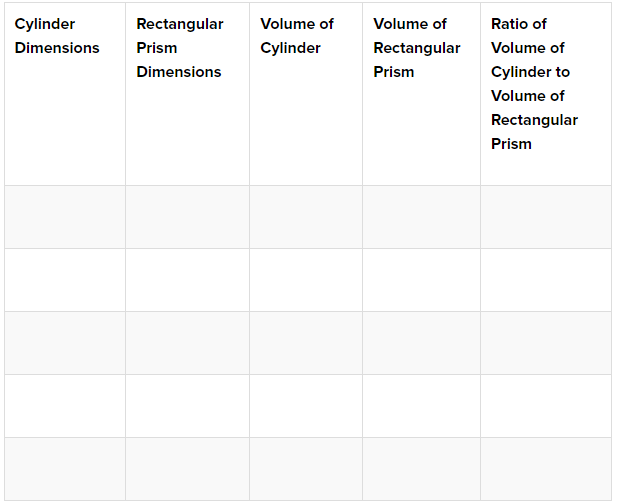
Is a function that maps each input value to only one output value; it makes no difference if 1 appears as an output for multiple input values. The key here is that one input value is not mapped to multiple output values.
Example 5:
Is a function; each x-value is mapped to only one y-value; this fact can be verified by creating a table of values or studying ordered pairs from the graph; can you discover an x-value that corresponds to more than one y-value?
*The "Vertical Line Test" can also be used to test this example. Pass the vertical line horizontally over the entire function. If the vertical line intersects multiple points at the same time, the graph is NOT a function. If a vertical line intersects the graph at exactly one point at one time, then the graph IS a function.
Provide discussion time for students to share findings and ask questions.
Linear Functions
"During this portion of the class, our main focus will be on a specific category of functions known as linear functions. Throughout our activities today, you have encountered and possibly generated various linear functions. Could someone provide a precise definition of a linear function?" Before presenting the formal definition, allow students to offer their own explanations, descriptions, or visual representations that aid in understanding linear functions.
"A linear function can be defined in multiple ways. A linear function is defined simply as one that changes at a constant rate. This definition applies to all representations and includes all other types of definitions. For example, we may state that a linear function is represented by a line graph. This statement is undoubtedly correct. In fact, the root word of linear is line. What makes a line unique? A line represents a constant rate of change, or a constant slope. All non-vertical straight lines represent functions. A line also associates each domain value (x) with precisely one range value (y)."
Describe slope by demonstrating a constant rate of change. Show how it can be visualized and calculated using a graph and coordinate pairs. Make it clear that the slope might be positive or negative, depending on whether the situation (or graphed line) is increasing from left to right or decreasing.
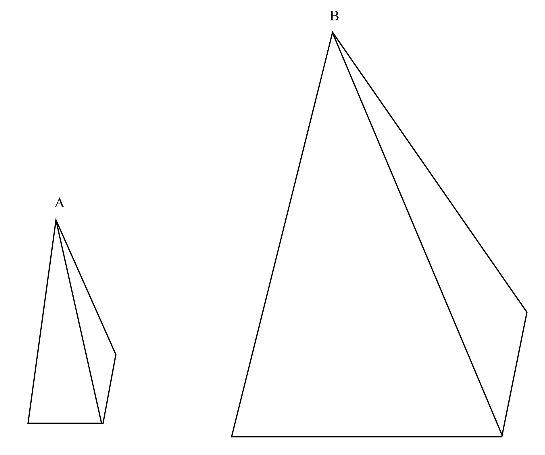
Comparing the change in the rise and the change in the run from point to point yields the slope. The "rise over run" (or slope) in this instance is 4/3.
To determine the constant rate of change or slope, using the coordinates provided. For instance, given the coordinates of two points as (1, 3) and (−2, −1), the slope may be determined using the following formula:
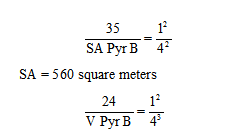
It is crucial for students to comprehend that for both techniques of determining slope, any two points on the line will give you the same slope. If there is enough time available, illustrate this by computing the slope in this example using an entirely distinct set of points.
Below are a few instances of linear patterns. Reminding students that all linear patterns have a consistent rate of change will assist them in understanding and working with these patterns. Instruct students to analyze each case and attempt to determine the missing values or continue the pattern. Once they have completed their work, select a few students to present their answers to the entire class.
−4, −1, 2, 5, 8, ____, ____, …
(The values increase by three after each other, 11 and 14).
4, 9, 14, ___, 24, …
(19, values are continuously increasing by 5)
98, 92, 86, 80, ____, ____, …
(The values are repeatedly dropping by 6 for 74 and 68.)
3, 12, ___, 30, …
(21, the values are consistently increasing by 9)
4, −1, −6, ____, ____, −21, …
(−11, −16, the values are continuously dropping by 5)
Linear Representations
There are multiple methods to express every function, even a linear function. The forms encompass a variety of structures, including phrases, sentences, lists of numbers or ordered pairs, as well as tables and graphs. Highlight the significance of being able to recognize a consistent rate of change in any of these formats to ascertain whether the scenario is linear or not.
“As we examine the linear functions presented below, let's stop and consider the precise definition of a linear function and how it might be utilized in different representations of functions.”
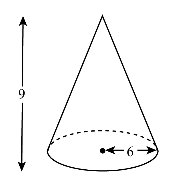
Ask students to think about real-life situations with a steady rate of change. Use an example: Joe gets money by mowing lawns. He saves $10 each week in his savings account. Discuss how the balance will increase by $10 per week. If graphed, this would result in a line with a positive slope of \(10 \over 1\), or 10. Continue the discussion by asking questions like these:
"How do the linear functions we just looked at support the definition of a linear function having a constant rate of change?" (They are graphed as a line; each input has precisely one output; the difference between each data point is the same each time; etc.)
"What is a constant rate of change? What does that actually mean?" (when something changes exactly the same amount every time)
"If a function does not have a constant rate of change, what might its graph look like?" (in discrete sections with numerous slopes, vertical line, quadratic, cubic, etc.)
"What is a rate?" (A rate compares two units or variables, namely x and y. Rate is frequently mentioned in terms of distance relative to time. Constant means "the same." Thus, a constant rate is the same rate applied across the function, regardless of what part of the graphed line, table, or situation you consider.)
"What other phrase seems to be synonymous with 'constant rate'?" (The slope is the rate of change of y-values per corresponding x-values. Slope can be calculated as the ratio of y-value change to x-value change. This ratio is also referred to as rise over run because of the variations seen in the graphed line. The slope can be calculated by counting the changes on a graph or by looking at any two ordered pairs and applying the formula:
m = \({y_2-y_1} \over {x_2-x_1}\)
"Can you think of another real-life example that is linear in nature?" (The answers will vary.)
"A constant slope indicates that the slope is the same throughout the entire function. We only observe this type of slope with linear functions. In our next activity, we will look at many representations of functions to see which are linear and why."
Activity 2: Linear or Not?
Distribute a copy of the Linear or Not? worksheet (M-8-3-1_Linear or Not and M-8-3-1_Linear or Not KEY) to every student. Instruct students to analyze each function example and contemplate the definition of a linear function. Please transcribe the definition on the board:
"A linear function is a function with a constant rate of change."
Students will answer "yes" or "no" in the "Constant Rate of Change?" column. Constant slope is another term for a constant rate of change. Students will offer an explanation for each case in the "Explain" column, noting whether or not it is linear. Allow students to collaborate with a partner. Inform students that you will select a student pair to give each example when the work time is over. Move throughout the classroom, supporting students with yes/no questions and explanations. If students' reasoning is incorrect use guiding questions to lead them down a logical path. Encourage students to consider each presentation and expand or revise the ideas on their papers. Before proceeding to the next section of the class, address any outstanding questions.
Although it is not the purpose or focus of this lesson, it is crucial to compare representations of linear to those of functions that are not linear.
"What definition could you give for a nonlinear function?" (A nonlinear function is one that is not linear; it lacks a constant rate of change or slope.)
Here are some examples of nonlinear functions to discuss with the students. Students do not need to learn the names or equations for these functions. They should be able to see that these functions do not have a constant rate of change, indicating that they are nonlinear. Provide students with strategies for determining if the rate of change is constant.
Example 1:
Example 2:
Example 3: 4, 8, 16, 32, 64, …
Example 4: (−5, 21), (0, −4), (2, 0), (6, 32)
Example 5: y = \(x^2\) - 6
Example 6: A dog eats 3 biscuits in the first hour, 9 biscuits in the second hour, and 27 biscuits in the third hour, and so on.
Extension:
Routine: Examine the significance of comprehending and employing accurate mathematical terminology to effectively convey mathematical concepts. The following terms—arithmetic sequence, continuous, discrete, function, linear function, nonlinear function, rate of change, relation, and slope—should be recorded in the student's vocabulary journals during this lesson. Ensure that students have access to extra Vocabulary Journal pages so they can add them as needed. Discuss examples of functions, situations with a constant rate of change, and instances of slope that have been encountered throughout the academic year. Request that students bring function graphs and real-life examples they encounter outside of class, and engage in a discussion about the purpose and significance of each specific setting. It is essential to consistently enforce the usage of suitable terminology by students in both their spoken and written responses.
Small Group, Review: The class should be organized into groups consisting of two to four individuals. Instruct each student to generate a collection of five questions (along with their corresponding responses), with at least one question from each of the following categories: relations, functions, and linear functions.
Every individual in the small group will pose questions to the other members of the group.
Conduct a discourse pertaining to any challenges or apprehensions.
Station, Exploring Linearity: Students are divided into groups of three and given tasks to complete at the station. Provide students with the following directions and, if needed, display a copy at each station:
1. Assign two students to take turns spinning the spinner until they obtain distinct values of 1, 2, or 3. The leftover number will be given to the last student.
a. The student who rotates 1 must create a table of values illustrating a linear function.
b. The student who rotates 2 must create a graph that displays a linear function.
c. The student who rotates 3 must create an equation that demonstrates a linear function.
Students should ensure that all group members have actually provided a table, graph, or equation demonstrating a linear function.
2. Students rotate representations so that each group member is now observing a distinct representation from the one they initially produced. Students are required to modify the table, graph, or equation in such a way that it no longer qualifies as a linear function.
Students should ensure that all modifications are currently non-linear and engage in a conversation about alternate strategies.
Expansion, Connecting It: Prompt students to provide instances of linear and nonlinear functions in real-world scenarios. Require students to justify how they know the situations as functions, and to explain the characteristics that determine whether they are linear or non-linear. Additionally, you can instruct students to depict their functions using mapping.

Introducing Relations and Functions (M-8-3-1)
This lesson will teach and distinguish the concepts of relations and functions. The properties that separate linear functions from other functions will be addressed, leading to the connections between different representations of linear functions. Students will:
- determine the distinction between a relation and a function.
- determine whether or not a function is linear.
- calculate the missing values for a specified function or function pattern.
- recognize numerous representations of linear functions.


