


























1 / 2
0
Views
0
Downloads

0.0
0
0 Likes
Judging Your Neighbor - A Teen Perspective
0 Views
0 Downloads
Paste this activity's link or code into your existing LMS (Google Classroom, Canvas, Teams, Schoology, Moodle, etc.).
Students can open and work on the activity right away, with no student login required.
You'll still be able to track student progress and results from your teacher account.
Information
Description
What It Is:
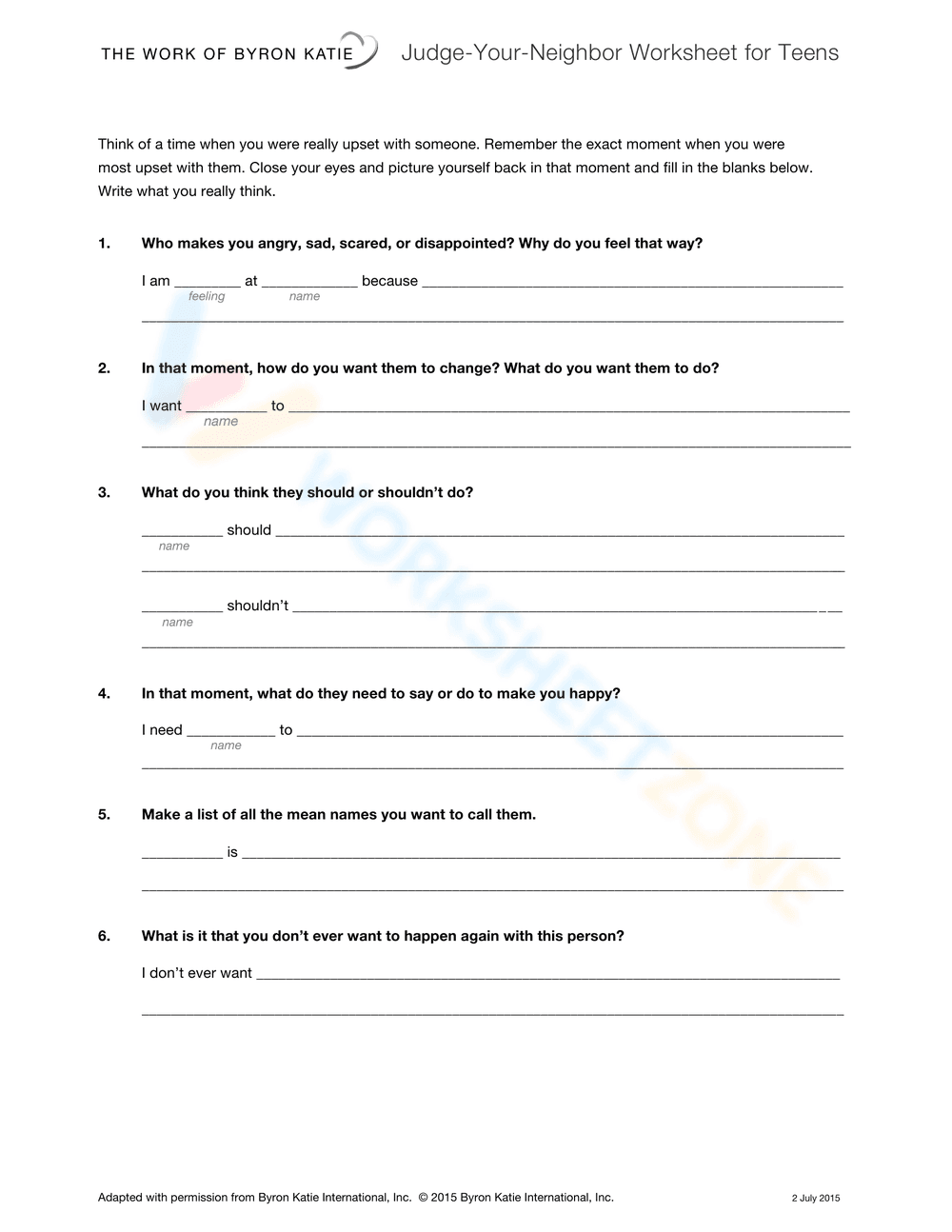
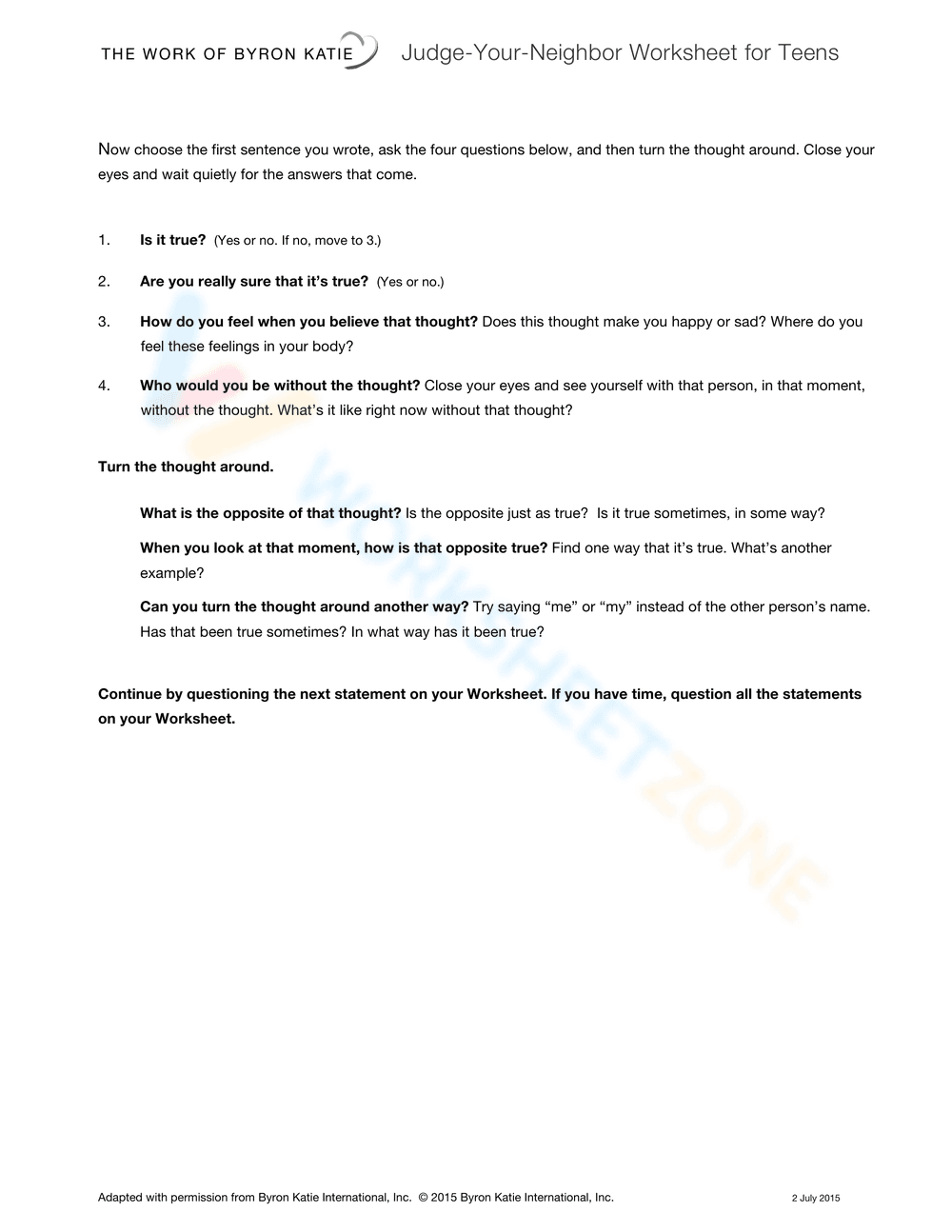
This is a 'Judge-Your-Neighbor Worksheet for Teens' based on the work of Byron Katie. It prompts the user to reflect on a time they were upset with someone and then answer questions about their feelings, desired changes in the other person's behavior, what they think the other person should or shouldn't do, what they need from the other person, mean names they want to call the person, and what they don't want to ever happen again with that person. It is designed to encourage self-reflection and emotional processing.
Grade Level Suitability:
This worksheet is suitable for grades 9-12 (high school). The questions require abstract thinking, emotional maturity, and strong writing skills to articulate complex feelings and desires. It also requires a level of self-awareness that is more developed in older teenagers.
Why Use It:
This worksheet can help teens process difficult emotions and understand their reactions to conflict. It encourages self-reflection and helps identify unmet needs and expectations in relationships. It may promote healthier communication and conflict resolution skills by exploring underlying feelings and desires.
How to Use It:
To use this worksheet, have the student recall a specific incident where they were upset with someone. They should close their eyes and picture the moment. Then, they should answer each question honestly and thoughtfully, filling in the blanks and writing complete sentences. It can be used individually or as a basis for discussion with a counselor or trusted adult.
Target Users:
The target users are teenagers (high school students) who are experiencing conflict or difficult emotions in their relationships. It is useful for teens seeking to improve their self-awareness, emotional regulation, and communication skills. It may also be beneficial for teens working with a therapist or counselor.
This is a 'Judge-Your-Neighbor Worksheet for Teens' based on the work of Byron Katie. It prompts the user to reflect on a time they were upset with someone and then answer questions about their feelings, desired changes in the other person's behavior, what they think the other person should or shouldn't do, what they need from the other person, mean names they want to call the person, and what they don't want to ever happen again with that person. It is designed to encourage self-reflection and emotional processing.
Grade Level Suitability:
This worksheet is suitable for grades 9-12 (high school). The questions require abstract thinking, emotional maturity, and strong writing skills to articulate complex feelings and desires. It also requires a level of self-awareness that is more developed in older teenagers.
Why Use It:
This worksheet can help teens process difficult emotions and understand their reactions to conflict. It encourages self-reflection and helps identify unmet needs and expectations in relationships. It may promote healthier communication and conflict resolution skills by exploring underlying feelings and desires.
How to Use It:
To use this worksheet, have the student recall a specific incident where they were upset with someone. They should close their eyes and picture the moment. Then, they should answer each question honestly and thoughtfully, filling in the blanks and writing complete sentences. It can be used individually or as a basis for discussion with a counselor or trusted adult.
Target Users:
The target users are teenagers (high school students) who are experiencing conflict or difficult emotions in their relationships. It is useful for teens seeking to improve their self-awareness, emotional regulation, and communication skills. It may also be beneficial for teens working with a therapist or counselor.


