


























0
Views
0
Downloads

0 Likes
Kinetic or Potential Energy: Identifying Energy Types
0 Views
0 Downloads
Paste this activity's link or code into your existing LMS (Google Classroom, Canvas, Teams, Schoology, Moodle, etc.).
Students can open and work on the activity right away, with no student login required.
You'll still be able to track student progress and results from your teacher account.
Information
Description
What It Is:
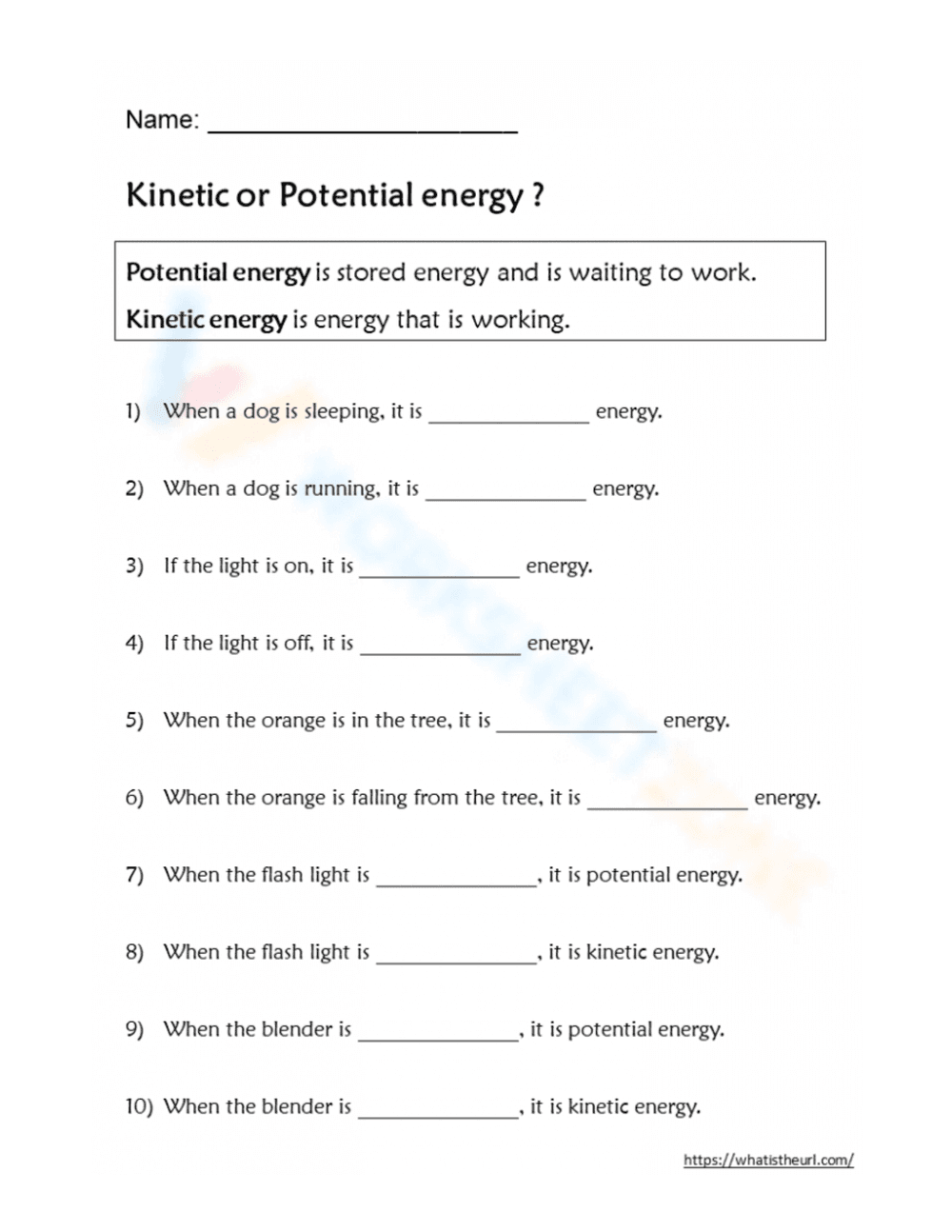
This is a science worksheet focused on kinetic and potential energy. It provides definitions of both types of energy and then presents ten scenarios where students must identify whether the energy described is kinetic or potential. Examples include a sleeping dog, a running dog, a light being on or off, an orange in a tree, an orange falling, a flashlight, and a blender. Students fill in the blanks to complete each sentence.
Grade Level Suitability:
This worksheet is most suitable for grades 3-5. The concepts are introduced in a simple manner, and the scenarios are relatable to everyday experiences. The fill-in-the-blank format makes it accessible for this age group.
Why Use It:
This worksheet helps students understand the difference between kinetic and potential energy through real-world examples. It reinforces the definitions provided and encourages critical thinking about how energy manifests in different situations. It provides practice in applying scientific concepts.
How to Use It:
Begin by reviewing the definitions of kinetic and potential energy with the student. Then, have the student read each sentence carefully and consider whether the described object is actively in motion (kinetic) or has the capacity to be in motion (potential). The student should then write either 'kinetic' or 'potential' in the blank provided.
Target Users:
This worksheet is ideal for elementary school students learning about energy for the first time. It can be used as a classroom activity, a homework assignment, or a review exercise. It's also beneficial for students who need extra practice in understanding the basic concepts of kinetic and potential energy.
This is a science worksheet focused on kinetic and potential energy. It provides definitions of both types of energy and then presents ten scenarios where students must identify whether the energy described is kinetic or potential. Examples include a sleeping dog, a running dog, a light being on or off, an orange in a tree, an orange falling, a flashlight, and a blender. Students fill in the blanks to complete each sentence.
Grade Level Suitability:
This worksheet is most suitable for grades 3-5. The concepts are introduced in a simple manner, and the scenarios are relatable to everyday experiences. The fill-in-the-blank format makes it accessible for this age group.
Why Use It:
This worksheet helps students understand the difference between kinetic and potential energy through real-world examples. It reinforces the definitions provided and encourages critical thinking about how energy manifests in different situations. It provides practice in applying scientific concepts.
How to Use It:
Begin by reviewing the definitions of kinetic and potential energy with the student. Then, have the student read each sentence carefully and consider whether the described object is actively in motion (kinetic) or has the capacity to be in motion (potential). The student should then write either 'kinetic' or 'potential' in the blank provided.
Target Users:
This worksheet is ideal for elementary school students learning about energy for the first time. It can be used as a classroom activity, a homework assignment, or a review exercise. It's also beneficial for students who need extra practice in understanding the basic concepts of kinetic and potential energy.


