


























1 / 2
0
Views
0
Downloads

0 Likes
Practice Problems: Limiting Reagent Worksheet
0 Views
0 Downloads
Paste this activity's link or code into your existing LMS (Google Classroom, Canvas, Teams, Schoology, Moodle, etc.).
Students can open and work on the activity right away, with no student login required.
You'll still be able to track student progress and results from your teacher account.
Information
Description
What It Is:
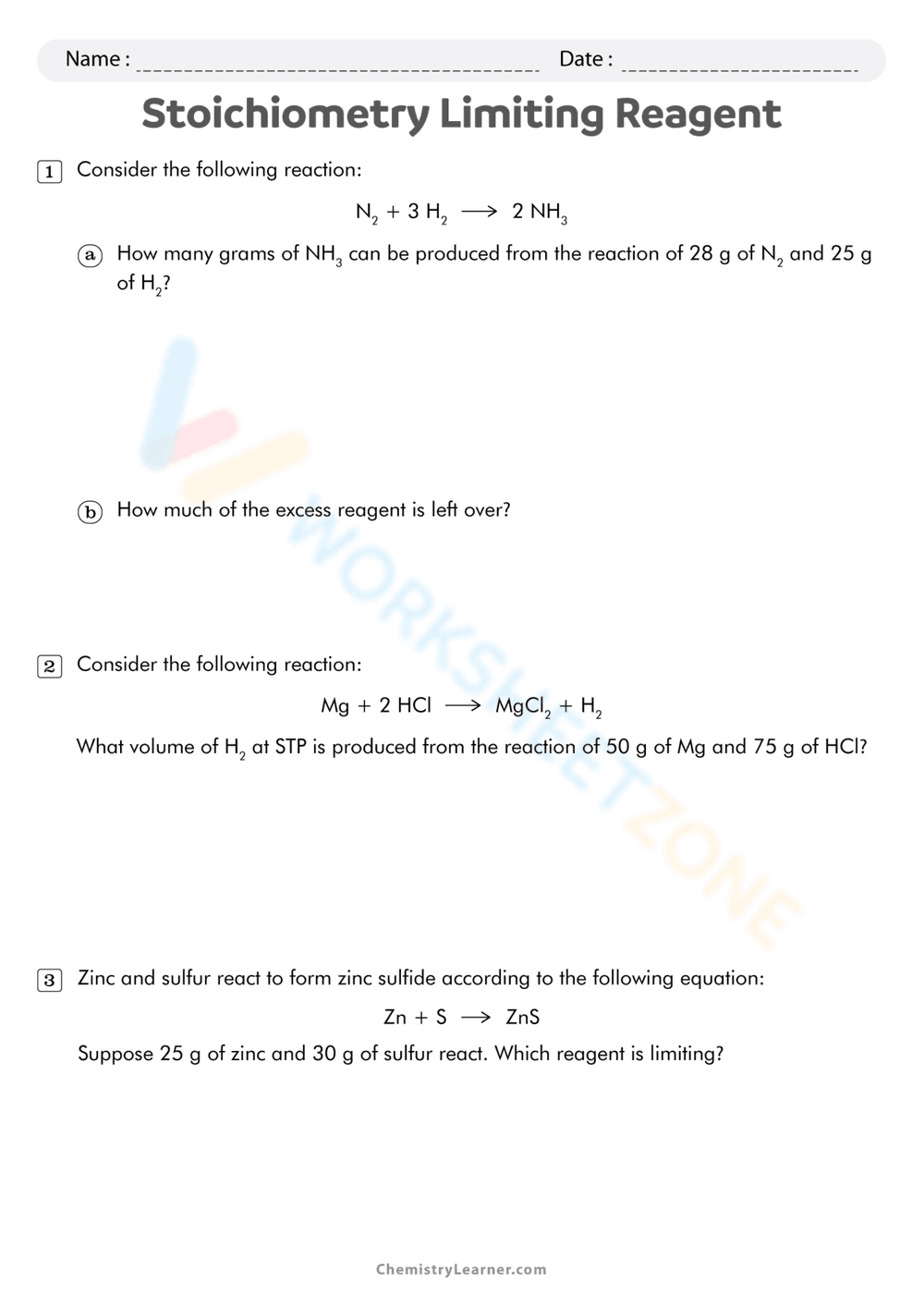
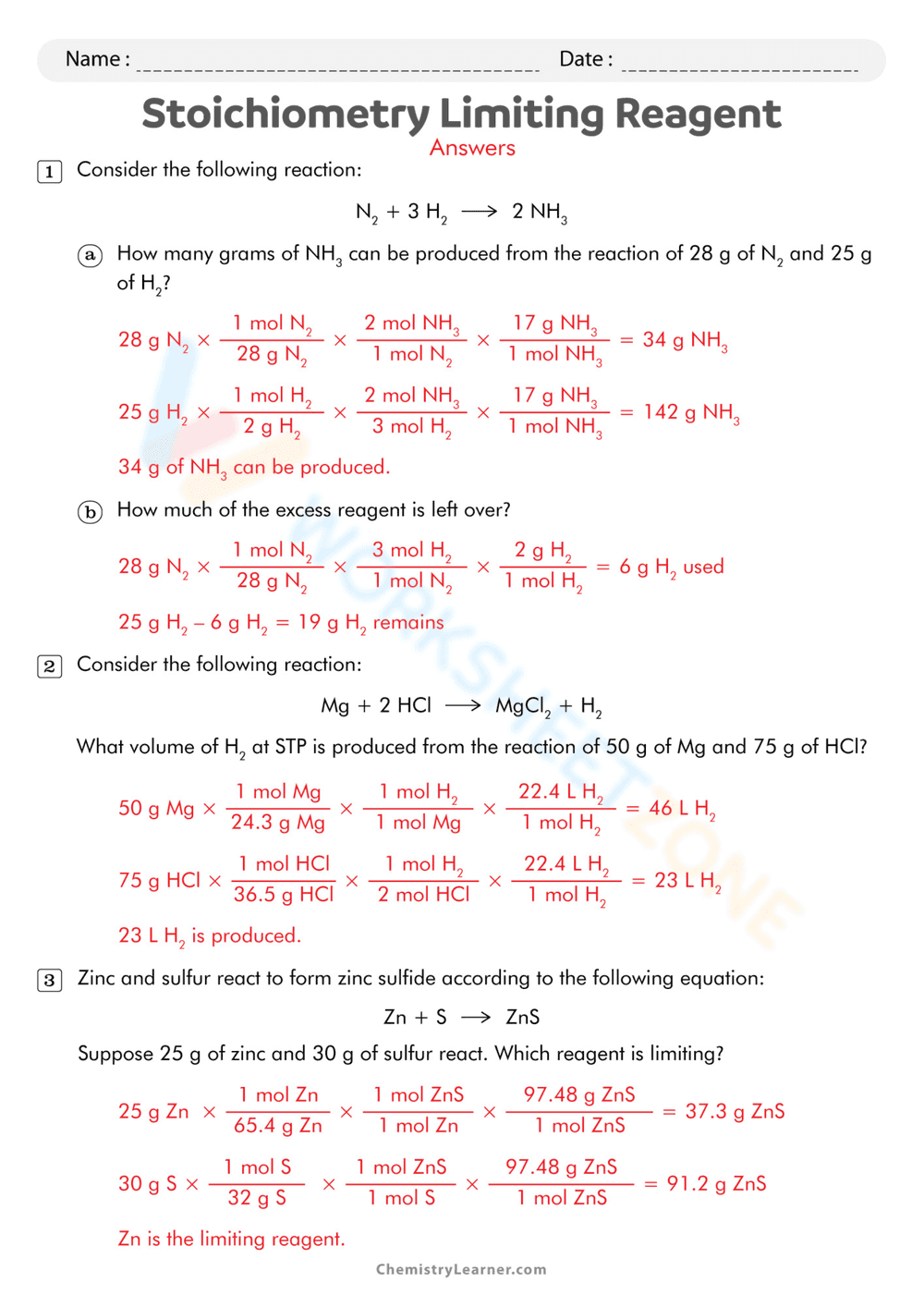
This is a chemistry worksheet focused on stoichiometry and limiting reagents. It presents three problems involving chemical reactions. The first problem asks students to calculate the amount of ammonia (NH3) produced from given amounts of nitrogen (N2) and hydrogen (H2), and to determine the amount of excess reagent remaining. The second problem requires students to calculate the volume of hydrogen gas (H2) produced at STP from the reaction of magnesium (Mg) and hydrochloric acid (HCl). The third problem asks students to identify the limiting reagent in the reaction between zinc (Zn) and sulfur (S) to form zinc sulfide (ZnS).
Grade Level Suitability:
This worksheet is suitable for high school chemistry students, specifically grades 11-12. It requires a solid understanding of stoichiometry, molar mass calculations, balancing chemical equations, and the concept of limiting reagents.
Why Use It:
This worksheet provides practice in applying stoichiometric principles to solve quantitative chemistry problems. It reinforces the concepts of limiting reagents and excess reagents, allowing students to develop problem-solving skills related to chemical reactions and calculations. It also tests the students understanding of standard temperature and pressure (STP).
How to Use It:
Students should first balance the chemical equations provided in each problem. Then, they need to calculate the number of moles of each reactant. Next, they should use the stoichiometry of the balanced equation to determine the limiting reagent. Finally, they can calculate the amount of product formed based on the limiting reagent, and the amount of excess reagent left over, where applicable.
Target Users:
The target users are high school chemistry students learning about stoichiometry and limiting reagents, as well as teachers looking for practice problems to assign to their students.
This is a chemistry worksheet focused on stoichiometry and limiting reagents. It presents three problems involving chemical reactions. The first problem asks students to calculate the amount of ammonia (NH3) produced from given amounts of nitrogen (N2) and hydrogen (H2), and to determine the amount of excess reagent remaining. The second problem requires students to calculate the volume of hydrogen gas (H2) produced at STP from the reaction of magnesium (Mg) and hydrochloric acid (HCl). The third problem asks students to identify the limiting reagent in the reaction between zinc (Zn) and sulfur (S) to form zinc sulfide (ZnS).
Grade Level Suitability:
This worksheet is suitable for high school chemistry students, specifically grades 11-12. It requires a solid understanding of stoichiometry, molar mass calculations, balancing chemical equations, and the concept of limiting reagents.
Why Use It:
This worksheet provides practice in applying stoichiometric principles to solve quantitative chemistry problems. It reinforces the concepts of limiting reagents and excess reagents, allowing students to develop problem-solving skills related to chemical reactions and calculations. It also tests the students understanding of standard temperature and pressure (STP).
How to Use It:
Students should first balance the chemical equations provided in each problem. Then, they need to calculate the number of moles of each reactant. Next, they should use the stoichiometry of the balanced equation to determine the limiting reagent. Finally, they can calculate the amount of product formed based on the limiting reagent, and the amount of excess reagent left over, where applicable.
Target Users:
The target users are high school chemistry students learning about stoichiometry and limiting reagents, as well as teachers looking for practice problems to assign to their students.


