


























1 / 4
0
Views
0
Downloads




0 Likes
Macromolecule Biomolecule Review Worksheet
0 Views
0 Downloads
Paste this activity's link or code into your existing LMS (Google Classroom, Canvas, Teams, Schoology, Moodle, etc.).
Students can open and work on the activity right away, with no student login required.
You'll still be able to track student progress and results from your teacher account.
Information
Description
What It Is:
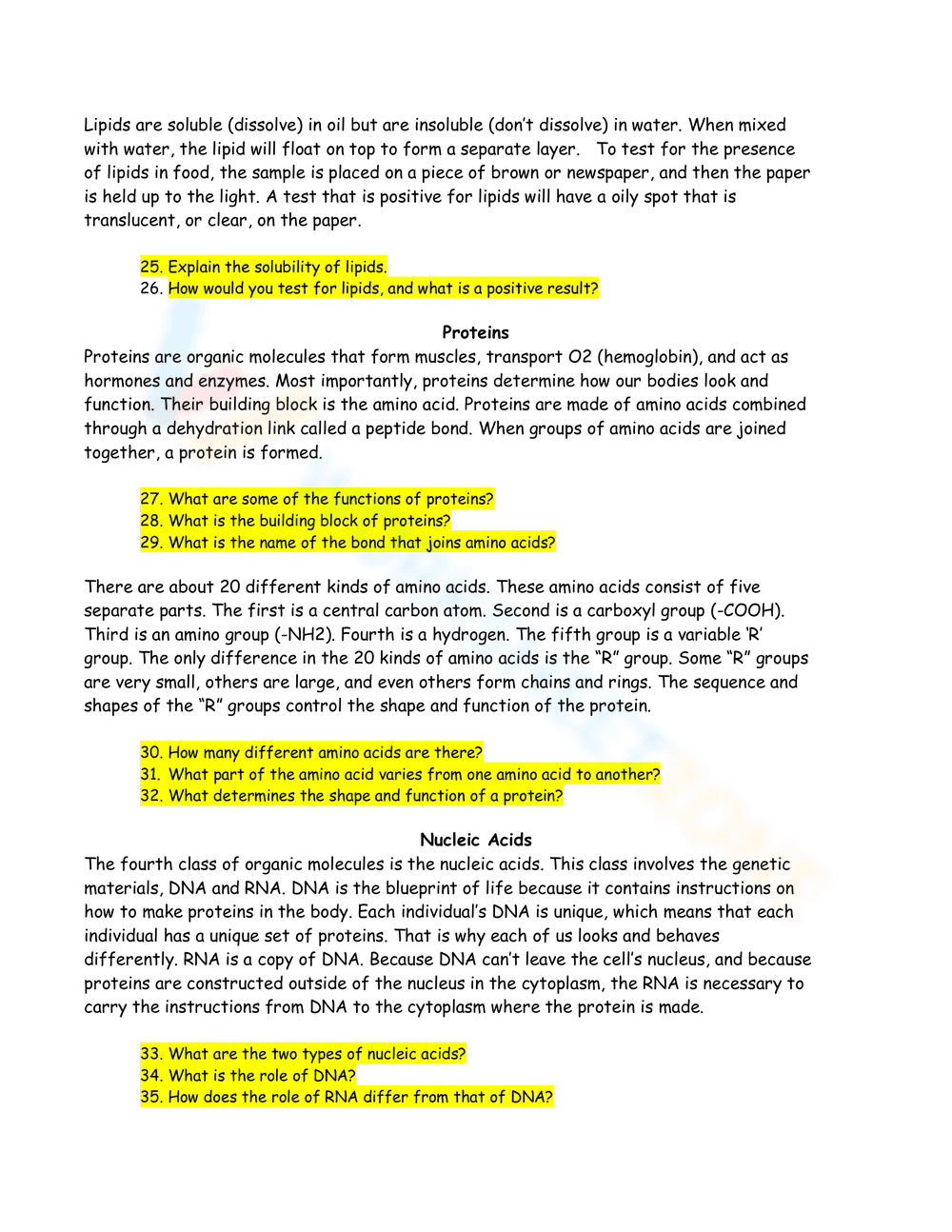
This is a macromolecule (biomolecule) review worksheet. It contains introductory text explaining organic molecules, their building blocks (carbohydrates, lipids, proteins, and nucleic acids), and their characteristics. It includes nine questions related to the text, asking students to identify relationships, characteristics, and building blocks of organic molecules. The worksheet also includes a section on carbohydrates, defining them and showing a diagram of a fructose molecule.
Grade Level Suitability:
This worksheet is suitable for grades 9-12, specifically high school biology or introductory chemistry. The content covers fundamental concepts in biochemistry and requires a basic understanding of chemical structures and biological processes.
Why Use It:
This worksheet reinforces understanding of macromolecules and their basic properties. It helps students connect organic molecules to living things, understand the building block concept of polymers, and review the characteristics of organic molecules. The carbohydrate section introduces a specific type of macromolecule with a visual aid.
How to Use It:
Students should read the introductory text and then answer the questions based on the information provided. They can use the text as a reference while completing the worksheet. The carbohydrate section can be used as a starting point for further research and learning about specific macromolecules.
Target Users:
The target users are high school students studying biology or chemistry, particularly those learning about macromolecules and organic molecules. It's also useful for students reviewing these concepts for exams.
This is a macromolecule (biomolecule) review worksheet. It contains introductory text explaining organic molecules, their building blocks (carbohydrates, lipids, proteins, and nucleic acids), and their characteristics. It includes nine questions related to the text, asking students to identify relationships, characteristics, and building blocks of organic molecules. The worksheet also includes a section on carbohydrates, defining them and showing a diagram of a fructose molecule.
Grade Level Suitability:
This worksheet is suitable for grades 9-12, specifically high school biology or introductory chemistry. The content covers fundamental concepts in biochemistry and requires a basic understanding of chemical structures and biological processes.
Why Use It:
This worksheet reinforces understanding of macromolecules and their basic properties. It helps students connect organic molecules to living things, understand the building block concept of polymers, and review the characteristics of organic molecules. The carbohydrate section introduces a specific type of macromolecule with a visual aid.
How to Use It:
Students should read the introductory text and then answer the questions based on the information provided. They can use the text as a reference while completing the worksheet. The carbohydrate section can be used as a starting point for further research and learning about specific macromolecules.
Target Users:
The target users are high school students studying biology or chemistry, particularly those learning about macromolecules and organic molecules. It's also useful for students reviewing these concepts for exams.


