


























1 / 9
0
Views
0
Downloads







0.0
0
0 Likes
Detailed Macromolecule Worksheet for Students
0 Views
0 Downloads
Paste this activity's link or code into your existing LMS (Google Classroom, Canvas, Teams, Schoology, Moodle, etc.).
Students can open and work on the activity right away, with no student login required.
You'll still be able to track student progress and results from your teacher account.
Information
Description
What It Is:
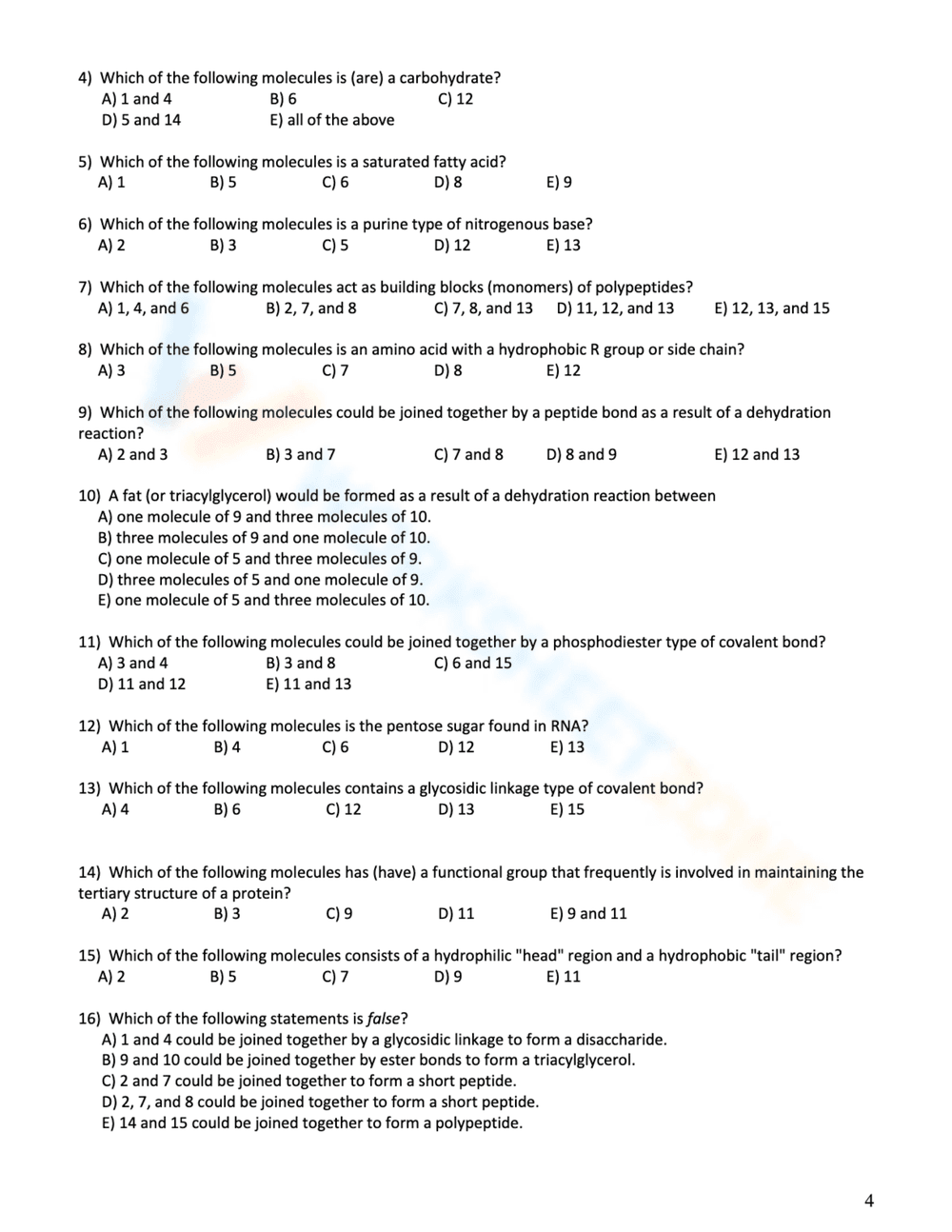
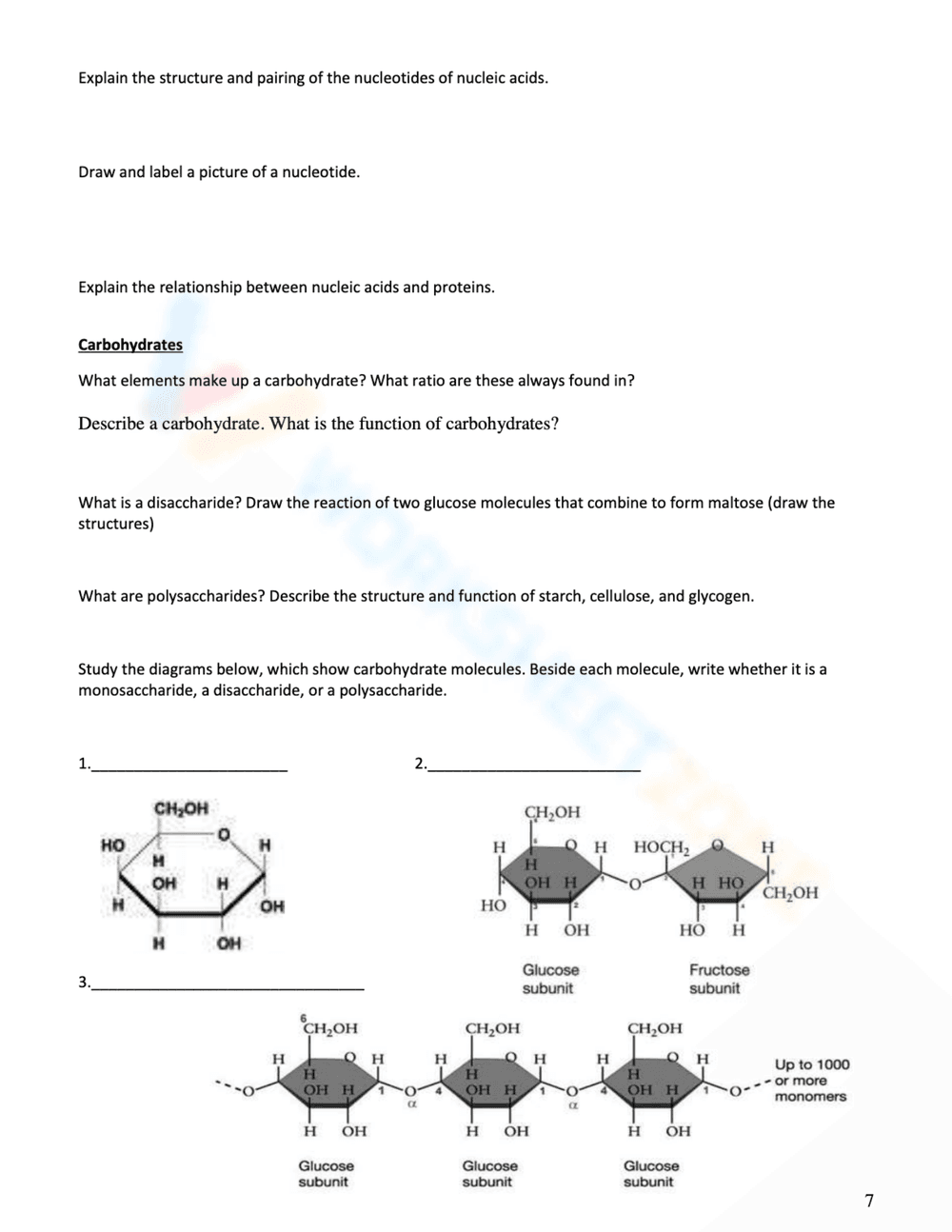
This is a macromolecules worksheet. It includes questions about carbon's versatility, identifying compounds with double bonds (C2H6, C3H6, CH4, C2H2, C3H4), identifying and naming functional groups in given chemical structures (containing elements such as C, H, O, N), and explaining the relationship between monomers and polymers and how they are related to the 'unity and diversity of life.' It also asks students to explain and illustrate how monomers are linked and disassembled. The worksheet refers to a diagram for answering questions which is not visible in the image.
Grade Level Suitability:
This worksheet is suitable for high school (Grades 9-12) chemistry or biology classes, specifically for students learning about organic chemistry and macromolecules. The concepts of functional groups, monomers, and polymers are typically introduced at the high school level.
Why Use It:
This worksheet reinforces understanding of carbon's bonding properties, functional group identification, and the relationship between monomers and polymers. It helps students connect molecular structures to broader biological concepts like the unity and diversity of life. The worksheet also encourages critical thinking and problem-solving skills in the context of organic chemistry.
How to Use It:
Students should first read the introductory questions about carbon. Next, they should answer the multiple-choice question about double bonds. For the functional groups section, they should circle the functional group(s) in each structure, write the name of the functional group, and then write the chemical formula for the entire molecule. Finally, they should explain the relationship between monomers and polymers and illustrate the linking and disassembling of monomers. The final section requires the use of a diagram (not shown) to answer questions.
Target Users:
The target users are high school students taking chemistry or biology courses, particularly those learning about organic molecules, functional groups, and macromolecules. It is also suitable for teachers looking for practice materials to supplement their lessons on these topics.
This is a macromolecules worksheet. It includes questions about carbon's versatility, identifying compounds with double bonds (C2H6, C3H6, CH4, C2H2, C3H4), identifying and naming functional groups in given chemical structures (containing elements such as C, H, O, N), and explaining the relationship between monomers and polymers and how they are related to the 'unity and diversity of life.' It also asks students to explain and illustrate how monomers are linked and disassembled. The worksheet refers to a diagram for answering questions which is not visible in the image.
Grade Level Suitability:
This worksheet is suitable for high school (Grades 9-12) chemistry or biology classes, specifically for students learning about organic chemistry and macromolecules. The concepts of functional groups, monomers, and polymers are typically introduced at the high school level.
Why Use It:
This worksheet reinforces understanding of carbon's bonding properties, functional group identification, and the relationship between monomers and polymers. It helps students connect molecular structures to broader biological concepts like the unity and diversity of life. The worksheet also encourages critical thinking and problem-solving skills in the context of organic chemistry.
How to Use It:
Students should first read the introductory questions about carbon. Next, they should answer the multiple-choice question about double bonds. For the functional groups section, they should circle the functional group(s) in each structure, write the name of the functional group, and then write the chemical formula for the entire molecule. Finally, they should explain the relationship between monomers and polymers and illustrate the linking and disassembling of monomers. The final section requires the use of a diagram (not shown) to answer questions.
Target Users:
The target users are high school students taking chemistry or biology courses, particularly those learning about organic molecules, functional groups, and macromolecules. It is also suitable for teachers looking for practice materials to supplement their lessons on these topics.


