


























0
Views
0
Downloads

0 Likes
Maslow Pyramid Diagram Worksheet
0 Views
0 Downloads
Paste this activity's link or code into your existing LMS (Google Classroom, Canvas, Teams, Schoology, Moodle, etc.).
Students can open and work on the activity right away, with no student login required.
You'll still be able to track student progress and results from your teacher account.
Information
Description
What It Is:
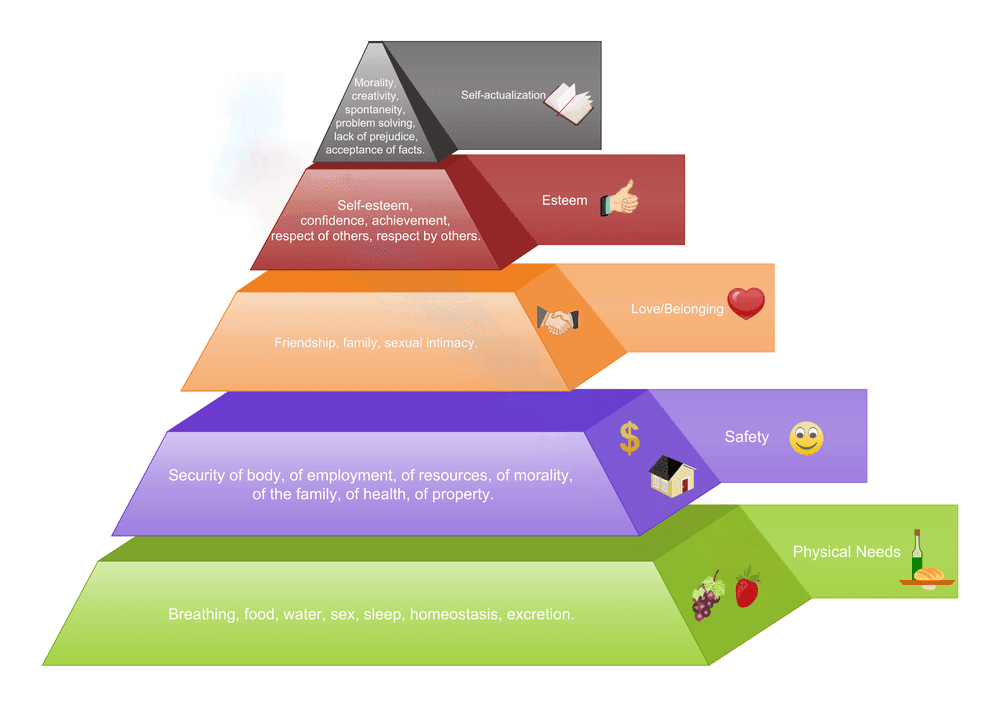
This is an educational worksheet depicting Maslow's Hierarchy of Needs. The worksheet presents the hierarchy as a pyramid, with each level labeled and described. The levels, from bottom to top, are: Physical Needs (breathing, food, water, sex, sleep, homeostasis, excretion), Safety (security of body, employment, resources, morality, family, health, property), Love/Belonging (friendship, family, sexual intimacy), Esteem (self-esteem, confidence, achievement, respect of others, respect by others), and Self-Actualization (morality, creativity, spontaneity, problem-solving, lack of prejudice, acceptance of facts). Each level includes corresponding icons to represent the needs.
Grade Level Suitability:
This worksheet is suitable for grades 6-12, particularly in social studies, psychology, or health classes. The concept of Maslow's Hierarchy of Needs is complex but presented visually, making it accessible to middle and high school students.
Why Use It:
This worksheet helps students understand the fundamental needs that drive human behavior and motivation. It allows them to visualize and internalize the different levels of needs and how they relate to each other. It promotes critical thinking about self-awareness and personal growth.
How to Use It:
Use this worksheet as a visual aid when introducing or reviewing Maslow's Hierarchy of Needs. Students can use it for note-taking, discussion prompts, or as a reference for assignments exploring human motivation and personal development. Teachers can use it as part of a lesson plan on psychology, sociology, or personal health.
Target Users:
This worksheet is ideal for middle and high school students studying social studies, psychology, or health. It is also beneficial for educators teaching these subjects and anyone interested in learning about human motivation and personal development.
This is an educational worksheet depicting Maslow's Hierarchy of Needs. The worksheet presents the hierarchy as a pyramid, with each level labeled and described. The levels, from bottom to top, are: Physical Needs (breathing, food, water, sex, sleep, homeostasis, excretion), Safety (security of body, employment, resources, morality, family, health, property), Love/Belonging (friendship, family, sexual intimacy), Esteem (self-esteem, confidence, achievement, respect of others, respect by others), and Self-Actualization (morality, creativity, spontaneity, problem-solving, lack of prejudice, acceptance of facts). Each level includes corresponding icons to represent the needs.
Grade Level Suitability:
This worksheet is suitable for grades 6-12, particularly in social studies, psychology, or health classes. The concept of Maslow's Hierarchy of Needs is complex but presented visually, making it accessible to middle and high school students.
Why Use It:
This worksheet helps students understand the fundamental needs that drive human behavior and motivation. It allows them to visualize and internalize the different levels of needs and how they relate to each other. It promotes critical thinking about self-awareness and personal growth.
How to Use It:
Use this worksheet as a visual aid when introducing or reviewing Maslow's Hierarchy of Needs. Students can use it for note-taking, discussion prompts, or as a reference for assignments exploring human motivation and personal development. Teachers can use it as part of a lesson plan on psychology, sociology, or personal health.
Target Users:
This worksheet is ideal for middle and high school students studying social studies, psychology, or health. It is also beneficial for educators teaching these subjects and anyone interested in learning about human motivation and personal development.


