


























1 / 15
0
Views
0
Downloads


0.0
0
0 Likes
Modeling Seafloor Spread
0 Views
0 Downloads
Paste this activity's link or code into your existing LMS (Google Classroom, Canvas, Teams, Schoology, Moodle, etc.).
Students can open and work on the activity right away, with no student login required.
You'll still be able to track student progress and results from your teacher account.
Information
Description
What It Is:
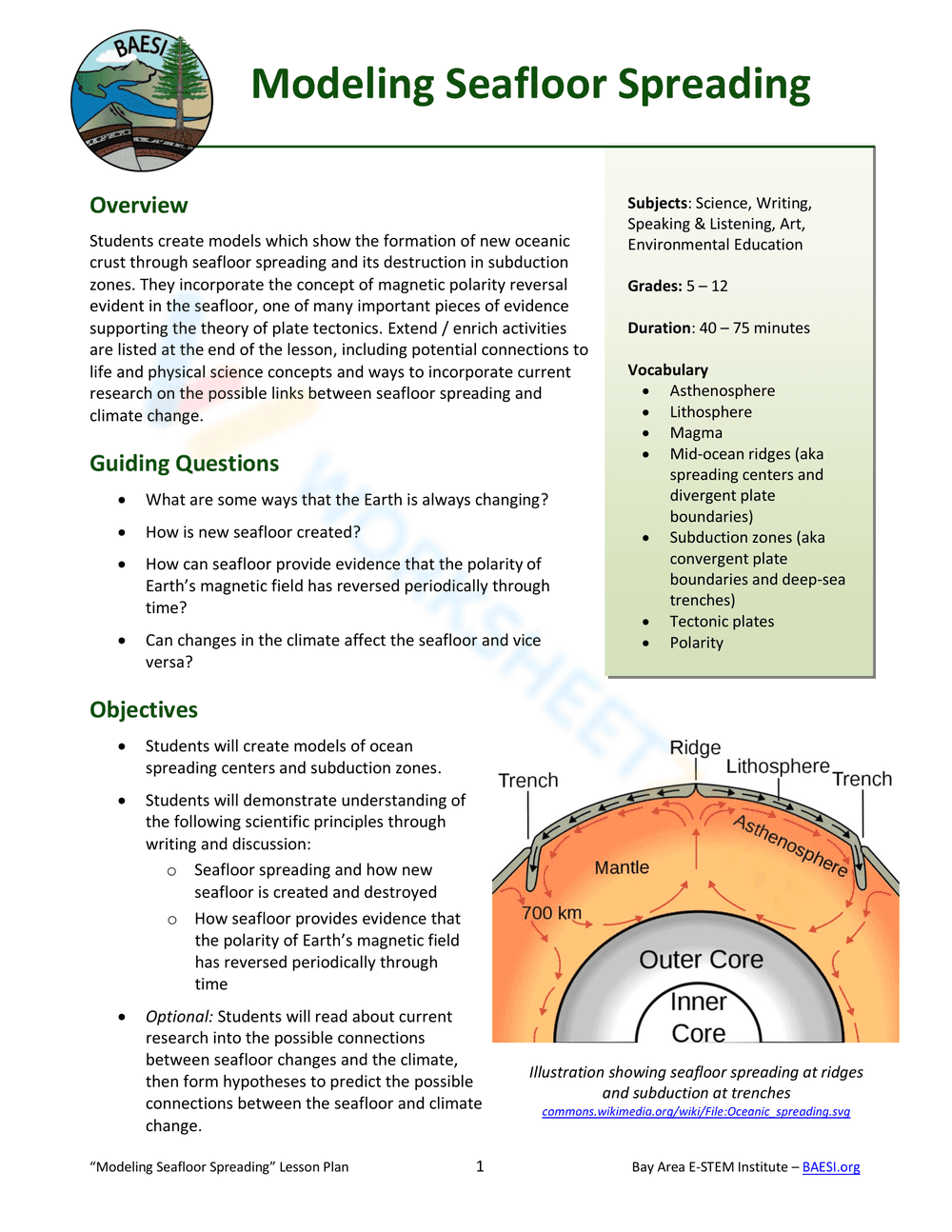
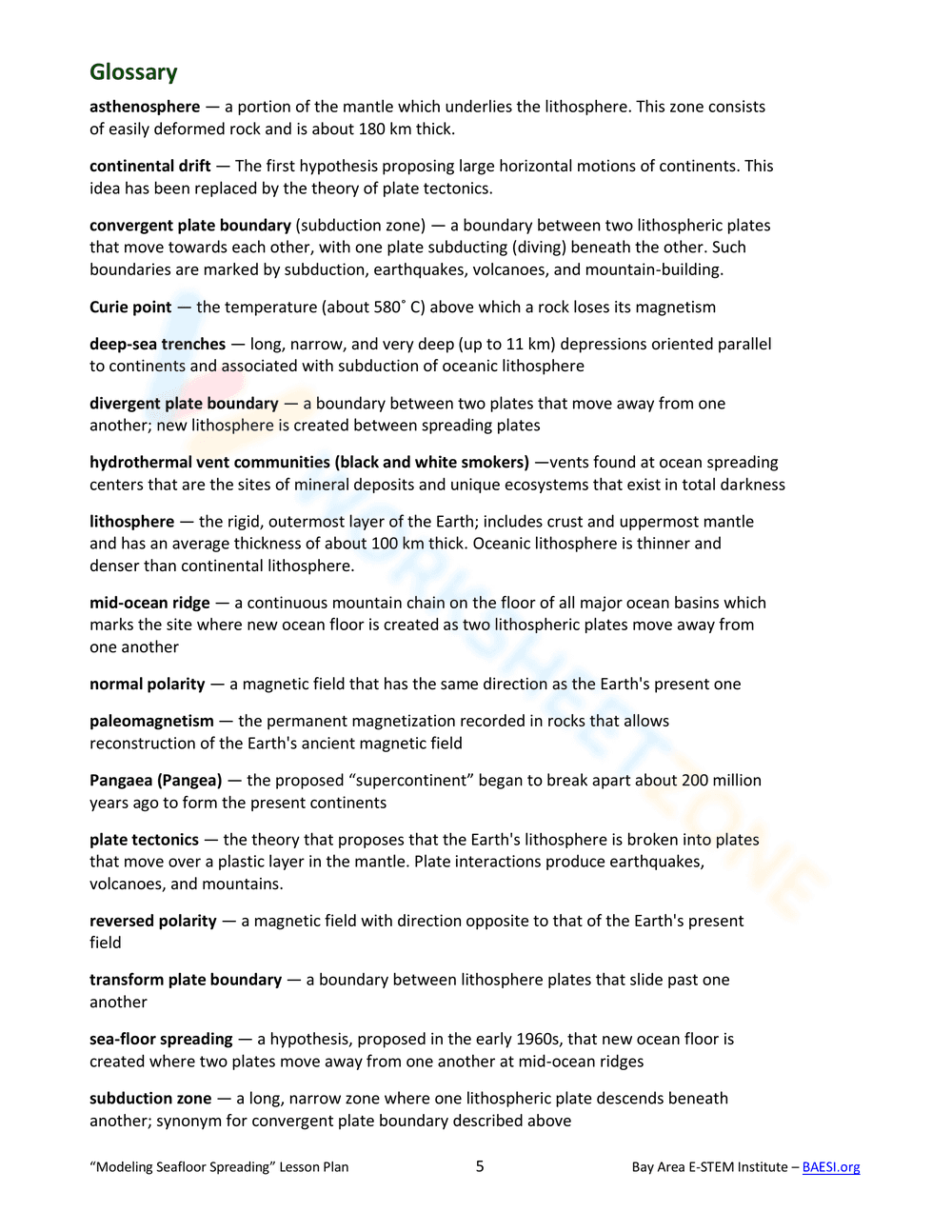
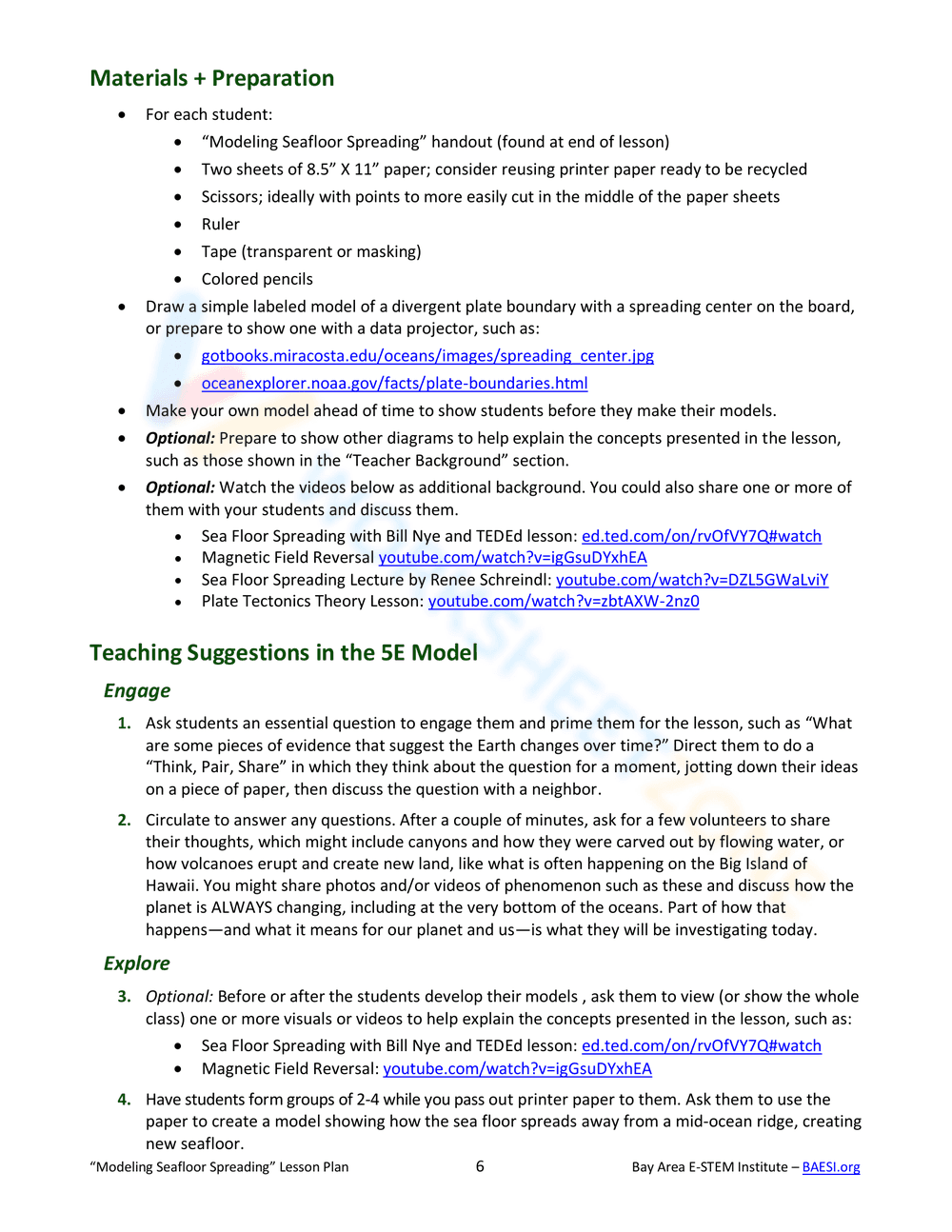
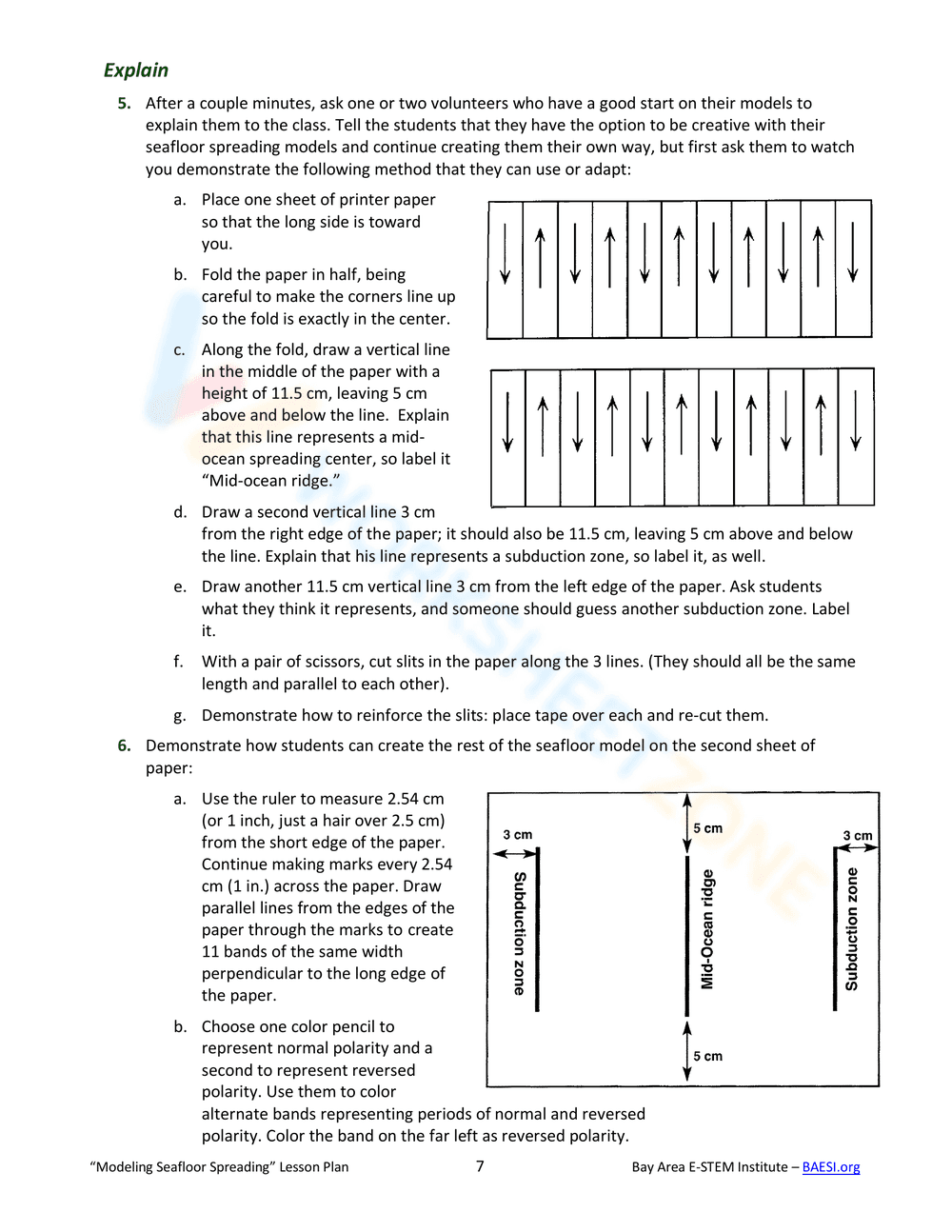
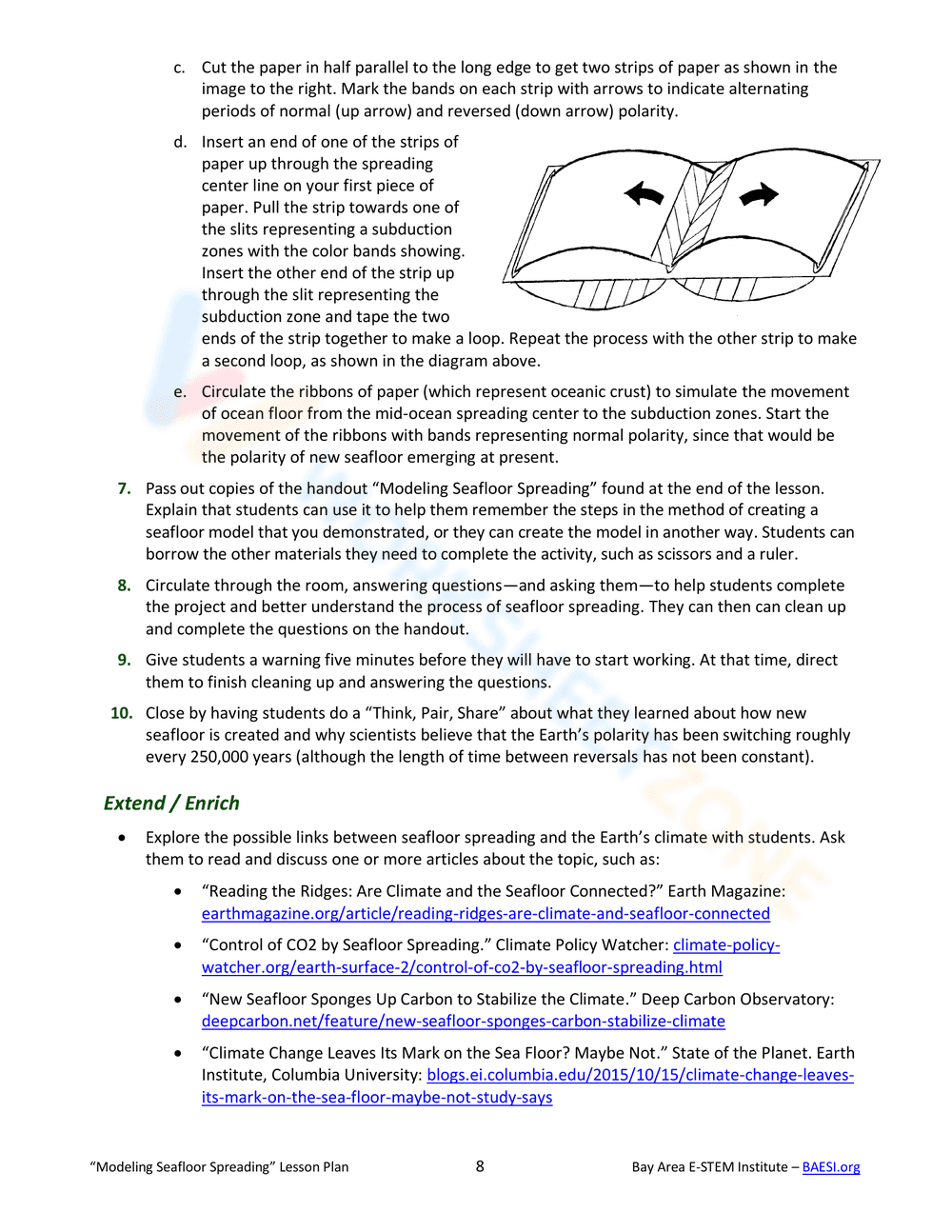
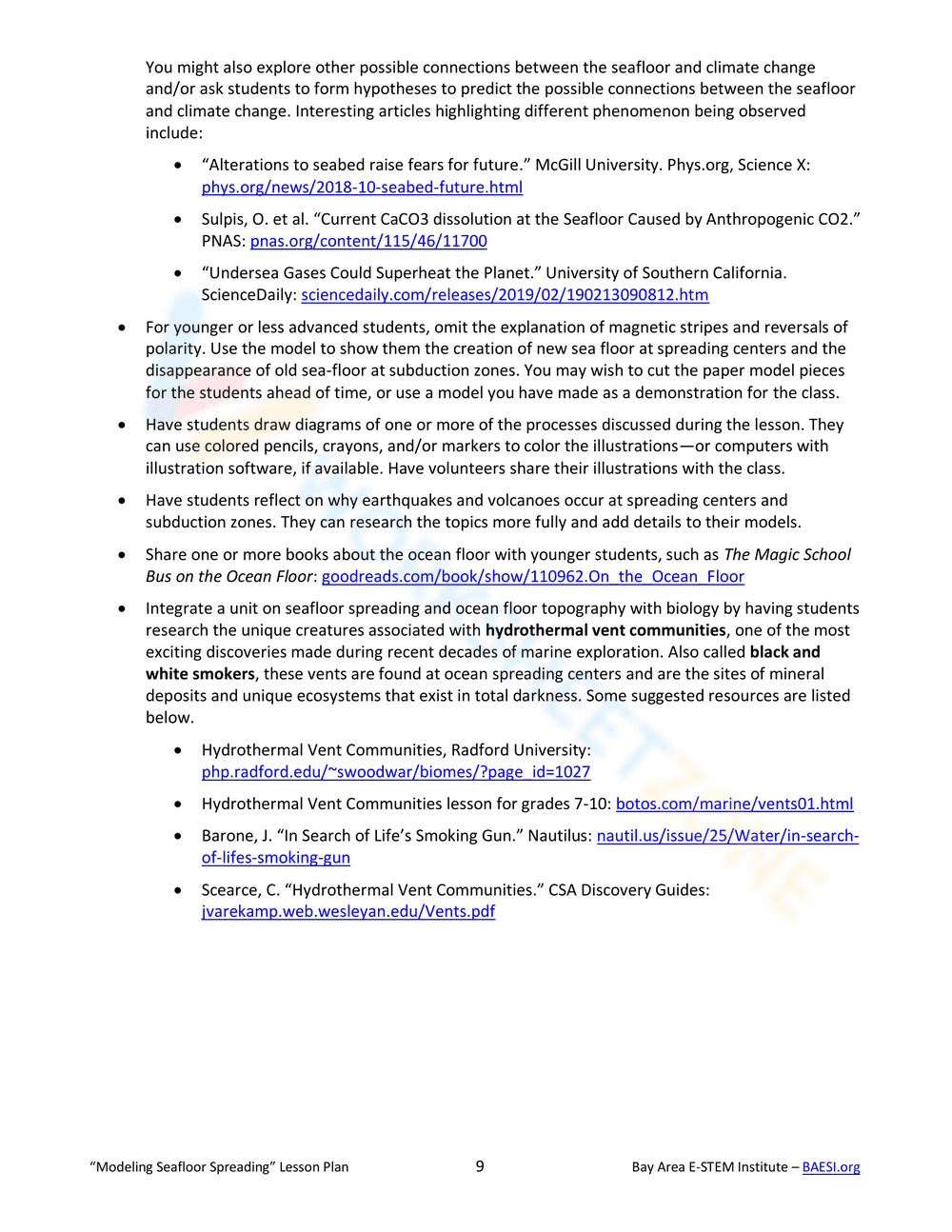
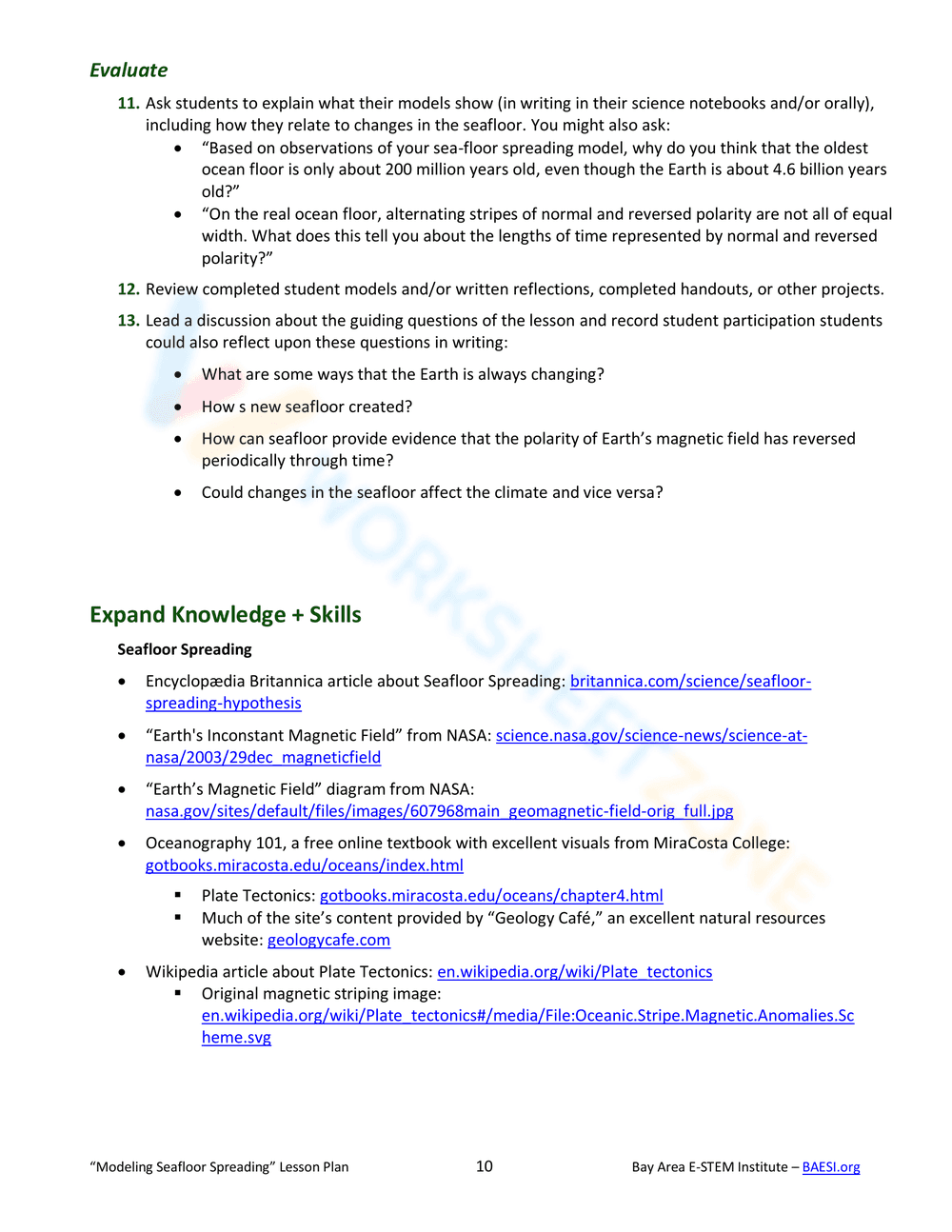
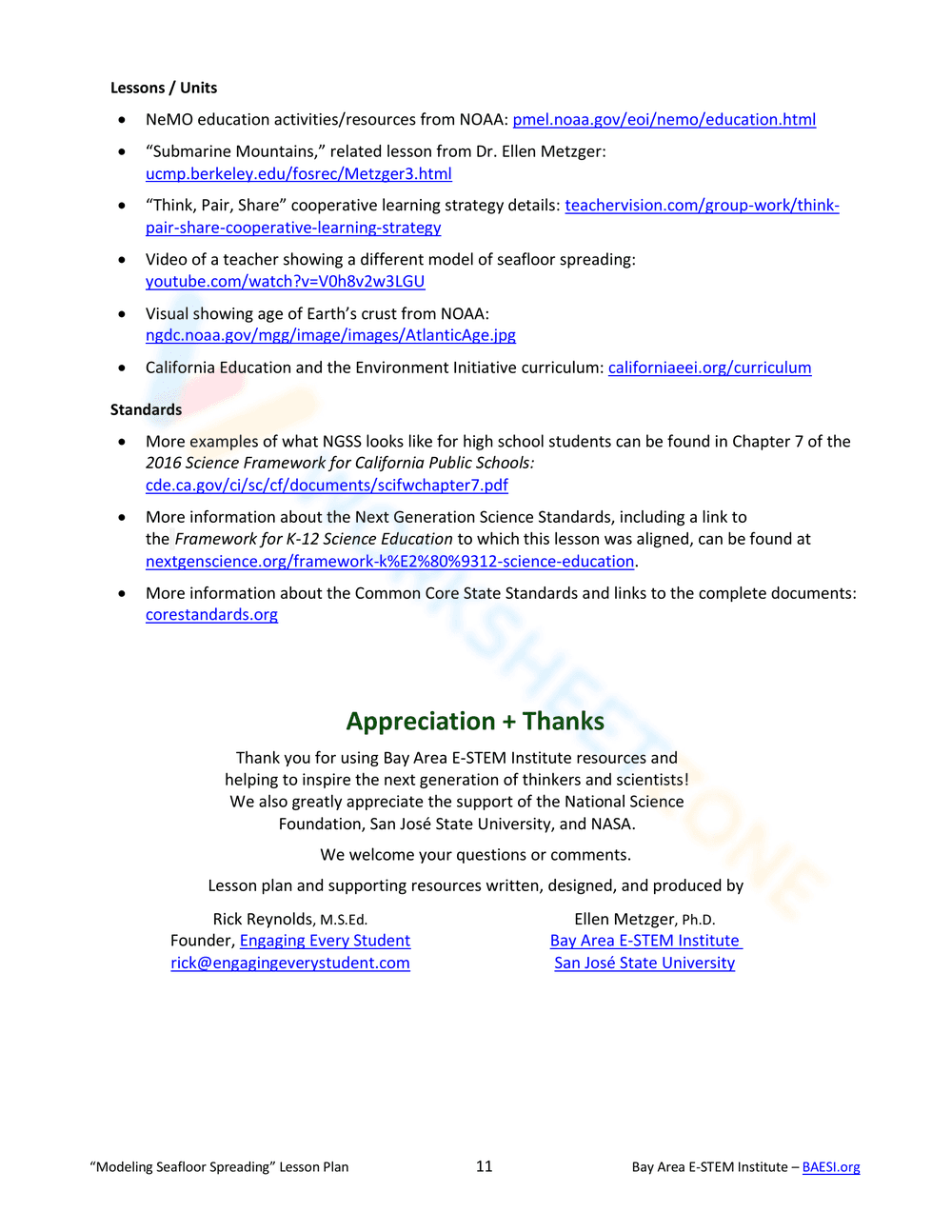
This is an educational worksheet titled 'Modeling Seafloor Spreading.' It includes an overview of seafloor spreading and subduction zones, guiding questions to stimulate student thinking, and learning objectives focusing on creating models and understanding scientific principles. It also provides a vocabulary list related to Earth's layers and plate tectonics, and includes a diagram illustrating seafloor spreading at ridges and subduction at trenches.
Grade Level Suitability:
This worksheet is suitable for grades 5-12. The concepts of plate tectonics, seafloor spreading, and subduction zones require a basic understanding of Earth science, making it appropriate for middle and high school students. The vocabulary and optional research component offer challenges for advanced learners.
Why Use It:
This worksheet helps students understand the dynamic processes of Earth's crust, specifically seafloor spreading and subduction. It encourages critical thinking through guiding questions, develops modeling skills, and promotes understanding of scientific principles related to plate tectonics and Earth's magnetic field. It also connects these concepts to climate change.
How to Use It:
Students can read the overview to understand the basics of seafloor spreading. They can then answer the guiding questions to prompt discussion. Students can then create models to visualize the processes of seafloor spreading and subduction. Use the vocabulary list to understand key terms. The diagram can be used as a visual aid.
Target Users:
This worksheet is designed for science teachers and students in grades 5-12 studying Earth science, plate tectonics, and related concepts. It is also beneficial for students interested in environmental science and the connection between Earth processes and climate change.
This is an educational worksheet titled 'Modeling Seafloor Spreading.' It includes an overview of seafloor spreading and subduction zones, guiding questions to stimulate student thinking, and learning objectives focusing on creating models and understanding scientific principles. It also provides a vocabulary list related to Earth's layers and plate tectonics, and includes a diagram illustrating seafloor spreading at ridges and subduction at trenches.
Grade Level Suitability:
This worksheet is suitable for grades 5-12. The concepts of plate tectonics, seafloor spreading, and subduction zones require a basic understanding of Earth science, making it appropriate for middle and high school students. The vocabulary and optional research component offer challenges for advanced learners.
Why Use It:
This worksheet helps students understand the dynamic processes of Earth's crust, specifically seafloor spreading and subduction. It encourages critical thinking through guiding questions, develops modeling skills, and promotes understanding of scientific principles related to plate tectonics and Earth's magnetic field. It also connects these concepts to climate change.
How to Use It:
Students can read the overview to understand the basics of seafloor spreading. They can then answer the guiding questions to prompt discussion. Students can then create models to visualize the processes of seafloor spreading and subduction. Use the vocabulary list to understand key terms. The diagram can be used as a visual aid.
Target Users:
This worksheet is designed for science teachers and students in grades 5-12 studying Earth science, plate tectonics, and related concepts. It is also beneficial for students interested in environmental science and the connection between Earth processes and climate change.


