


























1 / 5
0
Views
0
Downloads



0.0
0
0 Likes
Calculating Moles and Molar Mass
0 Views
0 Downloads
Paste this activity's link or code into your existing LMS (Google Classroom, Canvas, Teams, Schoology, Moodle, etc.).
Students can open and work on the activity right away, with no student login required.
You'll still be able to track student progress and results from your teacher account.
Information
Description
What It Is:
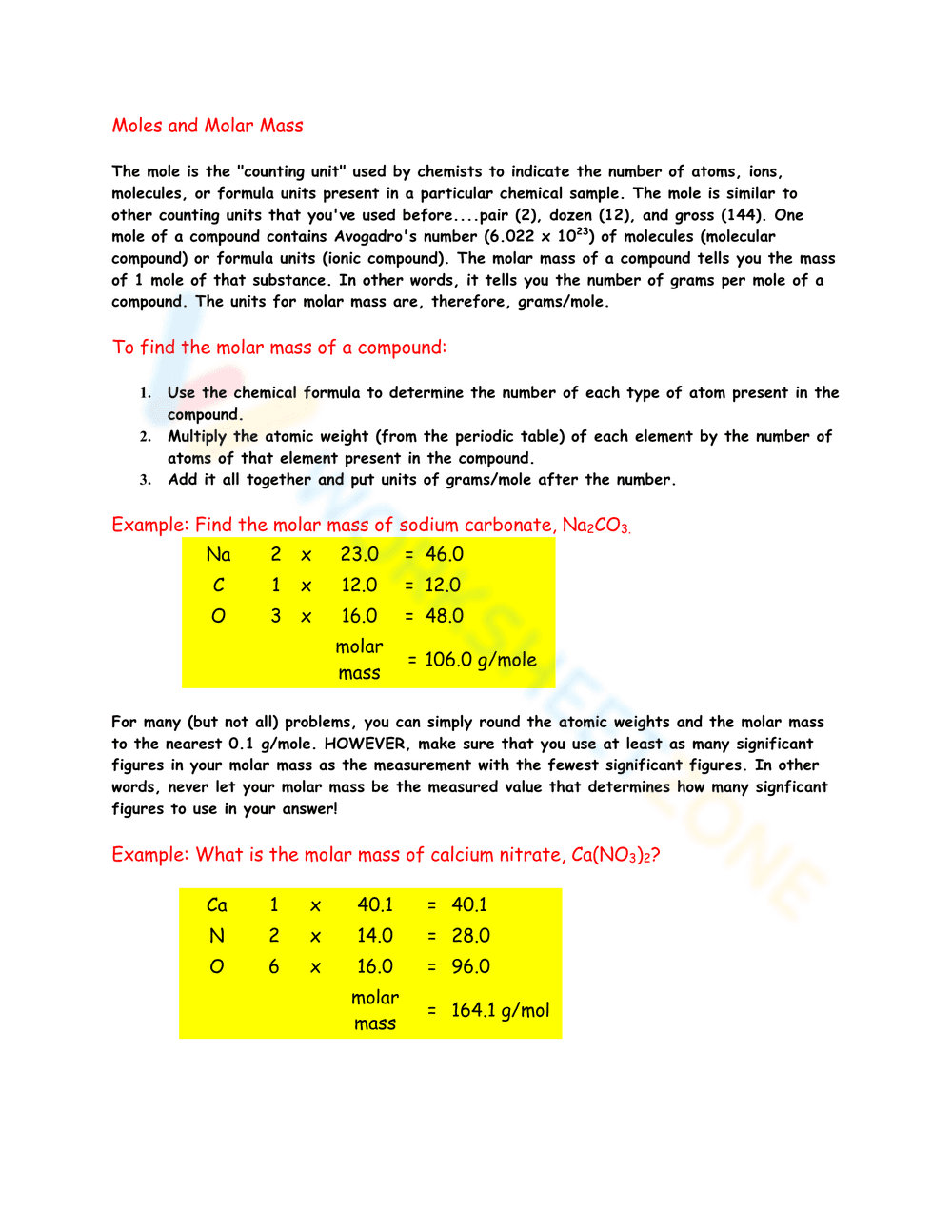
This is a chemistry worksheet explaining the concept of moles and molar mass. It defines the mole and its relation to Avogadro's number. It provides a step-by-step guide on how to calculate the molar mass of a compound, including examples of finding the molar mass of sodium carbonate (Na2CO3) and calcium nitrate (Ca(NO3)2). The worksheet includes instructions on using significant figures in calculations.
Grade Level Suitability:
This worksheet is suitable for high school (Grades 9-12) chemistry students. The concepts of moles, molar mass, and Avogadro's number are typically introduced in high school chemistry courses. The calculations and examples require an understanding of chemical formulas and basic algebra.
Why Use It:
This worksheet helps students understand the fundamental concept of molar mass and how to calculate it. It provides clear, step-by-step instructions and examples, making it easier for students to grasp the process. It also emphasizes the importance of significant figures in chemistry calculations.
How to Use It:
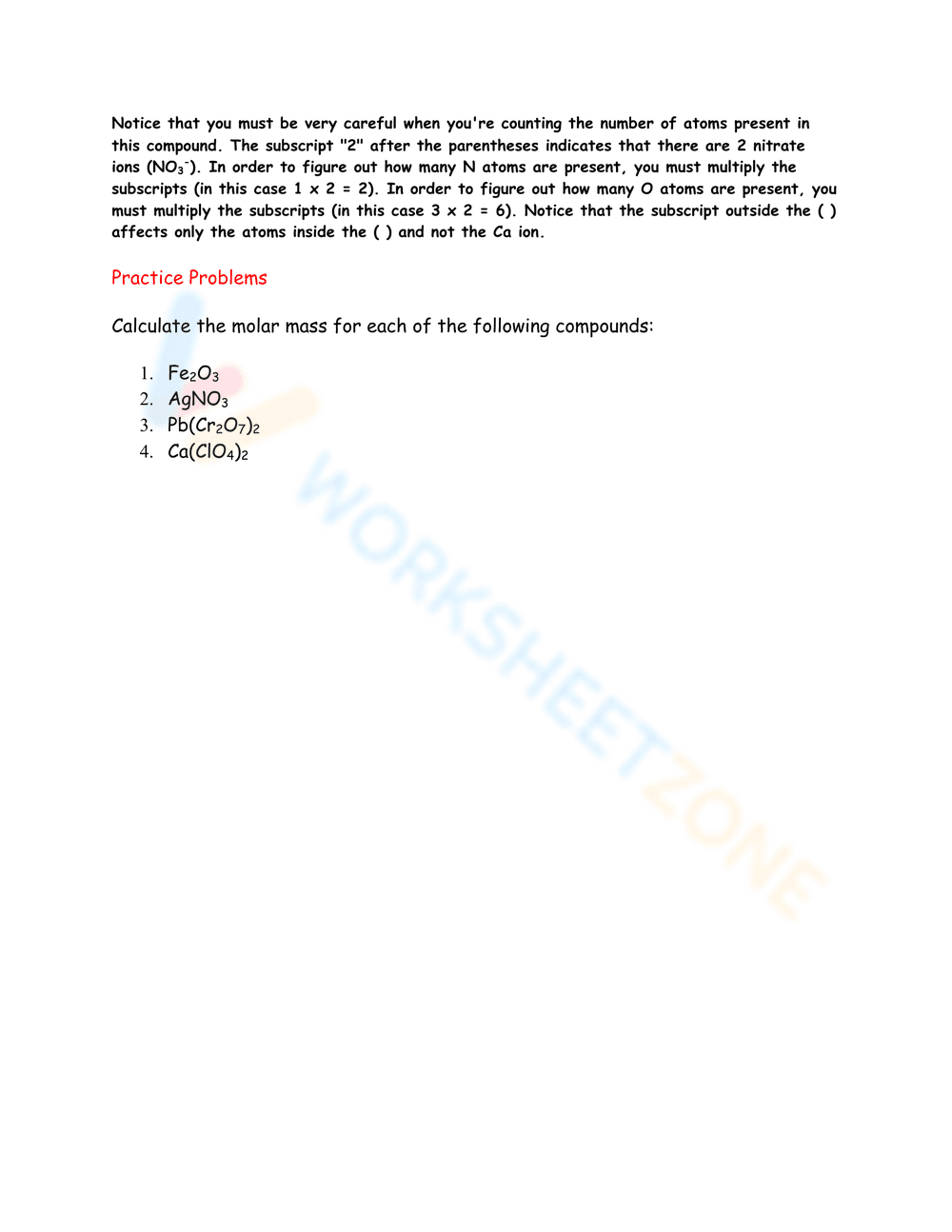
Students should read the introductory text to understand the definition of a mole and molar mass. Then, they should follow the numbered steps to calculate the molar mass of a compound. They can use the provided examples as a guide and practice calculating the molar mass of other compounds using the periodic table. Pay attention to the guidance about significant figures.
Target Users:
The target users are high school chemistry students learning about moles, molar mass, and stoichiometry. It can also be useful for students reviewing these concepts.
This is a chemistry worksheet explaining the concept of moles and molar mass. It defines the mole and its relation to Avogadro's number. It provides a step-by-step guide on how to calculate the molar mass of a compound, including examples of finding the molar mass of sodium carbonate (Na2CO3) and calcium nitrate (Ca(NO3)2). The worksheet includes instructions on using significant figures in calculations.
Grade Level Suitability:
This worksheet is suitable for high school (Grades 9-12) chemistry students. The concepts of moles, molar mass, and Avogadro's number are typically introduced in high school chemistry courses. The calculations and examples require an understanding of chemical formulas and basic algebra.
Why Use It:
This worksheet helps students understand the fundamental concept of molar mass and how to calculate it. It provides clear, step-by-step instructions and examples, making it easier for students to grasp the process. It also emphasizes the importance of significant figures in chemistry calculations.
How to Use It:
Students should read the introductory text to understand the definition of a mole and molar mass. Then, they should follow the numbered steps to calculate the molar mass of a compound. They can use the provided examples as a guide and practice calculating the molar mass of other compounds using the periodic table. Pay attention to the guidance about significant figures.
Target Users:
The target users are high school chemistry students learning about moles, molar mass, and stoichiometry. It can also be useful for students reviewing these concepts.


