


























1 / 2
0
Views
0
Downloads

0.0
0
0 Likes
Punnett Square Practice: Genetics Worksheet for Genotypes & Phenotypes
0 Views
0 Downloads
Paste this activity's link or code into your existing LMS (Google Classroom, Canvas, Teams, Schoology, Moodle, etc.).
Students can open and work on the activity right away, with no student login required.
You'll still be able to track student progress and results from your teacher account.
Information
Description
What It Is:
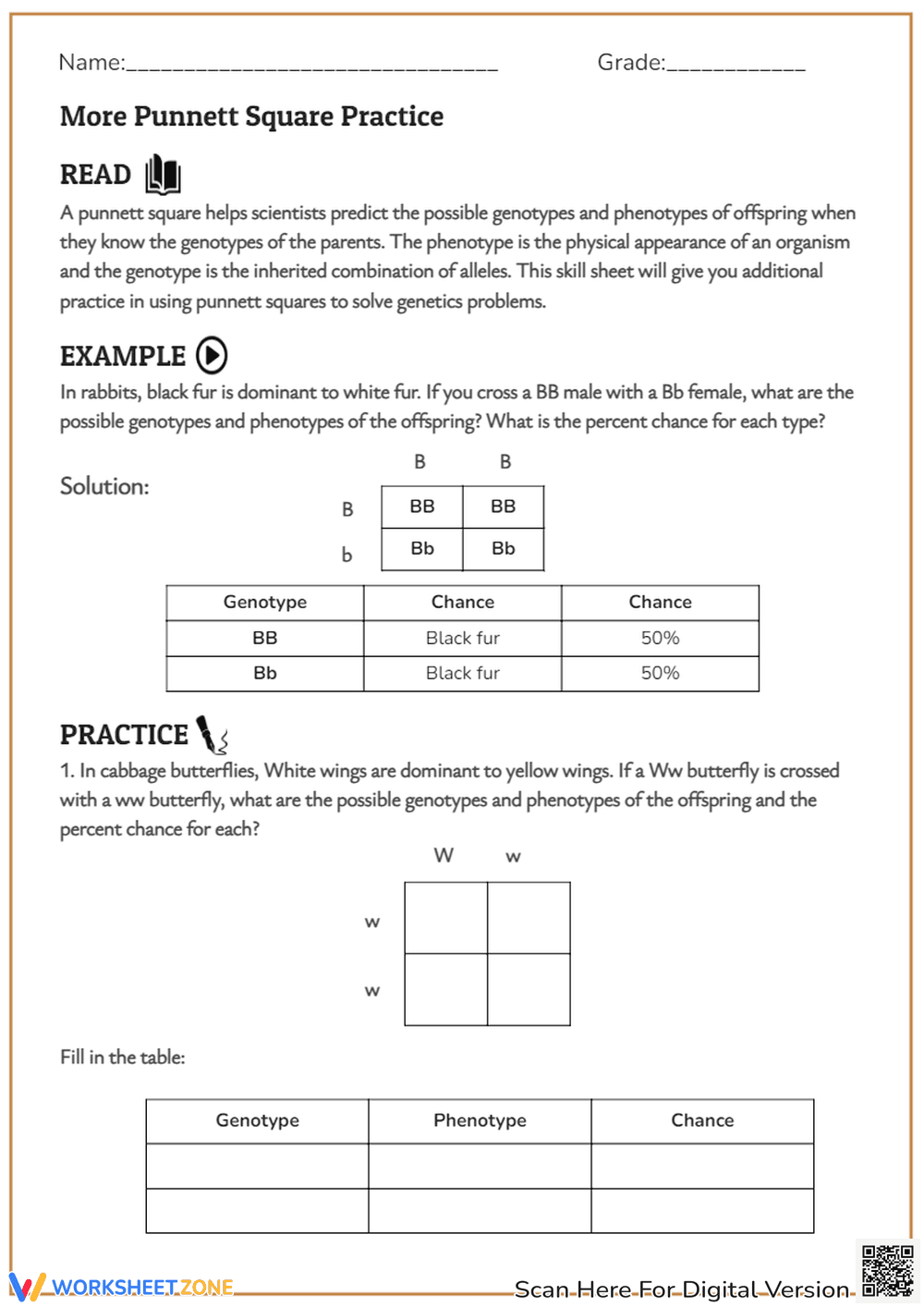
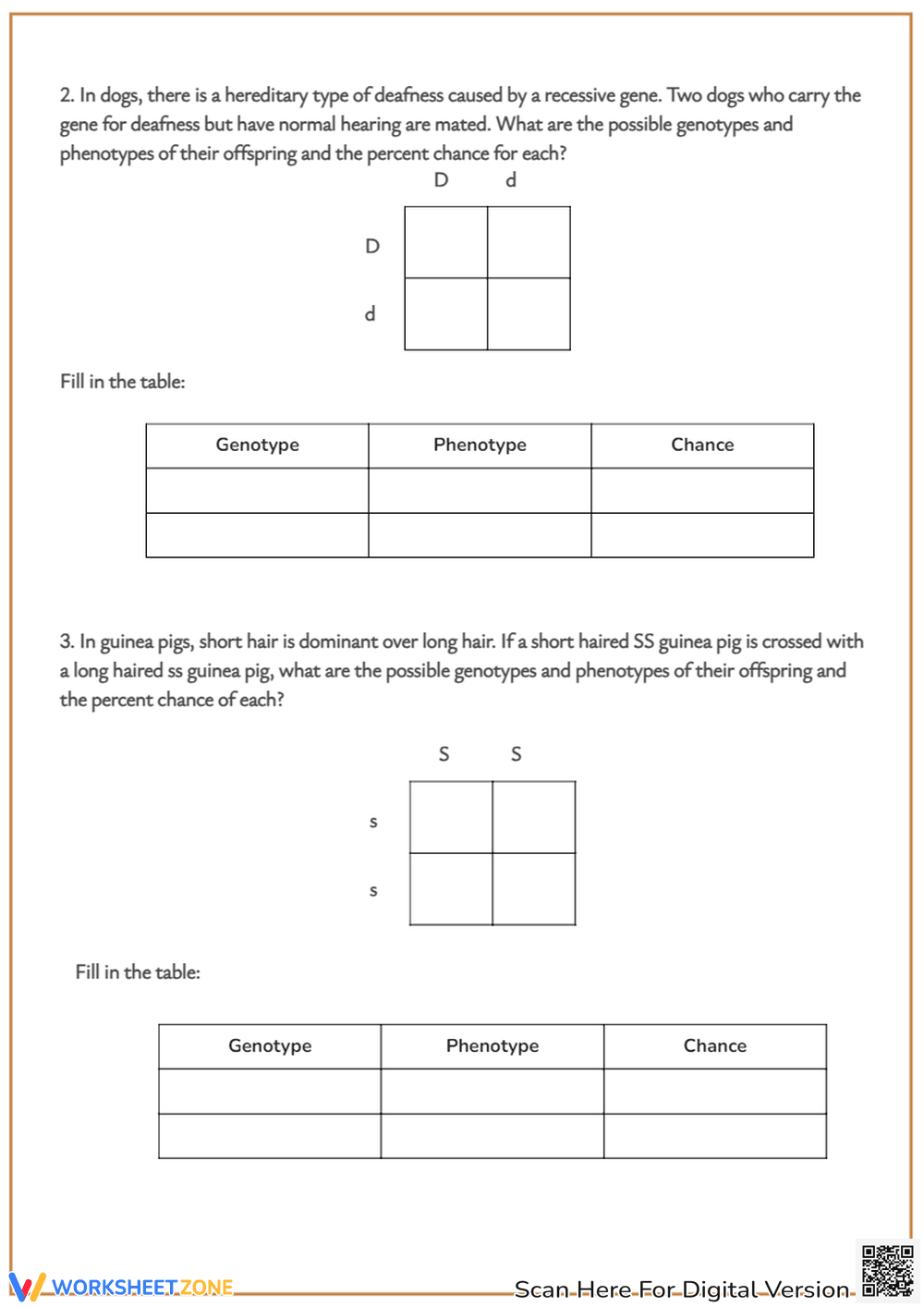
This is an educational worksheet focused on Punnett square practice. It includes a reading section explaining how Punnett squares are used to predict genotypes and phenotypes. An example problem demonstrates how to cross a Bb male rabbit with a Bb female rabbit to determine offspring genotypes, phenotypes, and probabilities. A practice problem requires students to complete a Punnett square and a table to determine genotypes, phenotypes, and probabilities for a cross between a Ww butterfly and a ww butterfly.
Grade Level Suitability:
This worksheet is suitable for grades 7-10, particularly for middle school and high school biology students. The content covers basic genetics concepts and requires an understanding of dominant and recessive alleles, genotypes, and phenotypes. The mathematical aspect of calculating probabilities also makes it suitable for these grades.
Why Use It:
This worksheet provides students with a hands-on opportunity to practice using Punnett squares to predict the genetic outcomes of crosses. It reinforces understanding of key genetics vocabulary like genotype, phenotype, and allele. It also helps students develop problem-solving skills and apply their knowledge of genetics to real-world scenarios.
How to Use It:
First, students should read the introductory text to understand the purpose of Punnett squares. Then, they can study the example problem to see how to set up and complete a Punnett square. Finally, they should complete the practice problem by filling in the provided Punnett square, determining the genotypes and phenotypes of the offspring, and calculating the probability of each outcome, recording their answers in the table.
Target Users:
This worksheet is designed for students learning about genetics and heredity in a science class. It is particularly helpful for students who are new to Punnett squares or who need additional practice to master the concept. It can be used as a classroom activity, homework assignment, or review tool.
This is an educational worksheet focused on Punnett square practice. It includes a reading section explaining how Punnett squares are used to predict genotypes and phenotypes. An example problem demonstrates how to cross a Bb male rabbit with a Bb female rabbit to determine offspring genotypes, phenotypes, and probabilities. A practice problem requires students to complete a Punnett square and a table to determine genotypes, phenotypes, and probabilities for a cross between a Ww butterfly and a ww butterfly.
Grade Level Suitability:
This worksheet is suitable for grades 7-10, particularly for middle school and high school biology students. The content covers basic genetics concepts and requires an understanding of dominant and recessive alleles, genotypes, and phenotypes. The mathematical aspect of calculating probabilities also makes it suitable for these grades.
Why Use It:
This worksheet provides students with a hands-on opportunity to practice using Punnett squares to predict the genetic outcomes of crosses. It reinforces understanding of key genetics vocabulary like genotype, phenotype, and allele. It also helps students develop problem-solving skills and apply their knowledge of genetics to real-world scenarios.
How to Use It:
First, students should read the introductory text to understand the purpose of Punnett squares. Then, they can study the example problem to see how to set up and complete a Punnett square. Finally, they should complete the practice problem by filling in the provided Punnett square, determining the genotypes and phenotypes of the offspring, and calculating the probability of each outcome, recording their answers in the table.
Target Users:
This worksheet is designed for students learning about genetics and heredity in a science class. It is particularly helpful for students who are new to Punnett squares or who need additional practice to master the concept. It can be used as a classroom activity, homework assignment, or review tool.


