


























0
Views
0
Downloads

0.0
0
0 Likes
Native Americans: The Nez Perce
0 Views
0 Downloads
Paste this activity's link or code into your existing LMS (Google Classroom, Canvas, Teams, Schoology, Moodle, etc.).
Students can open and work on the activity right away, with no student login required.
You'll still be able to track student progress and results from your teacher account.
Information
Description
What It Is:
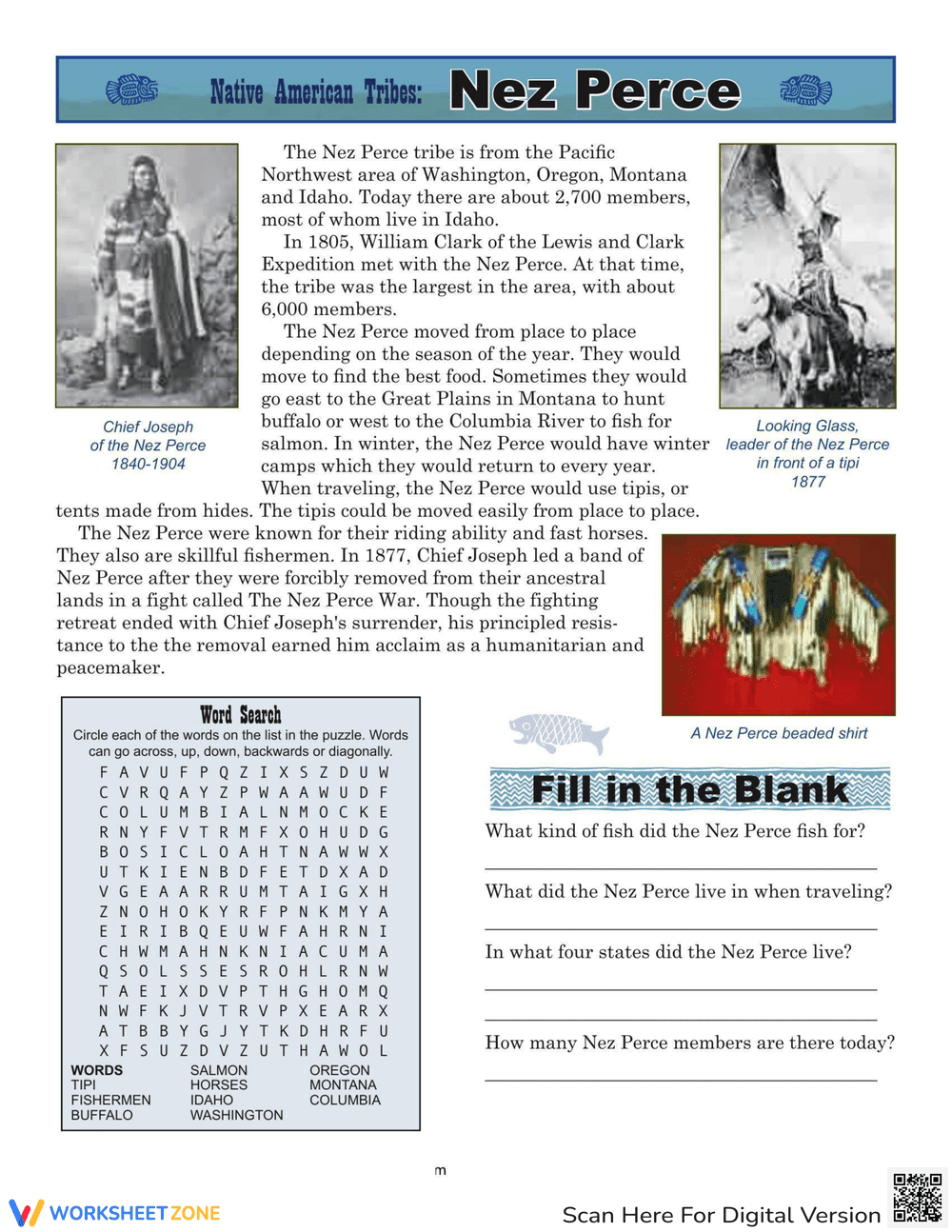
This is an educational worksheet about the Nez Perce Native American tribe. It includes a reading passage with information about their history, location, lifestyle, and notable figures. There is also a word search puzzle with words related to the Nez Perce, such as salmon, horses, buffalo, and Oregon. The worksheet also has a 'Fill in the Blank' section with questions about the reading passage, such as what kind of fish they fished for, where they lived when traveling, what states they lived in, and how many members there are today. There are images depicting Chief Joseph, Looking Glass, and a beaded Nez Perce shirt.
Grade Level Suitability:
This worksheet is suitable for grades 3-5. The reading passage is relatively simple and the questions are straightforward, making it accessible for elementary school students. The word search provides a fun, engaging activity that reinforces vocabulary.
Why Use It:
This worksheet helps students learn about the Nez Perce tribe, their culture, and history. It improves reading comprehension, vocabulary skills, and provides a fun way to learn about Native American history and culture. It also introduces students to the concept of cultural adaptation and resourcefulness.
How to Use It:
First, have students read the passage about the Nez Perce tribe. Then, they can complete the word search puzzle. Finally, they should answer the fill-in-the-blank questions based on the information from the reading passage. The teacher can review the answers and discuss the Nez Perce tribe further.
Target Users:
This worksheet is ideal for elementary school students, particularly those in grades 3-5, who are learning about Native American tribes, social studies, or history. It can also be used by homeschoolers or as a supplemental activity in a classroom setting.
This is an educational worksheet about the Nez Perce Native American tribe. It includes a reading passage with information about their history, location, lifestyle, and notable figures. There is also a word search puzzle with words related to the Nez Perce, such as salmon, horses, buffalo, and Oregon. The worksheet also has a 'Fill in the Blank' section with questions about the reading passage, such as what kind of fish they fished for, where they lived when traveling, what states they lived in, and how many members there are today. There are images depicting Chief Joseph, Looking Glass, and a beaded Nez Perce shirt.
Grade Level Suitability:
This worksheet is suitable for grades 3-5. The reading passage is relatively simple and the questions are straightforward, making it accessible for elementary school students. The word search provides a fun, engaging activity that reinforces vocabulary.
Why Use It:
This worksheet helps students learn about the Nez Perce tribe, their culture, and history. It improves reading comprehension, vocabulary skills, and provides a fun way to learn about Native American history and culture. It also introduces students to the concept of cultural adaptation and resourcefulness.
How to Use It:
First, have students read the passage about the Nez Perce tribe. Then, they can complete the word search puzzle. Finally, they should answer the fill-in-the-blank questions based on the information from the reading passage. The teacher can review the answers and discuss the Nez Perce tribe further.
Target Users:
This worksheet is ideal for elementary school students, particularly those in grades 3-5, who are learning about Native American tribes, social studies, or history. It can also be used by homeschoolers or as a supplemental activity in a classroom setting.


