


























1 / 2
0
Views
0
Plays


0.0
0
0 Likes
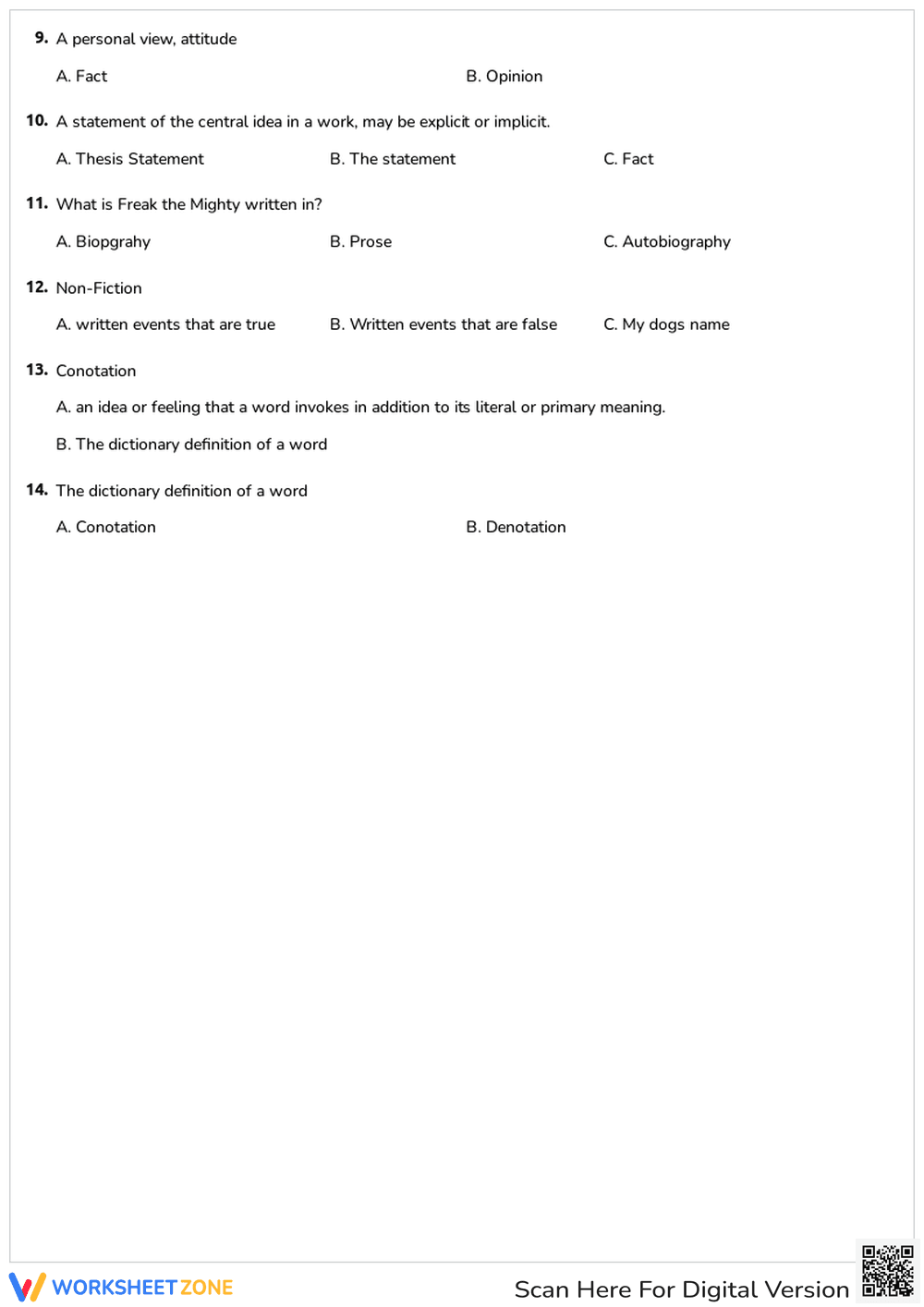
Non-Fiction Writing Terms Quiz: Facts and Opinions
0 Views
0 Plays
Paste this activity's link or code into your existing LMS (Google Classroom, Canvas, Teams, Schoology, Moodle, etc.).
Students can open and work on the activity right away, with no student login required.
You'll still be able to track student progress and results from your teacher account.
Information
Description
What It Is:
This is an educational worksheet defining Figurative Language. It explains that figurative language has meaning beyond the literal meaning and is also known as 'figures of speech.'
Grade Level Suitability:
This worksheet is suitable for grades 6-12. The concept of figurative language is usually introduced in middle school and expanded upon in high school English classes.
Why Use It:
This worksheet helps students understand the basic definition of figurative language. It provides a clear and concise explanation of a complex concept, making it easier for students to grasp the idea that language can have non-literal meanings.
How to Use It:
Use this worksheet as an introduction to a lesson on figurative language. It can be used as a reference sheet or as a starting point for discussion. Students can read the definition and then brainstorm examples of figurative language.
Target Users:
This worksheet is targeted towards students learning about figurative language for the first time or those who need a refresher on the basic definition. It's helpful for English language arts teachers and students in middle and high school.
This is an educational worksheet defining Figurative Language. It explains that figurative language has meaning beyond the literal meaning and is also known as 'figures of speech.'
Grade Level Suitability:
This worksheet is suitable for grades 6-12. The concept of figurative language is usually introduced in middle school and expanded upon in high school English classes.
Why Use It:
This worksheet helps students understand the basic definition of figurative language. It provides a clear and concise explanation of a complex concept, making it easier for students to grasp the idea that language can have non-literal meanings.
How to Use It:
Use this worksheet as an introduction to a lesson on figurative language. It can be used as a reference sheet or as a starting point for discussion. Students can read the definition and then brainstorm examples of figurative language.
Target Users:
This worksheet is targeted towards students learning about figurative language for the first time or those who need a refresher on the basic definition. It's helpful for English language arts teachers and students in middle and high school.


