


























1 / 2
0
Views
0
Downloads

0.0
0
0 Likes
Understanding Osmosis and Tonicity
0 Views
0 Downloads
Paste this activity's link or code into your existing LMS (Google Classroom, Canvas, Teams, Schoology, Moodle, etc.).
Students can open and work on the activity right away, with no student login required.
You'll still be able to track student progress and results from your teacher account.
Information
Description
What It Is:
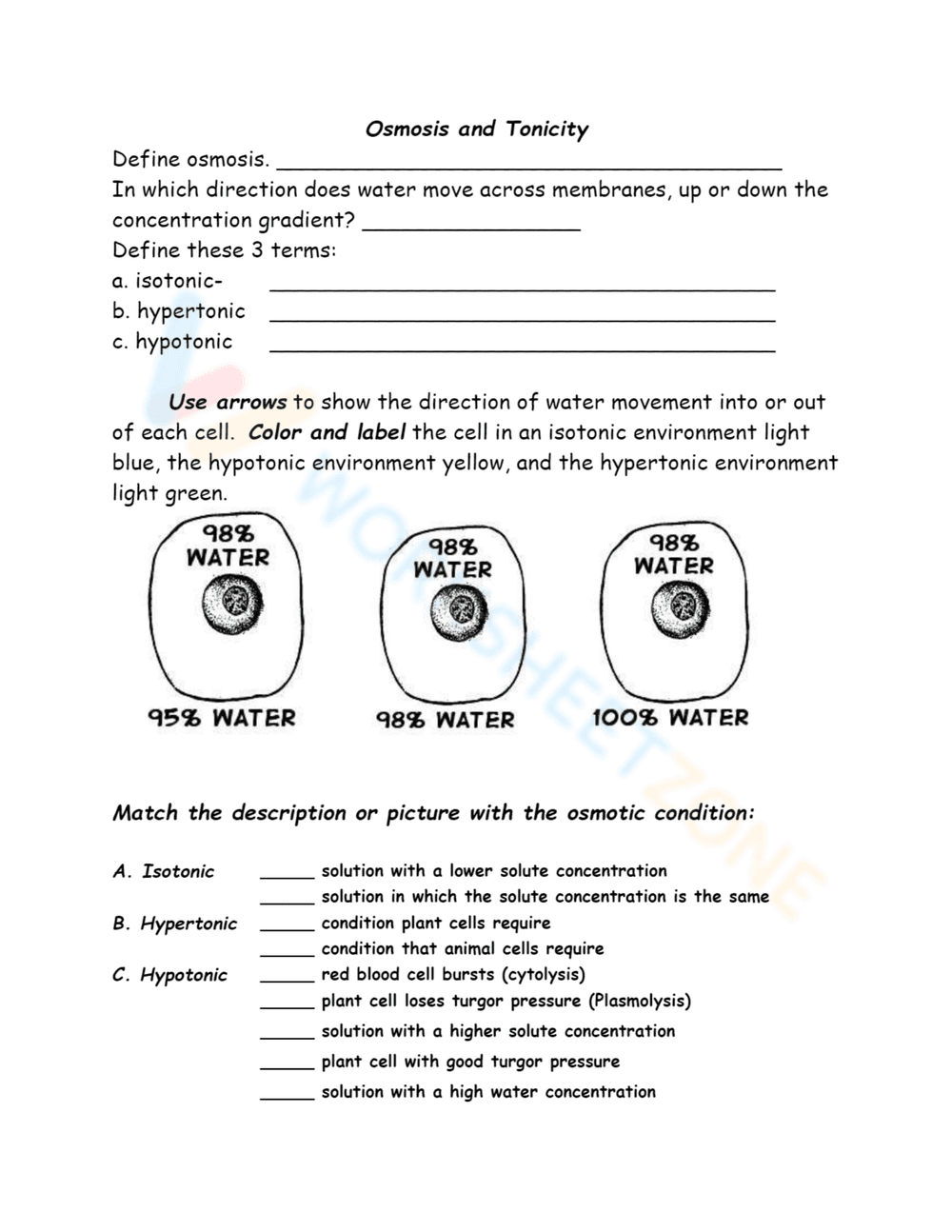
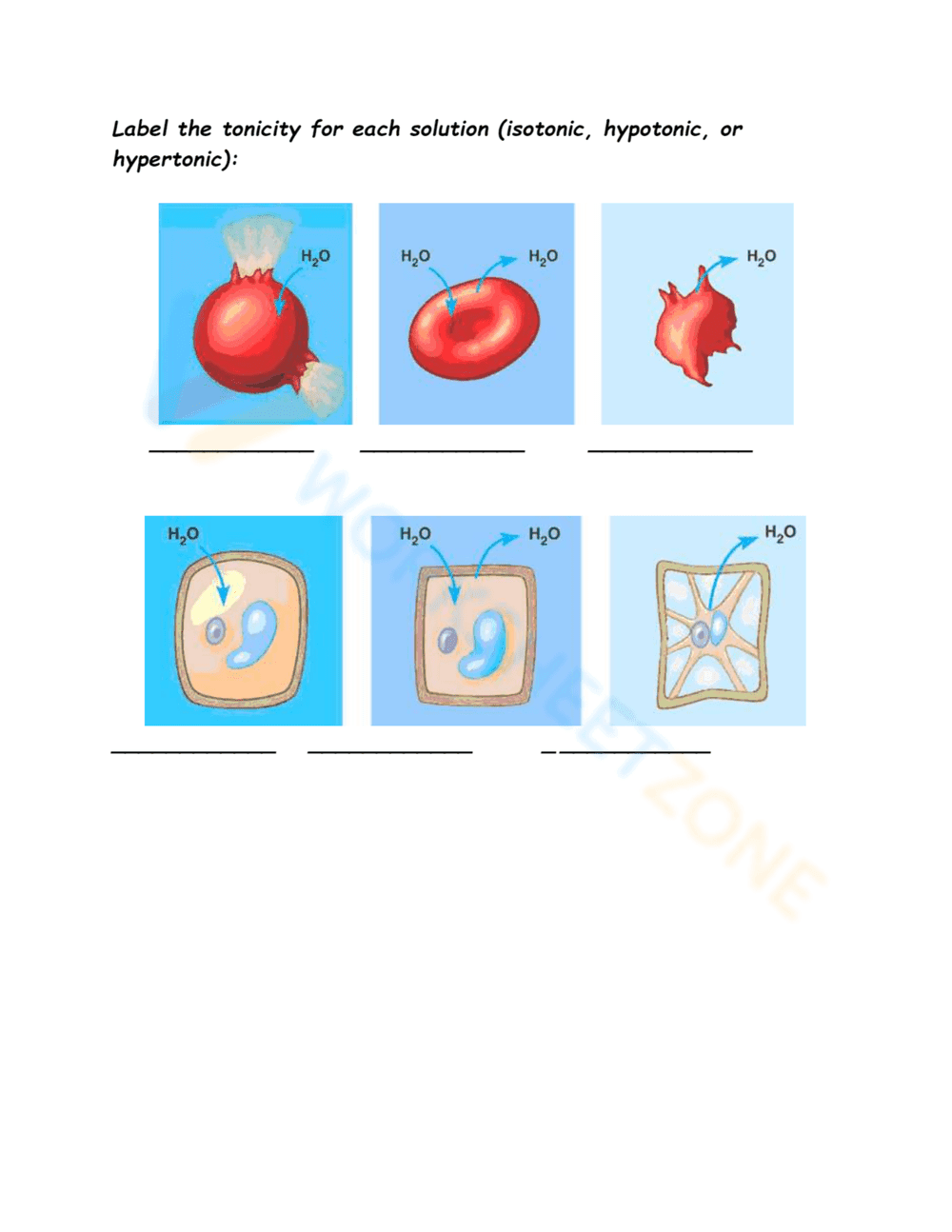
This is an educational worksheet about Osmosis and Tonicity. It includes definition questions for osmosis, isotonic, hypertonic, and hypotonic. It also has a section where students use arrows to show water movement in cells with different water concentrations (95%, 98%, and 100%) and color them based on their tonicity (isotonic-light blue, hypotonic-yellow, hypertonic-light green). Finally, it includes a matching section where students match descriptions with the correct osmotic condition (isotonic, hypertonic, hypotonic).
Grade Level Suitability:
This worksheet is most suitable for high school Biology (Grades 9-12). The concepts of osmosis, tonicity, and concentration gradients are typically covered in high school biology curricula. The vocabulary and complexity of the questions are appropriate for this age group.
Why Use It:
This worksheet reinforces understanding of osmosis and tonicity through definition recall, visual representation of water movement, and matching activities. It helps students visualize the impact of different tonicities on cells and connect definitions to real-world scenarios. It helps students understand how water potential and concentration gradients affect cells.
How to Use It:
Students should first define the terms osmosis, isotonic, hypertonic, and hypotonic using their textbook or notes. Then, they should draw arrows to indicate the direction of water movement in each cell based on the water concentration inside and outside the cell. They should then color each cell according to the instructions. Finally, they should match each description to the correct osmotic condition.
Target Users:
This worksheet is designed for high school biology students learning about cell transport, osmosis, and tonicity. It can be used as a homework assignment, in-class activity, or review sheet to reinforce these concepts. It would also be beneficial for students preparing for biology exams.
This is an educational worksheet about Osmosis and Tonicity. It includes definition questions for osmosis, isotonic, hypertonic, and hypotonic. It also has a section where students use arrows to show water movement in cells with different water concentrations (95%, 98%, and 100%) and color them based on their tonicity (isotonic-light blue, hypotonic-yellow, hypertonic-light green). Finally, it includes a matching section where students match descriptions with the correct osmotic condition (isotonic, hypertonic, hypotonic).
Grade Level Suitability:
This worksheet is most suitable for high school Biology (Grades 9-12). The concepts of osmosis, tonicity, and concentration gradients are typically covered in high school biology curricula. The vocabulary and complexity of the questions are appropriate for this age group.
Why Use It:
This worksheet reinforces understanding of osmosis and tonicity through definition recall, visual representation of water movement, and matching activities. It helps students visualize the impact of different tonicities on cells and connect definitions to real-world scenarios. It helps students understand how water potential and concentration gradients affect cells.
How to Use It:
Students should first define the terms osmosis, isotonic, hypertonic, and hypotonic using their textbook or notes. Then, they should draw arrows to indicate the direction of water movement in each cell based on the water concentration inside and outside the cell. They should then color each cell according to the instructions. Finally, they should match each description to the correct osmotic condition.
Target Users:
This worksheet is designed for high school biology students learning about cell transport, osmosis, and tonicity. It can be used as a homework assignment, in-class activity, or review sheet to reinforce these concepts. It would also be beneficial for students preparing for biology exams.


