


























1 / 6
0
Views
0
Downloads



0 Likes
Create a Paper Skeleton: Halloween Craft Activity
0 Views
0 Downloads
Paste this activity's link or code into your existing LMS (Google Classroom, Canvas, Teams, Schoology, Moodle, etc.).
Students can open and work on the activity right away, with no student login required.
You'll still be able to track student progress and results from your teacher account.
Information
Description
What It Is:
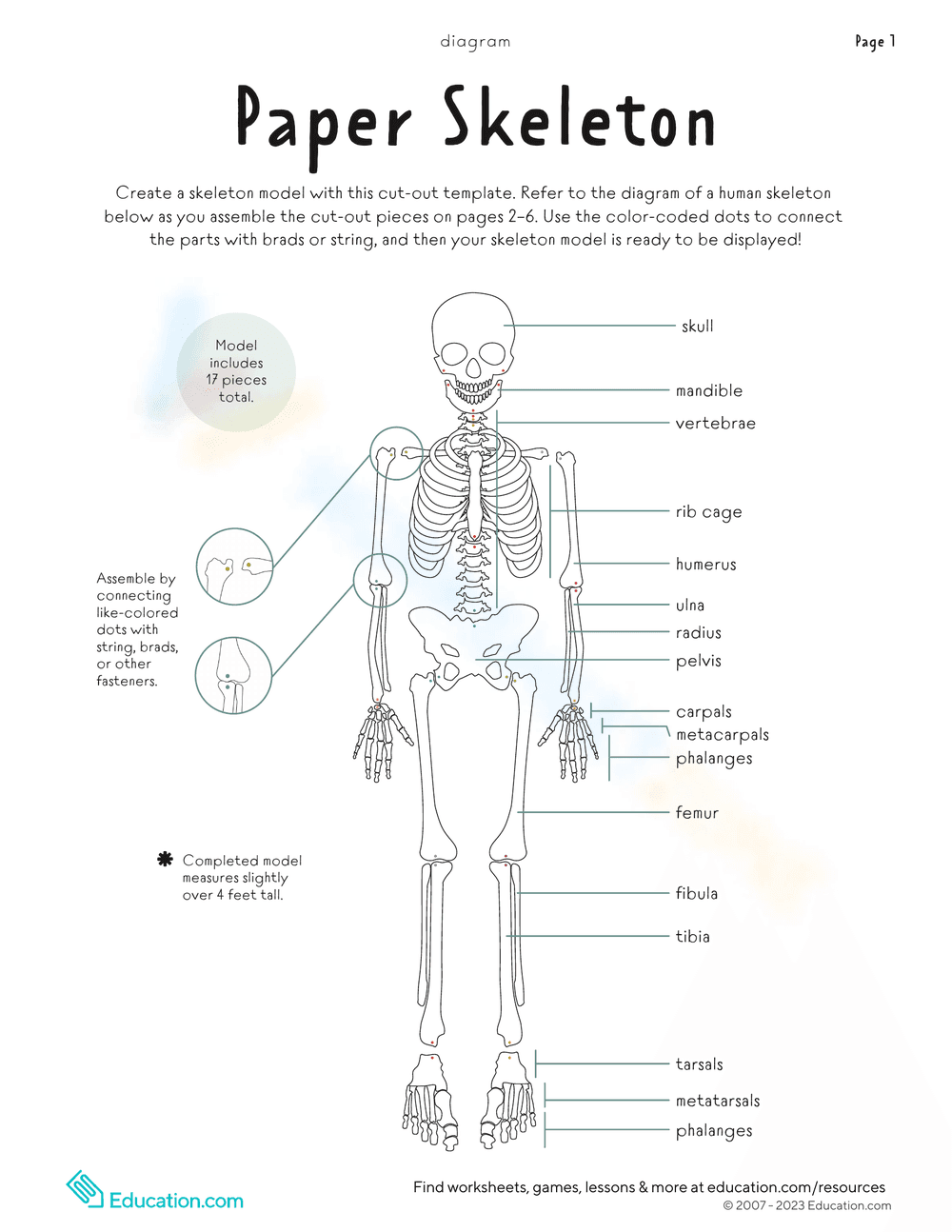
This is the first page of a multi-page educational worksheet for creating a paper skeleton model. The page features a diagram of a human skeleton with labeled bones including the skull, mandible, vertebrae, rib cage, humerus, ulna, radius, pelvis, carpals, metacarpals, phalanges, femur, fibula, tibia, tarsals, metatarsals, and phalanges. Instructions indicate that cut-out pieces on subsequent pages (2-6) are to be assembled using color-coded dots and fasteners like brads or string. The completed model is estimated to be slightly over 4 feet tall and includes 17 pieces.
Grade Level Suitability:
Grades 3-6. The activity involves fine motor skills (cutting and assembling), following instructions, and learning anatomical vocabulary, making it suitable for upper elementary and early middle school students.
Why Use It:
This worksheet helps students learn about the human skeletal system in a hands-on, engaging way. It reinforces anatomical vocabulary and provides a visual representation of bone structure. It also encourages fine motor skill development and spatial reasoning.
How to Use It:
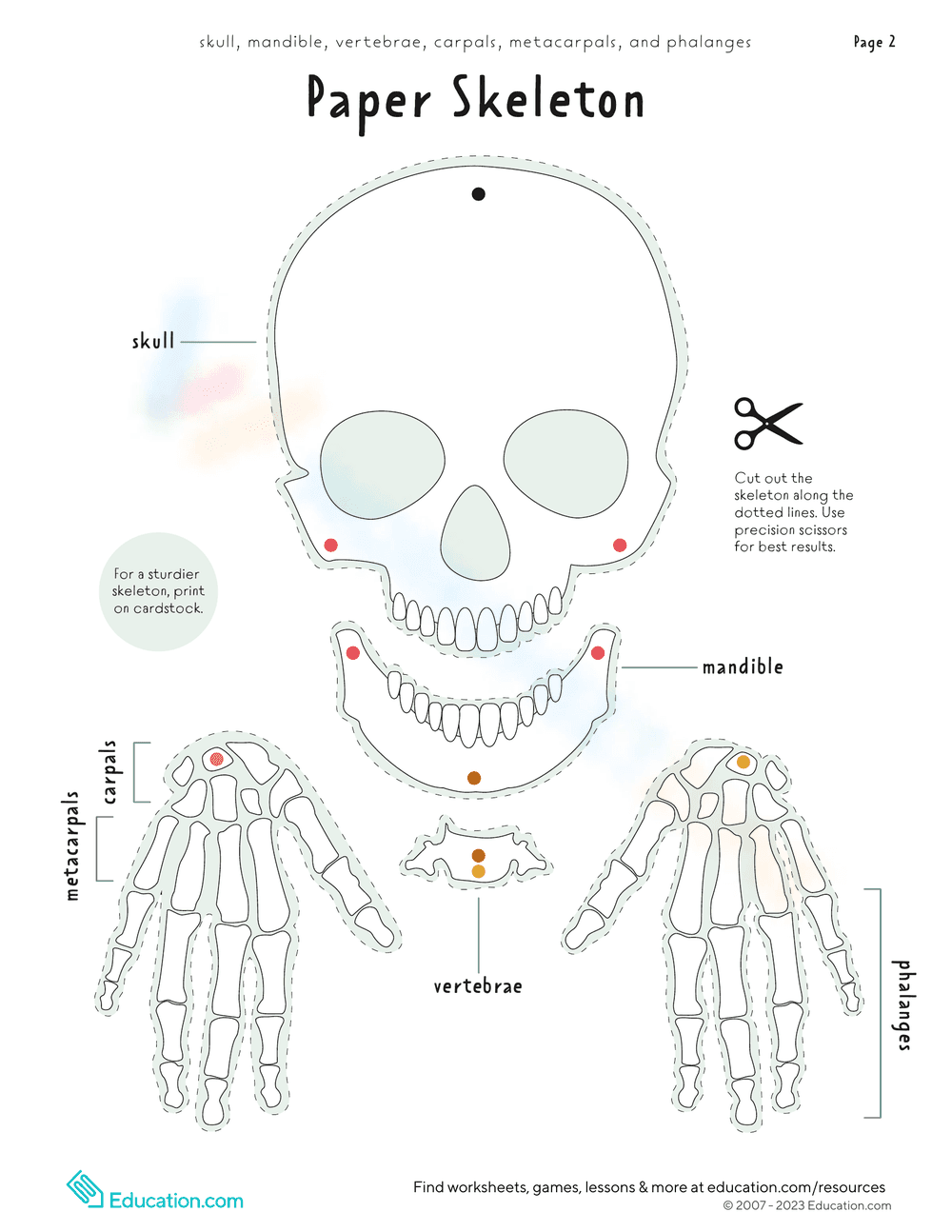
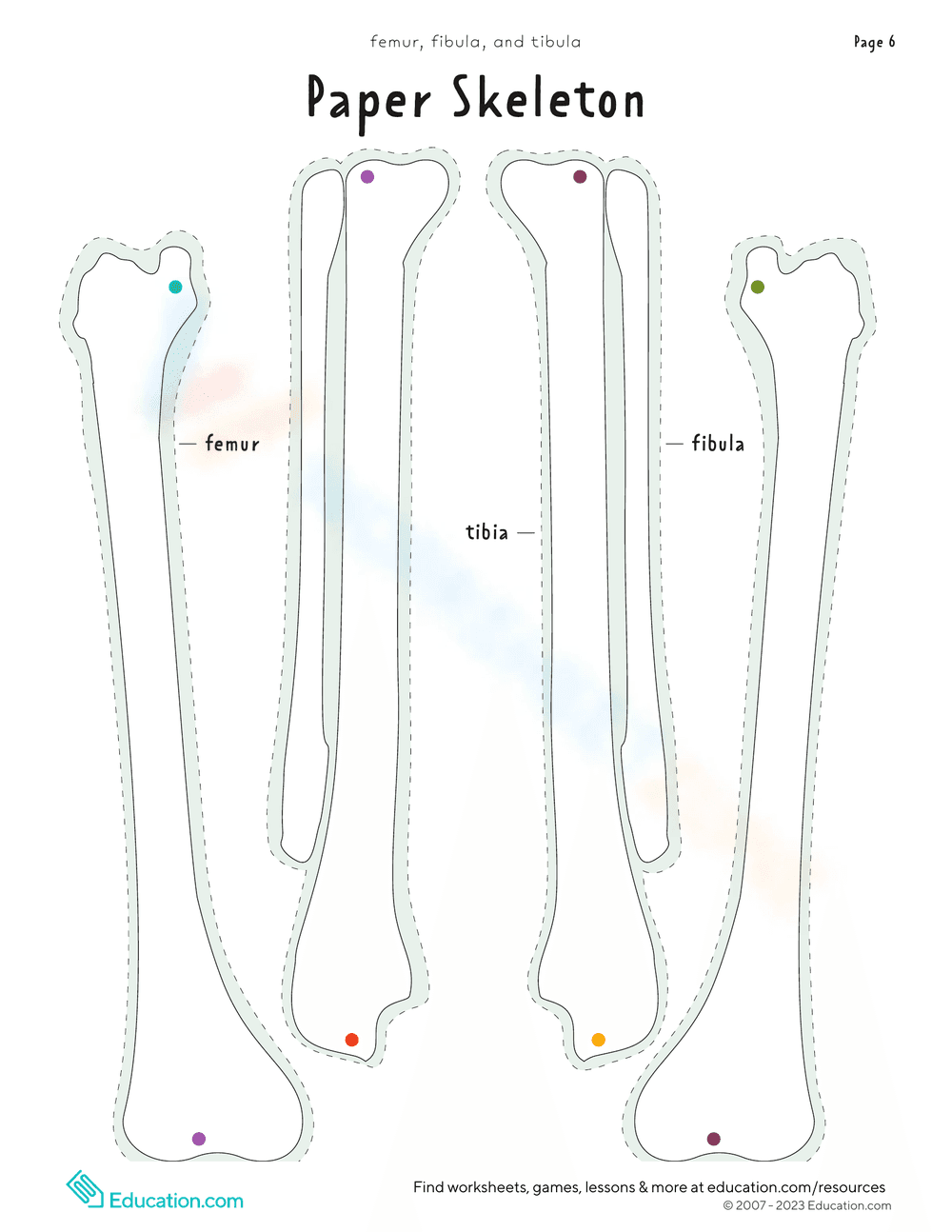
First, cut out the skeleton pieces from pages 2-6 (not shown). Then, use the diagram on page 1 as a reference to connect the corresponding color-coded dots on the cut-out pieces with brads, string, or other fasteners to assemble the skeleton model.
Target Users:
Elementary and middle school students studying human anatomy, teachers looking for hands-on science activities, and homeschool parents seeking engaging educational resources.
This is the first page of a multi-page educational worksheet for creating a paper skeleton model. The page features a diagram of a human skeleton with labeled bones including the skull, mandible, vertebrae, rib cage, humerus, ulna, radius, pelvis, carpals, metacarpals, phalanges, femur, fibula, tibia, tarsals, metatarsals, and phalanges. Instructions indicate that cut-out pieces on subsequent pages (2-6) are to be assembled using color-coded dots and fasteners like brads or string. The completed model is estimated to be slightly over 4 feet tall and includes 17 pieces.
Grade Level Suitability:
Grades 3-6. The activity involves fine motor skills (cutting and assembling), following instructions, and learning anatomical vocabulary, making it suitable for upper elementary and early middle school students.
Why Use It:
This worksheet helps students learn about the human skeletal system in a hands-on, engaging way. It reinforces anatomical vocabulary and provides a visual representation of bone structure. It also encourages fine motor skill development and spatial reasoning.
How to Use It:
First, cut out the skeleton pieces from pages 2-6 (not shown). Then, use the diagram on page 1 as a reference to connect the corresponding color-coded dots on the cut-out pieces with brads, string, or other fasteners to assemble the skeleton model.
Target Users:
Elementary and middle school students studying human anatomy, teachers looking for hands-on science activities, and homeschool parents seeking engaging educational resources.


